
Benzodiazepine Interaction Risk Checker
Check Your Medication Risks
Select the benzodiazepine you're taking and other medications to see potential interaction risks.
Results
Many people turn to benzodiazepines like Xanax, Ativan, or Valium when anxiety feels overwhelming. They work fast-often within an hour-and can bring relief when nothing else does. But here’s the part most prescriptions don’t spell out clearly: mixing these drugs with other common medications can be deadly. You might not realize you’re putting yourself at risk if you’re also taking painkillers, sleeping pills, or even just having a drink with dinner.
How Benzodiazepines Actually Work
Benzodiazepines boost the effect of GABA, a calming chemical in your brain. This reduces overactivity in your nervous system, which is why they help with panic attacks, muscle spasms, and seizures. They’re not like SSRIs, which take weeks to build up in your system. Benzodiazepines kick in fast, which is both their strength and their danger.
There are three types based on how long they last in your body:
- Short-acting: Alprazolam (Xanax), triazolam (Halcion)-lasts 6 to 12 hours
- Intermediate-acting: Lorazepam (Ativan)-lasts about 10 to 20 hours
- Long-acting: Diazepam (Valium), clonazepam (Klonopin)-can stay in your system for 50 to 100 hours
This matters because the longer a drug sticks around, the more likely it is to build up and interact with other substances. And that’s where things get risky.
The Deadly Mix: Benzodiazepines and Opioids
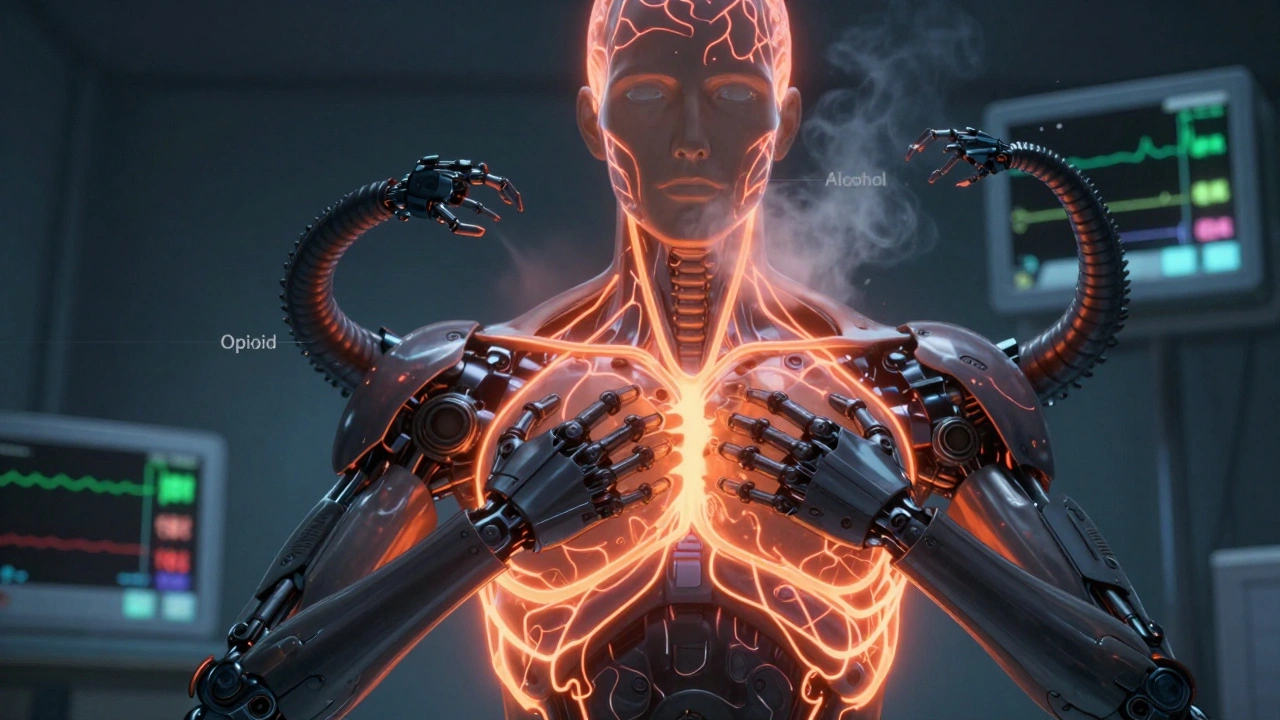
If you’re on opioid pain meds like oxycodone, hydrocodone, or fentanyl, combining them with benzodiazepines is like turning down the volume on your breathing. Both types of drugs slow down your central nervous system. Together, they can shut it down completely.
From 2011 to 2016, 75% of all benzodiazepine-related overdose deaths involved opioids, according to FDA analysis. That’s not a coincidence-it’s a pattern. In 2019, benzodiazepine-opioid combinations were responsible for 23% of all opioid-related deaths. A 2018 CDC study found that people taking both drugs had a 15 times higher risk of fatal overdose than those taking opioids alone.
One Reddit user, u/AnxietyWarrior2020, shared how this played out in real life: “I was on Xanax for panic attacks and oxycodone for back pain. Two weeks in, I stopped breathing in my sleep. I woke up in the ER with my oxygen levels dangerously low.”
The FDA now requires every benzodiazepine prescription to include a Boxed Warning-the strongest safety alert they issue-about this exact danger. Still, a 2022 survey by the Anxiety and Depression Association of America found that 32% of benzodiazepine users were prescribed them alongside opioids. And 18% of those people experienced serious breathing problems.
Alcohol? Even More Dangerous
Alcohol is another CNS depressant. It doesn’t matter if it’s one glass of wine or a few beers. Mixing alcohol with benzodiazepines increases sedation, impairs coordination, and can cause unconsciousness or respiratory failure.
On Drugs.com, a pharmacy student wrote: “I’ve seen multiple near-fatal cases where people drank while on Ativan or Klonopin. They passed out, couldn’t be woken up, and ended up in intensive care.”
Healthgrades reviews from 2023 show that 27% of negative feedback about benzodiazepines mentioned dangerous reactions with alcohol. One patient said, “I had one drink after taking Ativan and felt like I was drowning in my own body.”
It’s not just about getting drunk. Even small amounts of alcohol can amplify the sedative effect. That’s why the FDA’s updated medication guides now explicitly warn against combining these drugs with “alcohol, opioid pain relievers, or illicit drugs.”
What About Sleep Medicines and Other Sedatives?
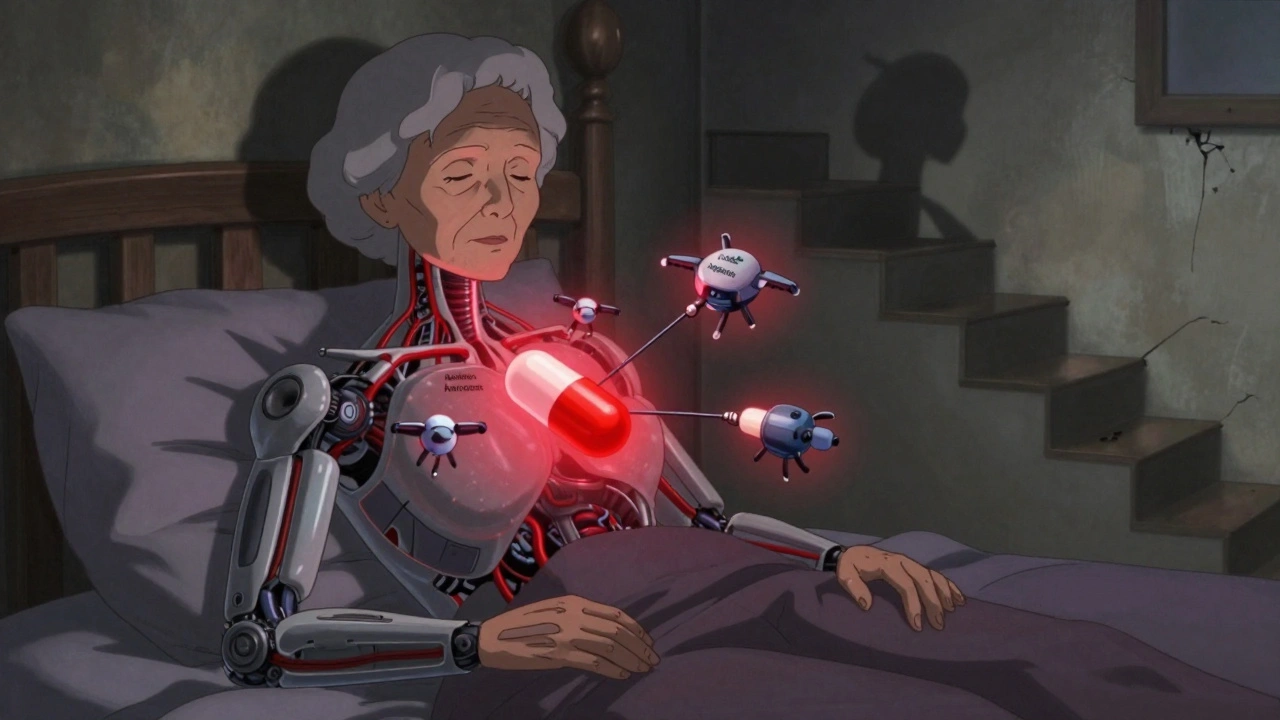
Z-drugs like zolpidem (Ambien) and eszopiclone (Lunesta) are often prescribed for insomnia. They work similarly to benzodiazepines, targeting the same brain receptors. Combining them isn’t just doubling down on drowsiness-it’s increasing the risk of overdose.
Older adults are especially vulnerable. A 2019 study in the Journal of the American Geriatrics Society found that people over 65 who took benzodiazepines had a 50% higher chance of falling and breaking a bone. If they were also taking another sedating drug-like an antihistamine, muscle relaxant, or sleep aid-that risk tripled.
The American Geriatrics Society’s Beers Criteria (updated in 2019) says benzodiazepines should be avoided entirely in seniors. Why? Because they worsen confusion, memory loss, and balance issues. And those effects get worse with every additional sedating medication.
Why SSRIs Are Often a Safer Choice
For long-term anxiety management, SSRIs like sertraline (Zoloft) or escitalopram (Lexapro) are now the first-line treatment. They don’t work right away-it takes 4 to 6 weeks to feel the full effect. But they don’t cause dependence, and they have very few dangerous interactions.
In contrast, benzodiazepines carry a high risk of tolerance and addiction. About 40% of people who use them for six months or longer experience withdrawal symptoms if they stop suddenly. Those symptoms can include seizures, hallucinations, and extreme anxiety that’s worse than what they started with.
According to IMS Health data from 2022, SSRIs are now prescribed for 68% of new anxiety cases. Benzodiazepines? Only 22%. That shift isn’t random-it’s based on safety data.

What Should You Do If You’re Already on Both?
If you’re taking a benzodiazepine and an opioid-or any other CNS depressant-you need to talk to your doctor now. Don’t stop suddenly. Abruptly quitting benzodiazepines can trigger life-threatening seizures.
The CDC and Kaiser Permanente both recommend:
- Never start a benzodiazepine if you’re already on opioids-unless there’s no other option and you’re under close supervision.
- If you must take both, use the lowest possible dose for the shortest time possible-no longer than 2 to 4 weeks.
- Ask your doctor about tapering off slowly. Short-acting drugs like Xanax need slower reductions (5-10% every 1-2 weeks) than long-acting ones like Valium (10-25% every 1-2 weeks).
- Get your prescriptions tracked. Many states now have prescription drug monitoring programs (PDMPs) that flag dangerous combinations. Ask your pharmacist to check them before filling.
A 2023 study in JAMA Internal Medicine showed that states with PDMP alerts for benzodiazepine-opioid combos saw a 27.3% drop in dangerous prescriptions within 18 months. Awareness saves lives.
What’s Changing in 2025?
The landscape is shifting fast. In January 2023, Medicare started requiring prior authorization for any prescription combining benzodiazepines and opioids. Doctors now have to prove it’s medically necessary-and explain why safer alternatives won’t work.
The American Psychiatric Association’s 2023 guidelines say benzodiazepines should only be used after SSRIs or SNRIs have failed-and even then, only for up to 4 weeks. Long-term use is no longer considered standard care.
Prescriptions are already dropping. In 2013, 13.1% of U.S. adults used benzodiazepines. By 2021, that number fell to 10.8%. Younger adults are especially moving away from them, opting for therapy, mindfulness, or non-addictive medications instead.
The market for these drugs is shrinking-projected to decline 3.2% per year through 2027. That’s not because they’re ineffective. It’s because the risks are finally being taken seriously.
When Are Benzodiazepines Still Appropriate?
They’re not all bad. In short bursts, they can be lifesaving. A patient recovering from surgery, someone in the middle of a severe panic attack, or a person going through alcohol withdrawal might benefit greatly from a few days of use.
Dr. Christine Musso from Hartford Hospital says: “When used appropriately for short-term management of severe anxiety, benzodiazepines can be life-saving medications.”
The key is intention. If you’re prescribed one, ask:
- Why am I getting this instead of something else?
- How long am I supposed to take it?
- What drugs or substances should I avoid while taking it?
- What happens if I stop suddenly?
If your doctor doesn’t answer clearly, get a second opinion. Your life depends on it.




13 Comments
Bee Floyd
I used to take Xanax for panic attacks after my mom passed. Didn’t realize how dangerous it was with my back meds until I blacked out at the dinner table. My pharmacist flagged it before the next refill. Scared the hell out of me. Now I’m on Zoloft and therapy. Took months to feel better, but I’m actually living instead of just surviving. 🙏
Eric Vlach
benzos are fine if you dont do stupid shit like mix em with opioids or booze
Souvik Datta
There is a deeper truth here: our society outsources emotional regulation to chemicals because we’ve abandoned community, ritual, and stillness. Benzodiazepines are not the enemy-they are a symptom of a broken system. We medicate the symptom instead of healing the wound. What if we treated anxiety not as a disorder but as a signal? A call to slow down, to listen, to reconnect? The pills give temporary silence, but the soul still screams.
Priyam Tomar
Everyone’s acting like this is news. People have been dying from benzo-opioid combos since the 90s. If you’re dumb enough to mix them, you deserve what you get. Also SSRIs don’t work for most people. You just become a numb zombie. At least benzos let you feel something-even if it’s just sedation.
Jack Arscott
My therapist said no benzos after my panic attack last year. I cried. Then I tried breathwork. Now I use a weighted blanket and hum when I feel it coming. 🧘♂️💙
Walker Alvey
Wow what a shocker drugs slow your breathing when you combine them with other drugs that slow your breathing
Adrian Barnes
The data presented here is statistically significant, methodologically sound, and aligns with CDC, FDA, and JAMA meta-analyses. The continued prescribing of benzodiazepines as first-line treatment for anxiety in primary care settings represents a systemic failure of medical education and pharmaceutical influence. This is not anecdotal-it is epidemiological catastrophe dressed as compassion.
Declan Flynn Fitness
Been off benzos for 3 years now. Started with 10mg diazepam daily. Tapered over 14 months. Worst part wasn’t the anxiety-it was the guilt. Like I’d failed myself by needing them in the first place. But here’s the thing: recovery isn’t linear. Some days I still want to pop one. But now I know: the calm I find in walking, in silence, in tea-it’s real. And it lasts.
Declan O Reilly
so i was on klonopin for 6 months after a bad breakup and i thought it was helping until i started forgetting my own phone number and my dog got scared of me because i was so spaced out. then i quit cold turkey and had seizures in my sleep. my roommate called 911. now i do yoga and write in a journal. no pills. no regrets. kinda wish i knew this stuff sooner though
Linda Migdal
Of course this is an American problem. In Europe, they don’t prescribe benzos like candy. We don’t have this epidemic because we have real healthcare. Stop blaming the drugs-blame the profit-driven, pill-pushing medical-industrial complex that’s destroying our nation’s mental health.
Tommy Walton
SSRIs are for the weak. Benzos = real coping. If you need 6 weeks to feel better, you’re not healing-you’re just waiting. 🤷♂️💊
James Steele
The pharmacokinetic profile of benzodiazepines, particularly their GABA-A receptor affinity and half-life variability, creates a non-linear risk curve when co-administered with CYP3A4 substrates like opioids. The synergistic CNS depression is not merely additive-it’s multiplicative. Yet, primary care providers continue to overlook pharmacodynamic interactions due to fragmented EHRs and insufficient pharmacology training. This is a systems failure, not a patient failure.
Louise Girvan
Did you know the FDA is being paid off by Big Pharma? That’s why the warning labels are so weak. They’re hiding the truth-benzos are designed to keep you dependent. They’re not treating anxiety-they’re creating addicts. And the government? They’re in on it. Watch your back. Someone’s always watching.