
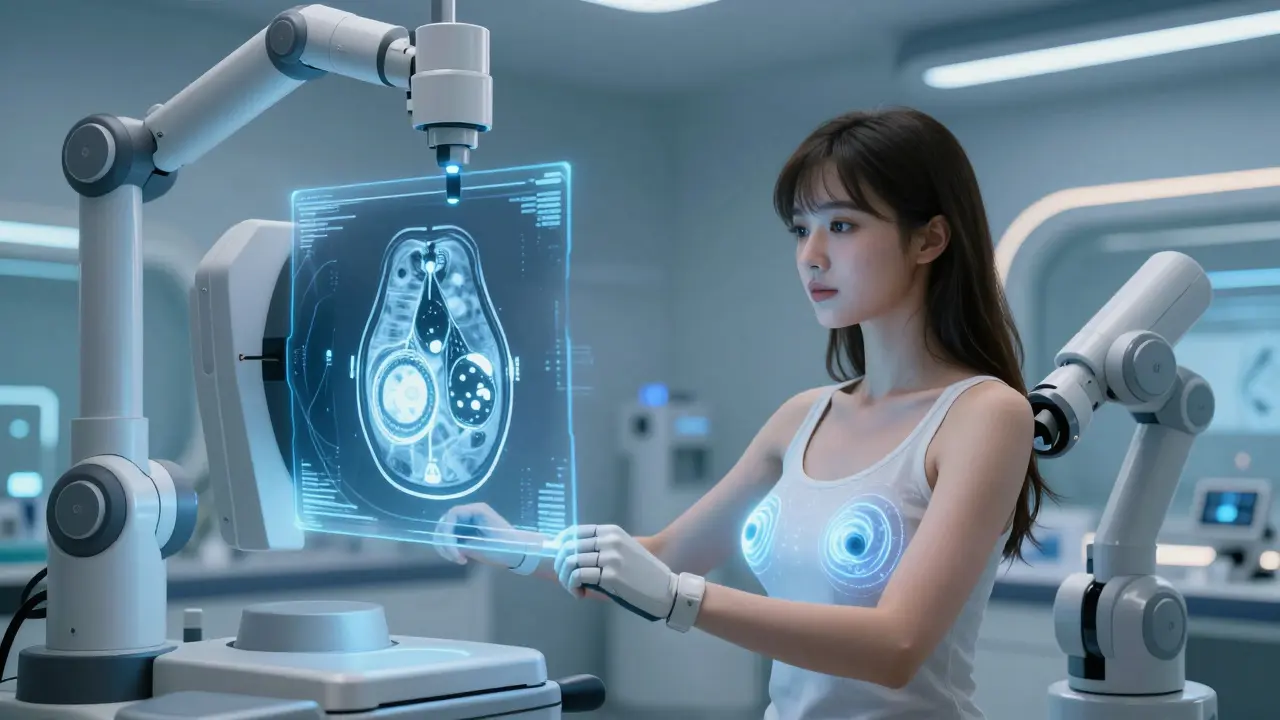
When you hear the word breast cancer, it’s easy to feel overwhelmed. But here’s the truth: early detection saves lives. And the most proven way to catch it early? Screening mammography. Not every woman needs the same plan, and not every abnormal finding means cancer. Understanding how screening works - and what happens next - can take the fear out of the unknown.
Who Should Get Screened and When?
For years, there was confusion about when to start mammograms. Some said 40, others said 50. Now, most major U.S. groups are aligned: if you’re at average risk, start screening at age 40. The U.S. Preventive Services Task Force (USPSTF) says women aged 40 to 74 should get a mammogram every two years. The American College of Obstetricians and Gynecologists (ACOG) updated its 2024 guidelines to say the same - but adds that women can choose yearly screening if they prefer. The American Cancer Society suggests annual screenings from 45 to 54, then switching to every other year if you’d like. The American Society of Breast Surgeons is clear: start yearly at 40, keep going as long as you’re healthy and expect to live another 10 years. Why the push to start at 40? Because breast cancer isn’t just an older woman’s disease. In recent years, rates of invasive breast cancer in women under 50 have been rising. Studies show that starting at 40 reduces deaths more than waiting until 50. It’s not about fear - it’s about catching tumors before they grow.2D vs. 3D Mammograms: What’s the Difference?
Most women still get 2D mammograms - standard X-ray images from two angles. But 3D mammography, also called digital breast tomosynthesis (DBT), is becoming the new standard. It takes multiple low-dose X-rays from different angles and builds a 3D picture of your breast tissue. Why does this matter? If you have dense breasts - which about half of women do - 2D images can miss cancers hidden behind overlapping tissue. DBT reduces false positives and finds more invasive cancers in dense breasts. The American Society of Breast Surgeons recommends 3D as the preferred method. Medicare covers one baseline mammogram in your lifetime, and screening mammograms every 12 months. Diagnostic mammograms (if something looks suspicious) can be done more often. You don’t need to choose between 2D and 3D alone. Most 3D scans now include a synthetic 2D image created from the same data, so you get both views without extra radiation.What If You’re at Higher Risk?
Not all women have the same risk. If you have a strong family history, a BRCA1 or BRCA2 gene mutation, a history of chest radiation before age 30, or a personal history of certain breast conditions like ductal carcinoma in situ (DCIS) or lobular carcinoma in situ (LCIS), your screening plan changes. For women with a lifetime risk of 20% to 25% or higher - calculated using tools like Tyrer-Cuzick or Gail - guidelines from the American Cancer Society and others recommend yearly mammograms plus annual breast MRI. MRI is more sensitive than mammography, especially for dense tissue, and can find cancers mammograms miss. What about women with dense breasts but no other risk factors? The USPSTF says there’s not enough proof to recommend routine supplemental ultrasound or MRI. But the American Cancer Society says it’s okay to discuss adding screening ultrasound if you’re concerned. Many doctors now offer it as an option, especially if you’ve had a false positive before.
How Effective Is Screening?
Let’s talk numbers. A major analysis of nine large studies showed that regular mammograms reduce breast cancer deaths by about 12%. That’s not a cure - but it’s a real, measurable win. For every 1,000 women screened yearly from age 40 to 74, roughly 1 to 2 deaths are prevented. The benefit grows with age. Women aged 50 to 69 get the biggest drop in mortality. But starting at 40 catches cancers earlier, when they’re smaller and easier to treat. And for Black women, who are more likely to die from breast cancer at younger ages, early screening is even more critical. Screening isn’t perfect. False positives happen. About 1 in 10 women will be called back for more tests after a mammogram. Most of those turn out to be nothing. But the anxiety is real. That’s why shared decision-making matters - talk with your doctor about your personal risk, your comfort level, and what you’re willing to go through.What Happens After a Diagnosis?
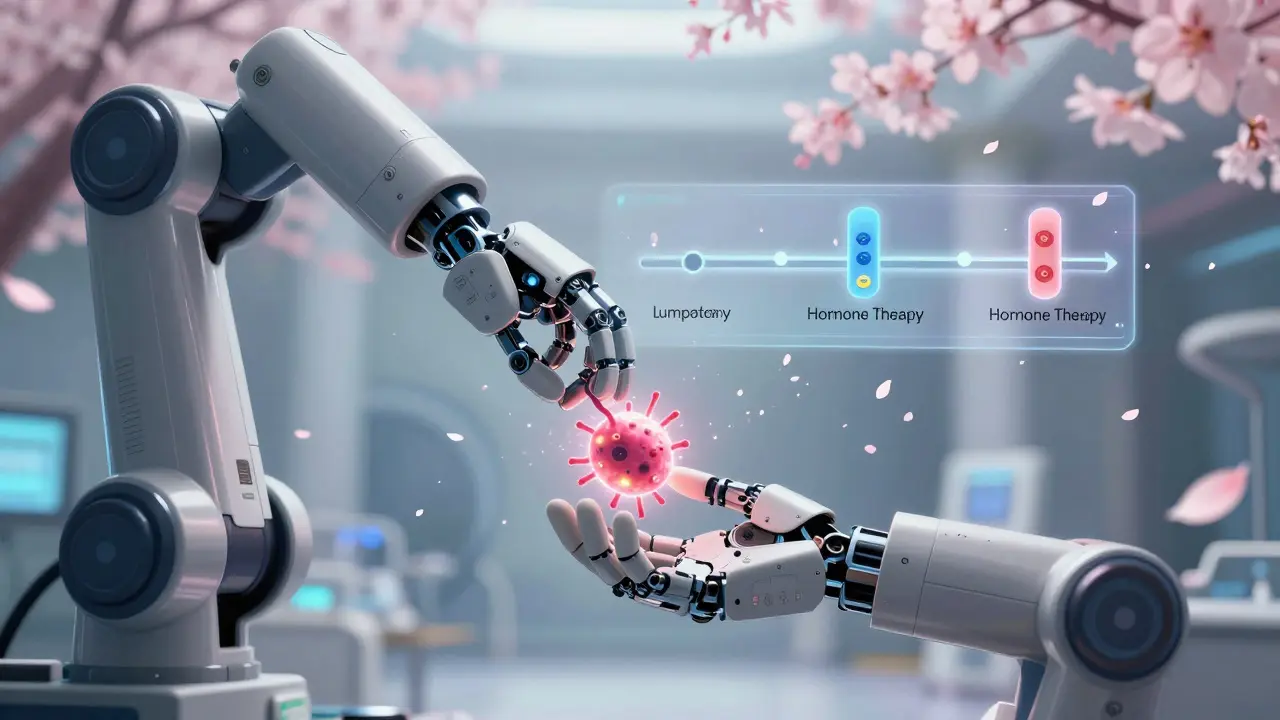
If a mammogram finds something suspicious, the next step isn’t surgery. It’s a diagnostic workup: more imaging, maybe a biopsy. Once cancer is confirmed, treatment isn’t one-size-fits-all. It’s built on three key facts:- Stage: How big is the tumor? Has it spread to lymph nodes or other organs? (This is the TNM system - Tumor, Nodes, Metastasis.)
- Biology: Is the cancer hormone-receptor positive (ER/PR)? Is it HER2-positive? These determine which drugs will work.
- Your health: Age, menopausal status, other medical conditions, and personal goals all shape your plan.
When Does Screening Stop?
There’s no hard cutoff at 75. The key question: Do you have a life expectancy of more than 10 years? If you’re healthy, active, and managing other conditions well, continuing screening makes sense. If you’re frail or have serious illness, the risks of false positives and over-treatment may outweigh the benefits. The American Society of Breast Surgeons says to stop when life expectancy drops below 10 years. The USPSTF doesn’t set a hard upper limit - it says decisions should be individualized.What About Other Screening Tools?
You might hear about breast self-exams or clinical breast exams. The Canadian Task Force and others say these aren’t reliable enough to recommend for population screening. They can cause more harm than good - leading to unnecessary biopsies and anxiety. Ultrasound and MRI are tools for high-risk women, not replacements for mammograms. Tomosynthesis (3D) is now the preferred imaging method for most. No new screening technology has proven better than mammography for average-risk women.What’s Next?
If you’re 40 or older, schedule your first mammogram if you haven’t already. Talk to your doctor about your risk. Ask if 3D mammography is available. Don’t wait for symptoms. Breast cancer often has none in the early stages. If you’re under 40 and have a family history or genetic risk, talk to your doctor about risk assessment and possible earlier screening. Tools like the Tyrer-Cuzick model can help - but only if you’ve had the conversation. Screening isn’t about panic. It’s about control. Knowing your body, knowing your risk, and acting early - that’s how you beat breast cancer.Do I need a mammogram if I have no family history of breast cancer?
Yes. About 85% of breast cancers occur in women with no family history. Having no relatives with breast cancer doesn’t mean you’re at low risk. Most cases come from random mutations over time. Screening is based on age and average population risk - not family history alone.
Is 3D mammography better than 2D for everyone?
It’s better for women with dense breasts - which is about half of all women. 3D mammograms reduce false alarms and find more invasive cancers in dense tissue. For women with fatty breasts, the benefit is smaller, but 3D still offers a clearer image. Most centers now offer 3D as standard. Ask if it’s available and covered by your insurance.
Can I skip mammograms if I do regular breast self-exams?
No. Breast self-exams haven’t been shown to reduce deaths from breast cancer. Many lumps found by hand are harmless, and many cancers are too small to feel. Mammograms detect microcalcifications and tumors that aren’t palpable. Self-exams can help you notice changes, but they’re not a substitute for screening.
What if I get called back after a mammogram?
It’s common - about 1 in 10 women are called back for more imaging. Most of these are just unclear areas that turn out to be normal after extra views or ultrasound. Only about 1 in 5 women who get a biopsy after a callback have cancer. Don’t panic. Follow up with your doctor. The system works better when you respond.
Do I need a breast MRI if I have dense breasts?
Not automatically. If you have dense breasts but no other risk factors - like a family history or genetic mutation - most guidelines don’t recommend routine MRI. It’s expensive, can lead to false positives, and isn’t proven to improve survival in average-risk women. Talk to your doctor about adding ultrasound if you’re concerned. MRI is reserved for high-risk women.
When should I stop getting mammograms?
There’s no set age. The decision depends on your health and life expectancy. If you’re healthy and expect to live more than 10 years, continuing screening is worthwhile. If you have serious chronic illness or are frail, the risks of overdiagnosis and unnecessary treatment may outweigh the benefits. Talk to your doctor - don’t just stop because you turned 75 or 80.




8 Comments
Bill Medley
Screening at 40 is non-negotiable for average-risk women. The data is clear. Delaying increases mortality. No caveats needed.
Early detection isn't optional. It's baseline care.
Richard Thomas
It's fascinating how we've come to treat cancer screening as a binary choice between fear and control, when in reality it's a deeply human negotiation with uncertainty.
Every mammogram carries the weight of potential loss, the quiet dread of the unknown, and the fragile hope that science might yet outpace chaos.
We talk about numbers - 12% reduction, 1 in 10 callbacks - but we rarely speak of the sleepless nights after a callback, the way your body holds its breath for weeks, the silence between you and your partner when you don't want to say what you're thinking.
Perhaps the real triumph isn't just in catching tumors early, but in learning how to live with the ambiguity that comes before the diagnosis.
And yet, we still push women to act, to screen, to comply - not because it's easy, but because not acting feels like surrendering to randomness.
Maybe that's the quiet courage we're really asking for: not to be fearless, but to move forward anyway.
Paul Ong
3D mammograms are the way forward
Stop with the 2D
If your clinic still uses only 2D ask why
Insurance covers it
Your life matters more than their outdated equipment
Get the 3D
Period
Layla Anna
I'm 42 and got my first 3D mammogram last month
It felt so much less scary than I expected
Technician was so gentle and explained every step
And when they said "no abnormalities" I cried 😭
Not because I thought I had cancer
But because I realized how much I'd been holding my breath for years
Thank you for writing this
It helped me feel less alone
Heather Josey
As a medical professional who works in oncology, I cannot emphasize enough the importance of adhering to evidence-based screening guidelines.
While anxiety around mammograms is understandable, avoiding them due to fear or misinformation directly contributes to preventable mortality.
3D mammography has demonstrably improved diagnostic accuracy, particularly in dense breast tissue, and should be the standard of care where available.
Supplemental screening with ultrasound or MRI should be reserved for high-risk populations, as recommended by the American Cancer Society and other authoritative bodies.
Patients must be empowered through education, not fear.
Early detection saves lives - this is not a slogan, it is a statistical reality supported by decades of research.
Let us continue to advocate for equitable access to screening, regardless of socioeconomic status or geographic location.
Olukayode Oguntulu
Let’s be honest - mammography is a glorified X-ray with a side of corporate profit.
Big Pharma and radiology conglomerates have weaponized fear to monetize anxiety.
12% mortality reduction? That’s a rounding error when you consider overdiagnosis rates of 19–31% in some cohorts.
And let’s not forget the radiation burden - cumulative exposure over decades isn’t benign.
Meanwhile, the real drivers of breast cancer - endocrine disruptors, processed foods, chronic stress - remain unaddressed.
We’ve turned a biological phenomenon into a surveillance state.
And the women? They’re just pawns in a game where the house always wins.
True prevention? It’s not in machines.
It’s in systemic change.
But that’s too inconvenient for the industry, isn’t it?
jaspreet sandhu
People in America always think they know everything about health because they have fancy machines.
In India we don’t have 3D mammograms in most villages.
Women still die from breast cancer.
But they also live longer because they don’t panic over every little bump.
You screen too much.
You worry too much.
You turn medicine into a business.
My aunt had a lump for 3 years.
She never went to a doctor.
She lived to 82.
What did your mammogram do for you?
Stress.
Money.
More tests.
Nothing real.
Stop pretending science is always right.
Some cultures just live with uncertainty.
And they survive.
Maybe you should try it.
Alex Warden
Why are we letting foreign experts dictate American women’s health?
USPSTF is full of bureaucrats who’ve never held a mammogram.
ACOG? Too soft.
ASBS gets it - start at 40, yearly, no excuses.
And if your insurance won’t cover 3D, sue them.
This isn’t about politics.
This is about survival.
Stop listening to people who don’t live here.
Our women deserve better than European-style half-measures.
Get screened.
Get 3D.
Don’t wait.
Don’t overthink.
Just do it.
Because if you don’t, who will?