
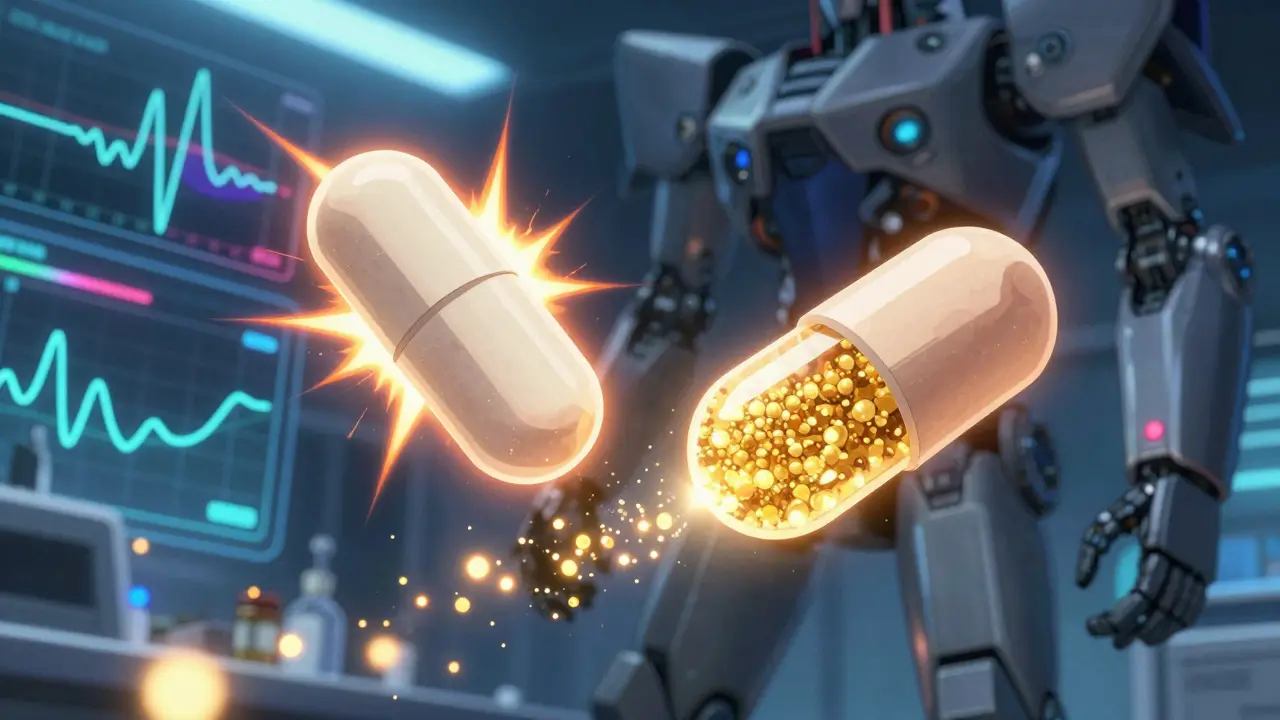
Imagine taking a pill and feeling relief within minutes. Now imagine taking the same pill, same dose, and waiting hours before you feel anything. That’s the difference between extended-release and immediate-release medications. It’s not just about convenience-it’s about safety, effectiveness, and sometimes, your life.
How These Two Types Work
Immediate-release (IR) pills are designed to dissolve fast. Once you swallow them, the active ingredient hits your bloodstream within 15 to 30 minutes. Peak levels come in under two hours. That’s why IR painkillers like oxycodone or ibuprofen work quickly-they’re built for fast action. Extended-release (ER), also called XR, SR, or CR, works differently. These pills use smart tech: special coatings, slow-dissolving gels, or tiny pellets that release medicine gradually over 12 to 24 hours. Think of it like a drip system instead of a firehose. Drugs like Adderall XR, Metformin ER, or sertraline ER keep levels steady so you don’t get spikes and crashes. The science behind this isn’t new. The first sustained-release capsule came out in 1952. Today, over 200 ER medications are FDA-approved. They’re everywhere-especially in mental health, heart disease, and diabetes.Why Timing Changes Everything
Timing isn’t just about when you feel better. It’s about how your body handles the drug over time. With IR, you get a sharp peak. That’s great if you need fast relief-like a panic attack or sudden pain. But high peaks also mean higher risk. For example, bupropion IR can spike blood levels to 600 ng/mL within two hours. At 350 ng/mL, seizure risk rises sharply. That’s why 300mg of bupropion is only safe in ER form. The ER version keeps levels steady between 100-200 ng/mL all day. ER meds avoid those dangerous spikes. Studies show they cut peak-to-trough ratios from 3:1 in IR to 1.5:1 in ER. That’s a big deal for drugs like antidepressants or blood pressure meds. Stable levels mean fewer side effects-less jitteriness, dizziness, or nausea. But ER isn’t instant. It takes 2 to 4 hours to even start working. That’s why people get frustrated. A 2022 GoodRx survey found 41% of users took extra doses because they didn’t feel anything right away. That’s how overdoses happen. One woman took her metoprolol ER twice in one day because she thought it wasn’t working. She ended up with dangerously low blood pressure.When ER Wins
ER formulations shine in chronic conditions. If you need medication all day, every day, ER is the smarter choice. Take ADHD. Adderall IR lasts 4-6 hours. That means kids need a dose at school. Adults need to remember a midday pill. Adderall XR lasts 10-12 hours. One dose. No interruptions. A 2023 study at Laguna Treatment Center found 87% of patients preferred XR for daily function. Same with hypertension. A 2022 JAMA study tracked 15,000 patients on blood pressure meds. Those on ER versions had 22% higher adherence. Why? Fewer pills. Fewer chances to forget. And fewer crashes from fluctuating levels. Psychiatrists prefer ER for long-term mental health. The American Psychiatric Association recommends extended-release quetiapine because it causes less nighttime agitation than the IR version. Dr. David P. Baron, a former chief of psychiatry, says in his practice, ER improved compliance by 30-40% over 25 years.
When IR Is Necessary
ER isn’t always better. Sometimes, speed is the point. Think of breakthrough pain. If you’re on an ER opioid for chronic pain but have a sudden flare-up, you need IR for fast relief. ER opioids take 2-4 hours to kick in. That’s too slow when you’re in agony. Same with psychiatric emergencies. If someone is having a severe panic attack or psychotic episode, you need the drug in their system now. IR lithium or lorazepam works in minutes. ER versions? Too slow. And don’t forget titration. When starting a new medication, doctors often begin with IR to find the right dose. You can adjust quickly. With ER, you’re stuck waiting days to see how your body responds.The Hidden Dangers
Here’s the scary part: ER meds are safe-until they’re not. Ninety-two percent of extended-release pills should never be crushed, split, or chewed. Ever. If you break open a Concerta tablet, you’re dumping the entire 54mg dose into your system at once. That’s an overdose. The FDA issued a safety warning in 2020 after multiple deaths from crushed ER opioids. Even swallowing a whole pill wrong can be risky. If you have gastroparesis-delayed stomach emptying-the ER pill might sit too long and dump all at once. The FDA warned in July 2023 that these patients can get 30-50% higher peak levels than normal. Pharmacists see this every day. A 2023 report from ISMP found 23% of ER errors came from splitting tablets. Venlafaxine XR isn’t scored, but people still break it. That’s not just ineffective-it’s dangerous. And overdoses? ER overdoses are worse. A 2021 National Poison Data System report showed patients on ER bupropion stayed in the hospital 2-3 times longer than those on IR. Why? The drug keeps releasing for 24-48 hours. You can’t just flush it out.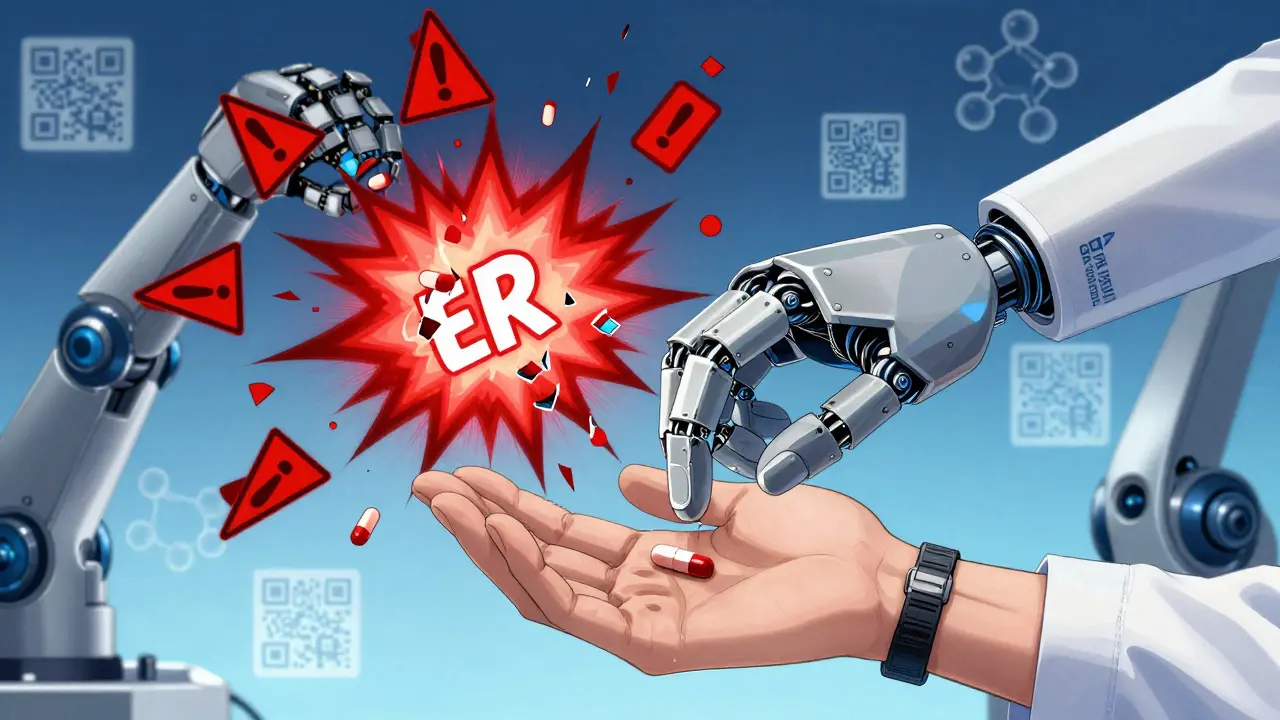
Cost and Accessibility
ER meds cost more. Adderall XR runs $350-$450 for 30 capsules. Adderall IR? $280-$380. That’s a 15-25% premium. Insurance often covers both, but copays can make IR the cheaper option. But here’s the twist: ER can save money long-term. Better adherence means fewer ER visits, hospital stays, and missed work. A 2023 Evaluate Pharma report found ER drugs reduce overall healthcare costs by 18% in chronic disease patients. And the market is shifting. Antidepressants are the #2 prescribed drug class in the U.S. Sixty-eight percent of new prescriptions are ER. That’s not because they’re more expensive-it’s because doctors and patients see the benefits.What You Need to Know
If you’re on an ER medication:- Don’t crush, chew, or split it-unless your doctor says it’s safe (very rare).
- Wait at least 2-4 hours before taking another dose. Feeling nothing doesn’t mean it’s not working.
- Take it at the same time every day. Skipping a dose can cause withdrawal symptoms.
- Watch for delayed side effects. Dizziness or nausea might show up hours after taking it.
- Follow the schedule. Taking it every 4-6 hours isn’t optional-it’s necessary.
- Keep track of peak times. If you feel jittery or dizzy 1-2 hours after taking it, that’s normal.
- Have a backup plan for breakthrough symptoms. Talk to your doctor about IR rescue doses.
What’s Next?
The future of pills is getting smarter. Researchers at MIT are testing 3D-printed “polypills” that release different drugs at exact times-like one for morning, another for evening. New ER tech like Aversion® makes pills turn to gel if crushed, cutting abuse by 47%. But until then, the rule is simple: Know what you’re taking. Ask your pharmacist if your pill is ER or IR. Read the label. Don’t assume two pills with the same name are the same. Your body doesn’t care about convenience. It responds to chemistry. And timing? That’s everything.Can I split an extended-release pill if it’s too big?
No-unless the pill is specifically scored and labeled as safe to split. Most extended-release pills, like Venlafaxine XR or Concerta, are not scored. Splitting them destroys the slow-release mechanism and can cause a dangerous overdose. Even if it looks like it can be broken, don’t do it. Always check the prescribing information or ask your pharmacist.
Why does my ER medication take so long to work?
Extended-release pills are designed to release medicine slowly over 12-24 hours. It can take 2-4 hours just to start working, and full effect may take 7-10 days to build up in your system. This is normal. Don’t take extra doses because you don’t feel it right away-that’s how accidental overdoses happen.
Is ER always better than IR?
No. ER is better for long-term, stable conditions like depression, high blood pressure, or ADHD maintenance. But IR is essential for acute symptoms-like sudden pain, panic attacks, or when starting a new drug. Your doctor chooses based on your needs, not just convenience.
What happens if I accidentally crush an ER pill?
You’ve likely taken a full dose all at once. This can cause dangerous spikes in blood levels. For example, crushing Adderall XR or OxyContin can lead to overdose, seizures, or heart problems. If this happens, call Poison Control (1-800-222-1222) or go to the ER immediately. Do not wait for symptoms to appear.
Can I switch from IR to ER or vice versa on my own?
Never. ER and IR are not interchangeable, even if the dose looks the same. Switching without medical supervision can lead to underdosing, overdosing, or withdrawal. For example, switching from IR bupropion to ER without adjusting the dose can cause seizures. Always talk to your doctor before changing formulations.



14 Comments
Alfred Schmidt
Wow. Just... wow. This is the most comprehensive, terrifying, and oddly beautiful breakdown of ER vs. IR I’ve ever read. I didn’t realize crushing a pill could be a homicide-by-pharmacy. I’m now terrified of my own medicine cabinet. Also-why does my Adderall XR taste like regret and plastic?!
Sean Feng
ER is just corporate laziness dressed up as science. Why not just make one pill that works? Why the fancy tech? I take mine once a day because I forget otherwise. That’s the real problem.
Priscilla Kraft
This is so helpful!! 🙌 I was literally about to split my venlafaxine XR because it was too big to swallow 😅 Thank you for the warning-now I’ll just drink more water and pray. Also, the part about delayed side effects? YES. I thought I was going crazy when I got dizzy at 10pm after taking it at 8am. Now I know it’s the pill, not my soul.
Christian Basel
Pharmacokinetic profiles are fundamentally compromised when patients lack adherence to temporal dosing paradigms. The peak-to-trough ratio modulation inherent in ER formulations mitigates Cmax-induced neurotoxicity, particularly in serotonergic and dopaminergic agents. IR, by contrast, imposes a bolus challenge on hepatic first-pass metabolism, increasing the risk of metabolite accumulation. This is not a preference-it’s a biopharmaceutical imperative.
Priya Patel
OMG I thought I was the only one who took my ER metformin at night and then panicked because I felt nothing in the morning 😭 Like... is it even working?? Now I know it’s just slow magic. Also, I once chewed a pill because I was in a rush. I felt like a ghost for 3 hours. Never again. 🙏
Jason Shriner
So let me get this straight… you’re telling me the reason I’m alive is because Big Pharma figured out how to make a pill that doesn’t work for 4 hours? Genius. Next they’ll invent a coffee that takes 6 hours to kick in. Maybe then I’ll finally stop being a zombie.
Sam Davies
How quaint. In my day, we took pills like adults-once, maybe twice, and didn’t need a PhD in pharmacology to figure out whether it was ‘XR’ or ‘IR’. Now we have 17 formulations of the same molecule, each with a different price tag and a different existential crisis attached. Progress?
Matthew Miller
You people are idiots. If you’re taking ER meds and still feeling symptoms, you’re either a drug-seeking addict or you’re too lazy to read the label. Crushed pills? That’s not a mistake-that’s a cry for help. And if you think 300mg of bupropion ER is ‘safe’, you’ve never seen someone seize in a Walmart parking lot.
Jennifer Littler
As a clinical pharmacist, I’ve seen 3 ER overdose cases this month alone-all from patients splitting un-scored tablets. Venlafaxine XR is the #1 offender. The FDA warning is clear: if it’s not scored, it’s not meant to be broken. Ever. And yet, I still get patients showing up with half a tablet in their hand saying, ‘But it looked like it was supposed to break.’ No. It wasn’t. Stop it.
Vincent Clarizio
Think about it: we’ve engineered time itself into medicine. We’ve turned biology into a symphony of delayed gratification. ER isn’t just a pill-it’s a metaphor. Life doesn’t give you instant results. Neither does serotonin reuptake inhibition. We want everything now-fast food, fast love, fast cures. But the body? The body moves like a glacier. And if you rush it? You break it. You don’t just overdose-you shatter your own rhythm. The ER pill is the quiet philosopher of pharmaceuticals. It doesn’t scream. It doesn’t rush. It just… holds space. And that, my friends, is the real medicine.
Alex Smith
Actually, there’s a weird loophole: some ER pills like Wellbutrin XL are designed with a dual-pellet system. One pellet releases fast, the other slow. So technically, you get a bit of IR and ER in one. Still shouldn’t crush it-but now you know why some people feel something faster. It’s not placebo. It’s pharmacology.
Roshan Joy
Thank you for this! I’m from India and we don’t get much info here about ER vs IR. My dad takes ER for BP and I always thought he was being dramatic when he said he felt dizzy after 5 hours. Now I know it’s the pill, not the heat. 🙏 I’ll show this to my family. Also, never split pills-got it!
Adewumi Gbotemi
Man, this is deep. I don’t know much about pills, but I know my cousin took his ER painkiller and broke it open. He ended up in hospital. Now I tell everyone: don’t touch the pill like it’s a chocolate bar. Just swallow it whole and wait. Patience is medicine too.
Michael Patterson
Everyone’s acting like this is new info. I’ve been screaming this for years. ER pills are not toys. And if you think you can ‘adjust’ your dose because you ‘felt nothing’-you’re not a patient, you’re a liability. Also, the FDA warnings? Too late. People are already dead. And you know what? You’ll probably be next if you keep being dumb.