
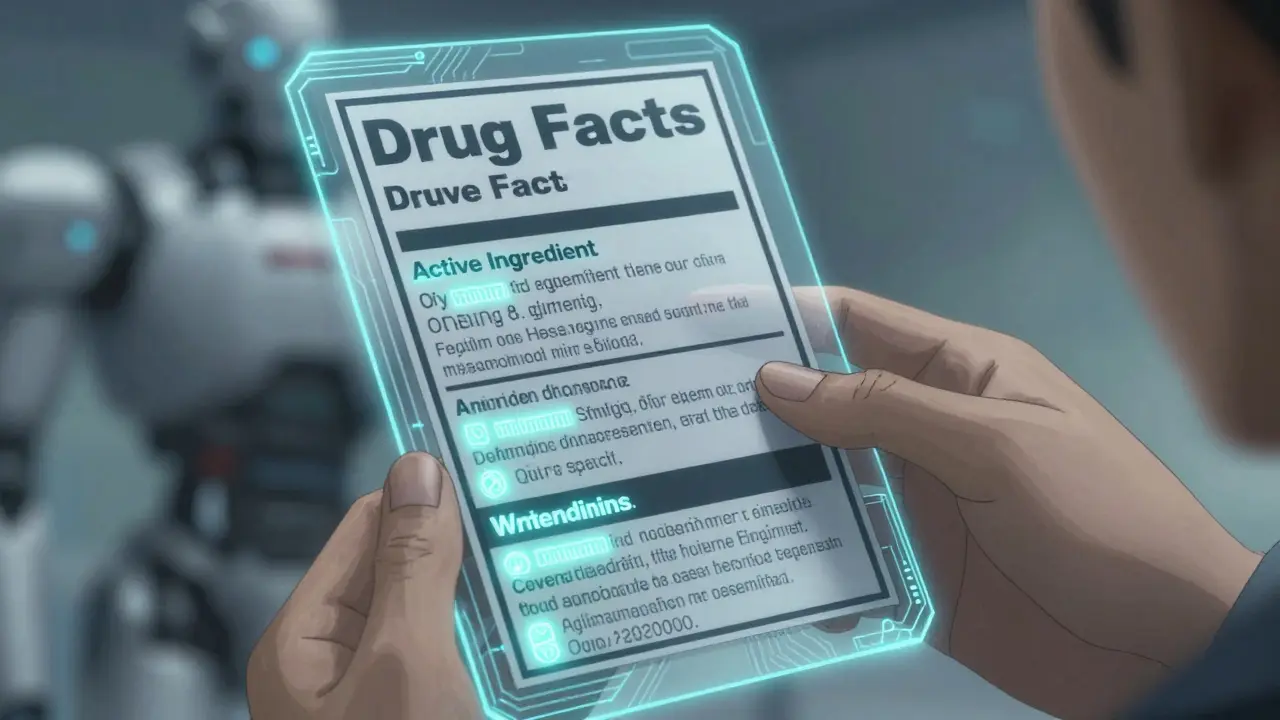
OTC Medication Safety Checker
The FDA's Drug Facts label helps prevent dangerous medication combinations. Enter your OTC medications below to check for potential conflicts from duplicate active ingredients.
Add Medications
Enter each medication with its active ingredient name and amount. Examples: "Acetaminophen 500 mg", "Ibuprofen 200 mg".
Safe Combination
All active ingredients are safe when combined. Double-check doses and warnings for your specific condition.
Risky Combination
Multiple medications contain the same active ingredients. This could cause overdose or adverse reactions:
Why This Matters
41% of medication errors happen when people take two products with the same active ingredient. Always check your OTC labels before combining medicines.
Every time you pick up a bottle of pain reliever, cold medicine, or even hand sanitizer, you’re holding a product regulated by the FDA. But most people never read the label. That’s a problem. The OTC Drug Facts label isn’t just fine print-it’s your guide to using medicine safely. If you’ve ever taken two painkillers and felt sick, or mixed a cold medicine with your blood pressure pill, you’ve seen what happens when people skip this step.
What Is the OTC Drug Facts Label?
The OTC Drug Facts label is the standardized information panel required by the FDA on all over-the-counter medicines. It was created in 1999 to fix a messy system where every brand used different formats, fonts, and wording. One bottle might hide the active ingredient in tiny text. Another might bury the warning at the bottom. The FDA stepped in to make it simple: same order, same headings, same font size. No matter if it’s Advil, CVS brand ibuprofen, or a generic store label-you’ll find the same structure. This label applies to more than just pills and syrups. It also covers sunscreens, antiperspirants, anti-cavity toothpaste, and hand sanitizers. Anything sold without a prescription and meant to treat or prevent a condition falls under this rule. The goal? Help you make smart choices without needing a pharmacy degree.The 8 Sections of the Drug Facts Label (In Order)
The label has eight sections, always in this exact order. Skipping one means missing critical info. Here’s what each one means:- Drug Facts - This is the heading. If you see this, you’re looking at the FDA-approved label.
- Active Ingredient(s) - This is the medicine part. It tells you the name and amount per dose. For example: “Acetaminophen 325 mg.” If you’re taking more than one product, this is where you check for duplicates. Taking two medicines with acetaminophen can cause liver damage.
- Purpose(s) - This tells you what kind of drug it is. “Analgesic” means pain reliever. “Antihistamine” means it fights allergies. Knowing this helps you avoid mixing drugs with the same purpose.
- Use(s) - This lists what the medicine treats. “Temporarily relieves minor aches and pains due to headache, toothache, or muscle strain.” Don’t use it for something not listed. That’s off-label use-and it’s risky.
- Warnings - This section is critical. It tells you when not to use the product. Look for red boxes. They highlight serious risks: “Do not use if you have liver disease,” “May cause drowsiness,” or “Do not take with alcohol.” It also tells you when to stop using it and call a doctor. Ignore this, and you could end up in the ER.
- Directions - This is your dosing guide. It says how much to take, how often, and for how long. “Adults: Take 1 tablet every 4 to 6 hours. Do not exceed 6 tablets in 24 hours.” If it says “for children under 12, ask a doctor,” don’t guess. Use a measuring spoon, not a kitchen teaspoon. A tablespoon is 15 mL. A teaspoon is 5 mL. Mixing them up is a common cause of overdose.
- Other Information - This includes storage tips and sodium content. If you’re on a low-sodium diet, this matters. Some cold medicines have over 200 mg of sodium per dose. That’s nearly 10% of your daily limit.
- Inactive Ingredients - These are fillers, dyes, or flavorings. They don’t treat symptoms, but they can cause allergic reactions. If you’re allergic to sulfa, dyes, or certain sugars, check here. Some products contain lactose or high-fructose corn syrup.
Why the Order Matters
The FDA didn’t randomize this order. It’s designed for quick scanning. You start with what’s in the medicine, then check if it’s right for your symptoms, then see the risks, then how to use it. This flow helps prevent mistakes. For example, if you see “Do not use if you have high blood pressure” in the Warnings section, you don’t need to read the Directions-you already know not to take it. Studies show that when people read the label in order, they’re 63% less likely to have a bad reaction. That’s not a small number. It’s the difference between feeling better and ending up in the hospital.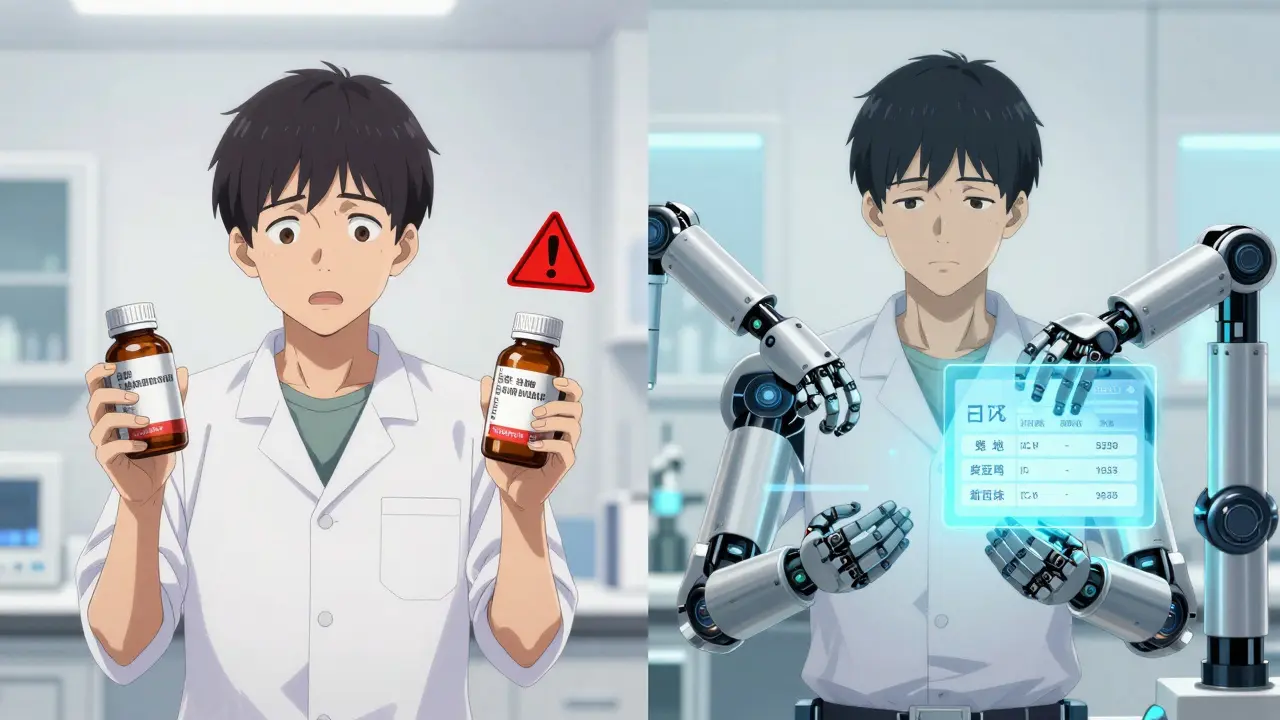
What to Do Before Taking Any OTC Medicine
Here’s a simple checklist to follow every time:- Check the active ingredient - Are you already taking something with the same one? Don’t double up. Acetaminophen, ibuprofen, and diphenhydramine are the most common culprits in accidental overdoses.
- Read the Warnings - Do you have asthma? Liver disease? Are you pregnant? Is the medicine safe for you? If you’re unsure, don’t guess.
- Match the Use to your symptoms - If your label says “for runny nose and sneezing,” but you have a fever and body aches, this isn’t the right medicine.
- Follow the Directions exactly - Don’t take more because you think “it won’t hurt.” More isn’t better. It’s dangerous.
- Check the expiration date - Expired medicine can lose potency or even become harmful.
Common Mistakes People Make
Even smart people mess this up. Here are the top errors:- Taking two medicines with the same active ingredient - 41% of medication errors happen this way. Cold medicine + painkiller = too much acetaminophen.
- Using a kitchen spoon for liquid doses - A regular spoon holds 10-15 mL. The correct dose might be 5 mL. That’s a 50-200% overdose.
- Ignoring the “Stop and ask a doctor” warning - If your pain lasts more than 10 days, or your fever doesn’t go down after 3 days, keep taking the medicine? No. Stop. Call your doctor.
- Assuming “natural” means safe - Herbal supplements sold as OTC can interact with prescription drugs. They’re not regulated the same way. Check the label: if it doesn’t have a Drug Facts panel, it’s not an FDA-approved medicine.
What About Newer Products? QR Codes and Digital Labels
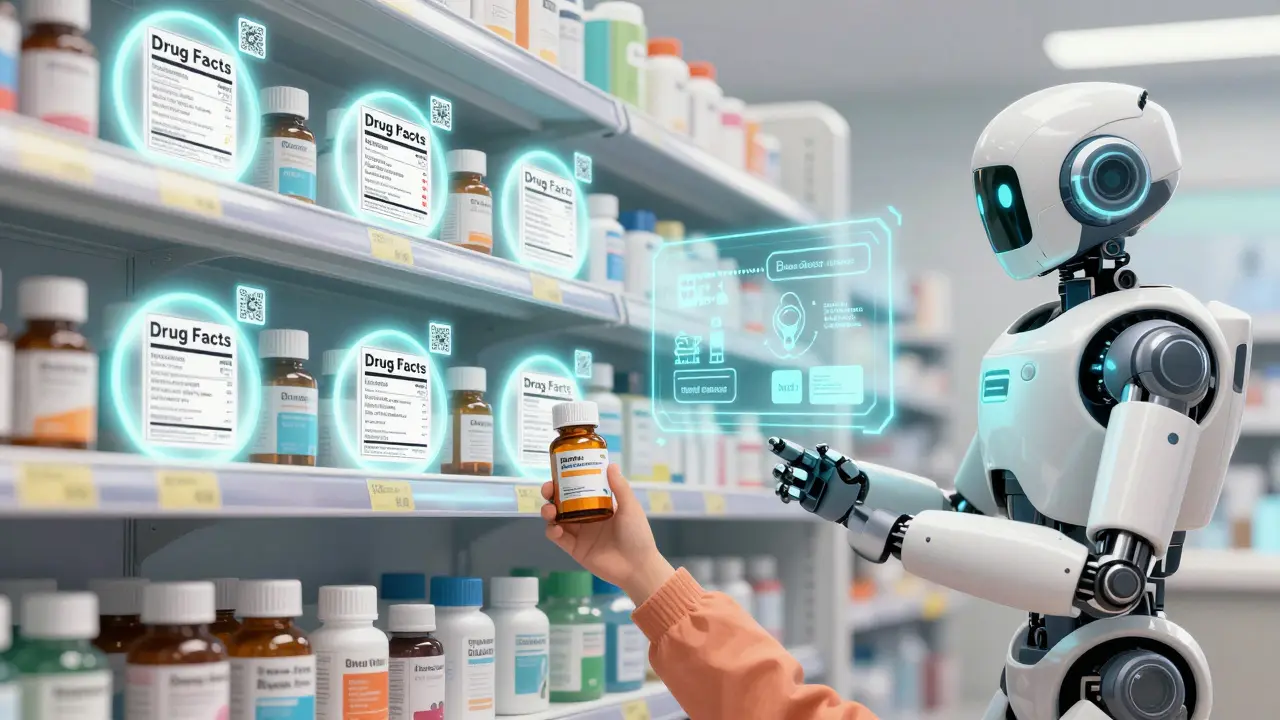
The FDA is testing QR codes on some OTC packages. Scan it, and you get extra info: videos, multilingual translations, or full prescribing details. But here’s the catch: the Drug Facts label must still be on the package. The QR code is just a bonus. Don’t rely on it. If the label is too small to fit all the text, the FDA allows a “Drug Facts (continued)” on the back. Always read both sides. Also, don’t assume online purchases are safe. Some websites sell fake or unapproved versions of OTC drugs. Only buy from pharmacies with a physical address and a licensed pharmacist on staff.Who Should Pay Extra Attention?
Some groups are at higher risk:- Older adults - Many take 5+ medications. The risk of interaction goes up fast.
- Parents - Kids’ doses are weight-based, not age-based. Never use adult medicine for a child unless a doctor says so.
- People with chronic conditions - Diabetes, heart disease, kidney problems? Your meds can react badly with OTCs.
- Non-English speakers - The FDA admits the current labels are hard for 25 million Americans with limited English. Look for bilingual labels or ask a pharmacist to explain.
Final Tip: Make It a Habit
The FDA’s “Check the Label” campaign has saved lives. But it only works if you do it every time. Keep a small notebook in your medicine cabinet. Write down the active ingredients of every OTC medicine you take. That way, you’ll know what’s safe to combine. Think of the Drug Facts label like a car’s manual. You wouldn’t drive without reading the safety warnings. Don’t take medicine without reading yours.Can I trust OTC medicines without a Drug Facts label?
No. If a product doesn’t have a Drug Facts label, it’s not regulated by the FDA as an over-the-counter drug. This includes many herbal supplements, homeopathic remedies, and “natural” products sold online or in health stores. They may not contain what they claim, and they could interact dangerously with prescription meds. Stick to products with the official Drug Facts panel.
What if the label is too small to fit all the text?
The FDA allows the label to continue on another panel, like the back of the box or a fold-out insert. It must be clearly labeled as “Drug Facts (continued)” and still follow the exact same order. Never skip reading the continuation. The full warning and dosage info might be there.
How do I know if I’m taking too much acetaminophen?
The maximum safe daily dose for adults is 4,000 mg. That’s about 8 extra-strength Tylenol tablets. But acetaminophen is in over 600 OTC products-cold medicines, sleep aids, migraine pills. Add them up. If you’re taking more than one, you could easily hit 5,000-6,000 mg without realizing it. Liver damage can happen silently. Always check the active ingredient list.
Is it safe to use expired OTC medicine?
Most expired OTC medicines lose potency but aren’t dangerous. However, liquid antibiotics, insulin, and nitroglycerin can become harmful. For pain relievers or antihistamines, using them past the date might mean they don’t work. If you’re treating something serious like a fever or infection, use a fresh product. When in doubt, throw it out.
Can I give my child an adult OTC medicine if I cut the dose in half?
Never. Children’s dosing is based on weight, not age or adult dosage halves. A 40-pound child needs a different amount than a 60-pound child. Adult formulas often contain ingredients not approved for kids, like alcohol or certain dyes. Always use a product made for children and follow the label’s weight-based instructions. If it says “under 2 years, ask a doctor,” do it.
What’s the difference between a Drug Facts label and a Supplement Facts label?
Big difference. Drug Facts labels are for FDA-approved medicines. They must prove safety and effectiveness. Supplement Facts labels are for vitamins, herbs, or minerals. They don’t need FDA approval before sale. They can’t claim to treat diseases-only support health. Don’t confuse them. A supplement that says “supports immune health” isn’t the same as a cold medicine that says “reduces nasal congestion.”




14 Comments
Kelly Beck
OMG I literally just read this and realized I’ve been taking NyQuil + Tylenol for my cold for YEARS 😱 I thought I was being smart by doubling up on relief... turns out I was basically doing liver yoga. Thank you for this!! I’m printing this out and taping it to my medicine cabinet. 🙏💖
Wesley Pereira
So let me get this straight - the FDA made a label so simple even your cat could read it, but people still skip it like it’s a pop-up ad? 🤦♂️ I’ve seen grown adults use a soup spoon for kids’ Motrin. It’s not a science experiment, it’s a damn drug. And yes, I’m talking to you, Karen who thinks ‘natural’ means ‘FDA-approved.’
Isaac Jules
41% of errors come from mixing active ingredients? That’s not incompetence - that’s systemic failure. People don’t read because they’re either too lazy, too dumb, or too addicted to ‘quick fixes.’ The FDA’s label isn’t the problem. The population is. And no, ‘I didn’t know’ isn’t an excuse when the word ‘WARNING’ is in 14pt bold.
Pavan Vora
....I am from India, and here, we often buy OTC medicines without any label... or with labels in Hindi, Tamil, or even just a sticker... sometimes, the bottle has no text at all... just a color... and we trust the shopkeeper... this is scary... I am so glad someone is talking about this... thank you... 🙏
Indra Triawan
It’s not about the label... it’s about how we’ve been conditioned to distrust our bodies and outsource healing to chemicals... the real question is... why do we feel we need to numb every ache, every feeling, every moment of discomfort? The label is just a symptom of a deeper sickness.
Susan Arlene
lol i just checked my cabinet and 3 of my meds have the same active ingredient. i’m gonna go sit in the corner now.
Mukesh Pareek
It’s obvious the FDA’s Drug Facts format is a structural optimization for cognitive load reduction - yet, the population’s health literacy remains catastrophically underdeveloped. You cannot engineer safety into a populace that lacks basic pharmacokinetic awareness. This is not a labeling issue - it’s a societal failure in science communication.
Leonard Shit
Man, I used to think I was being careful - until I realized I’d been taking Aleve and Excedrin together because ‘both help headaches.’ Nope. Nope nope nope. Now I keep a little notepad. I write down everything. Even the damn hand sanitizer. 😅
Gabrielle Panchev
Wait - so you’re saying the FDA actually did something right? And it’s not just a corporate scam? And people are still too lazy to read it? And now you’re surprised we’re all dying from acetaminophen overdoses? I mean... I guess the real tragedy is that this label exists... and nobody cares. 🙃
Melanie Clark
Did you know the FDA is working with Big Pharma to make you dependent? They made the label so complicated you need a degree to read it - so you keep buying new bottles every month. The real danger isn’t mixing meds - it’s trusting the system that made you think you need them in the first place. The QR code? That’s how they track you. Don’t scan it.
Harshit Kansal
Bro I just threw out my whole cabinet. No more mystery pills. I’m going back to tea and rest. If it doesn’t have a label I can read in 5 seconds, it’s not coming in my house. No cap.
Brian Anaz
USA invented this system. Other countries? They just copy it. And still, people here act like it’s some conspiracy. It’s not. It’s common sense. If you can’t read a label, maybe you shouldn’t be medicating yourself. Simple as that.
Venkataramanan Viswanathan
Dear author, I appreciate your comprehensive elucidation regarding the standardized OTC Drug Facts label. In India, the absence of such regulatory uniformity leads to widespread misuse. I propose that WHO collaborate with FDA to disseminate this model globally, especially in low-literacy regions. A pictorial version may enhance comprehension.
Vinayak Naik
Yo I work at a pharmacy and let me tell you - the worst offenders? Grandmas who take 7 different pills and then grab a ‘natural’ sleep aid that says ‘zero chemicals.’ Bro, that ‘natural’ thing has 300mg of diphenhydramine. Same as Benadryl. Same liver risk. Same ER trip. I’ve seen it 20x this month. Read the damn label. Even if it’s ‘herbal.’