
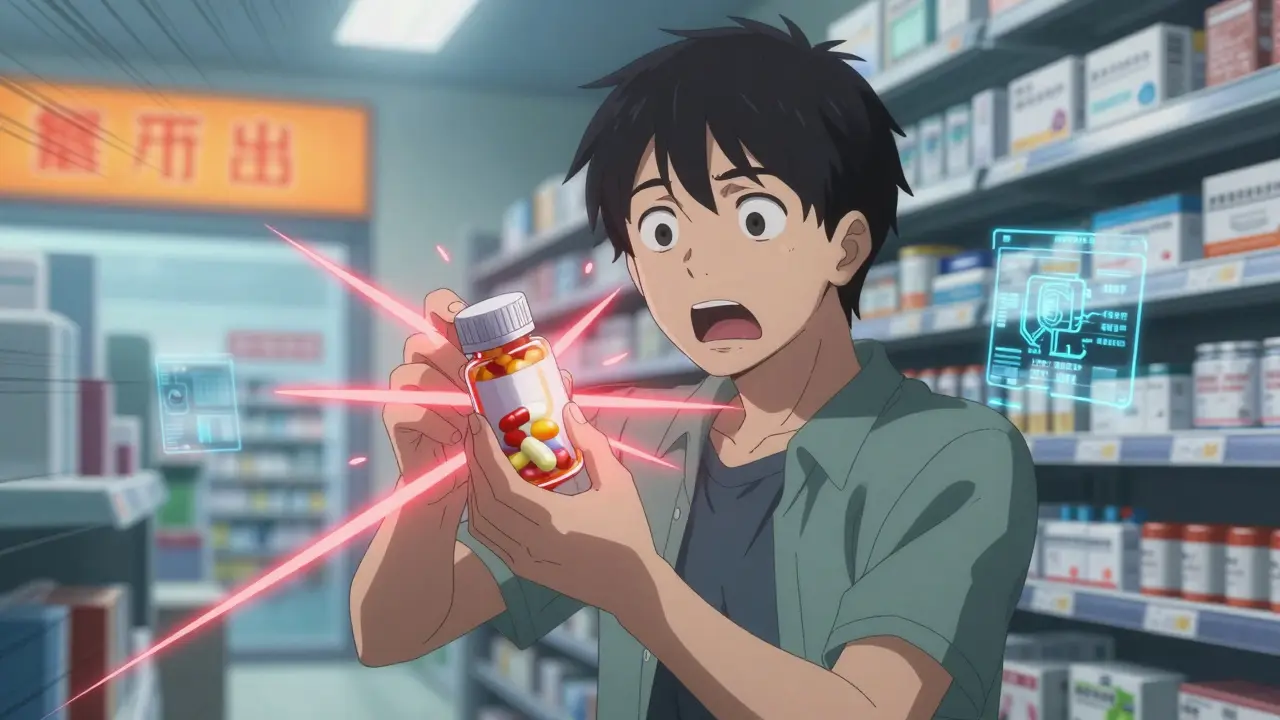
Stop Taking It Right Away
If you open your pill bottle and the pills look different-wrong color, shape, size, or even just not what you expected-stop taking them immediately. Don’t wait to see if you feel sick. Don’t assume it’s a mix-up with another prescription. That pill could be dangerous. A wrong blood pressure medication might send your heart into overdrive. A wrong diabetes pill could crash your blood sugar. Even something that seems harmless, like an ADHD pill you weren’t prescribed, can cause anxiety, rapid heartbeat, or dizziness. The moment you realize it’s not right, put the bottle down. Don’t swallow another dose.
Call Your Doctor Right Now
Your doctor needs to know this happened. Don’t wait until your next appointment. Call their office today. If it’s after hours, go to an urgent care center or emergency room. Your doctor will ask you what the pill is, what it’s supposed to be, and whether you’ve taken any of it. They might order blood tests, check your vitals, or give you a new prescription. In some cases, they’ll tell you to come in for an exam. If you’re dizzy, nauseous, having chest pain, or trouble breathing, don’t call-go to the ER. These aren’t just side effects. They’re warning signs. The sooner your doctor acts, the less likely you are to suffer lasting harm.
Contact the Pharmacy and Ask for the Manager
Don’t just walk back in and say, “Hey, this isn’t right.” Go back to the same pharmacy, ask to speak with the head pharmacist or store manager, and be clear: “I was given the wrong medication.” They’re required by law to investigate. Don’t accept a quick apology and a free refill. Ask them to pull the original prescription from your file and compare it to what they gave you. Write down the name of the person you spoke with, the time, and what they said. If they try to brush you off or say it’s “rare,” push back. This isn’t rare. One in five medication errors happens at the pharmacy level.
Keep Everything-Don’t Throw It Away
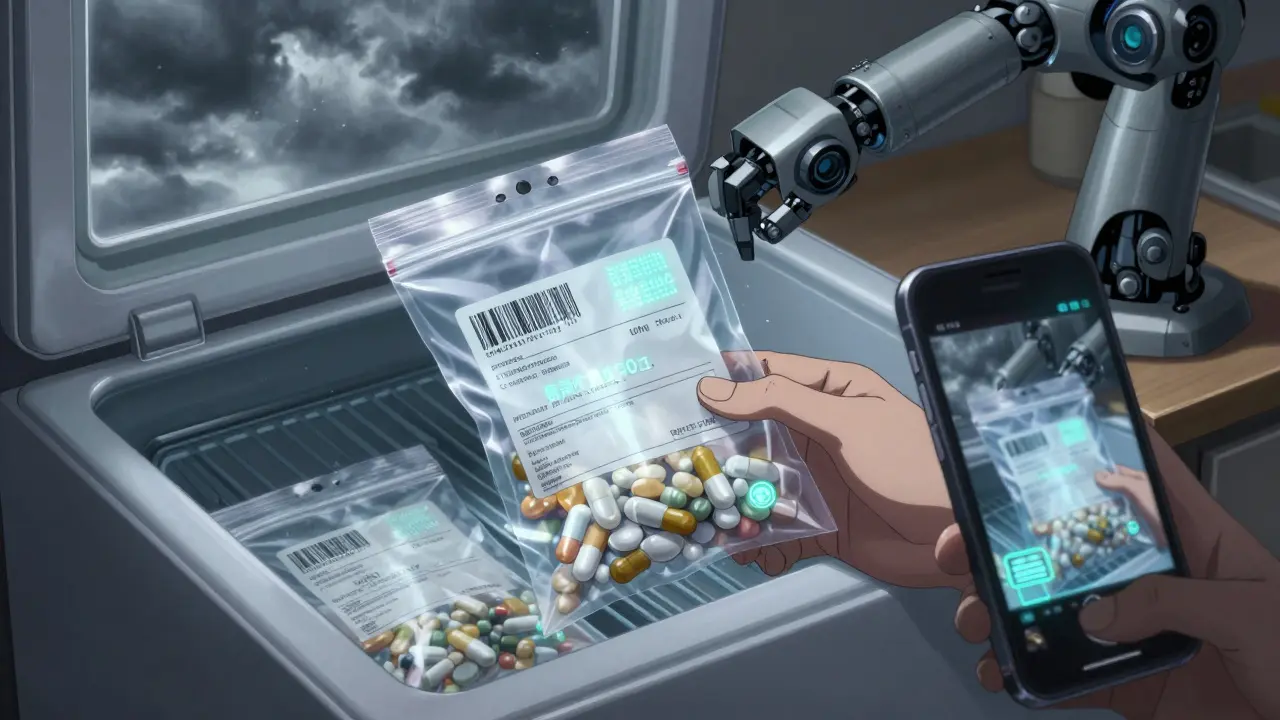
Save every single thing related to this mistake. The bottle. The pill bottle cap. The receipt. The original prescription slip your doctor gave you. Even the plastic bag the pharmacy gave you. Don’t return the wrong pills. Don’t flush them. Don’t give them back to the pharmacy. Keep them in a sealed bag in your fridge or freezer. Take clear photos of the pills next to the prescription label. If you have a smartphone, record a short video showing the label and the pills side by side. This is evidence. If you need to file a complaint or a legal claim later, this is what proves it wasn’t your mistake. Over 90% of successful claims include photo or video proof. Without it, your case is just your word against theirs.
Report It to the Right Authorities
Pharmacies don’t fix problems unless they’re forced to. Report the error to the FDA’s MedWatch program-it’s free, anonymous, and tracks errors nationwide. You can file online or call 1-800-FDA-1088. Also report it to your state’s board of pharmacy. In Georgia, that’s the Georgia Composite Medical Board. In California, it’s the California State Board of Pharmacy. These agencies track repeat offenders. If a pharmacy keeps making the same mistake, they can lose their license. The Institute for Safe Medication Practices (ISMP) also takes confidential reports. Since 1991, they’ve collected over 100,000 reports. Your report could help stop someone else from getting hurt.
Know Your Legal Rights
If you got sick, went to the hospital, or had to pay for extra medical care because of this mistake, you may have a legal case. Pharmacy errors are considered medical malpractice. You don’t need to be permanently injured to take action. Even a few days of dizziness, nausea, or anxiety can count. The average settlement for these cases is between $50,000 and $500,000. In extreme cases-like when someone dies or suffers brain damage-settlements have reached over $10 million. But you have to act fast. In most states, you only have one to three years to file a claim. In Georgia, it’s two years from the date you discovered the error. Don’t talk to the pharmacy’s insurance company. Don’t give them a recorded statement. Don’t sign anything. Get a lawyer who specializes in medical errors. About 70% of these cases settle out of court, but only if you have the right evidence and representation.
What Causes These Mistakes?
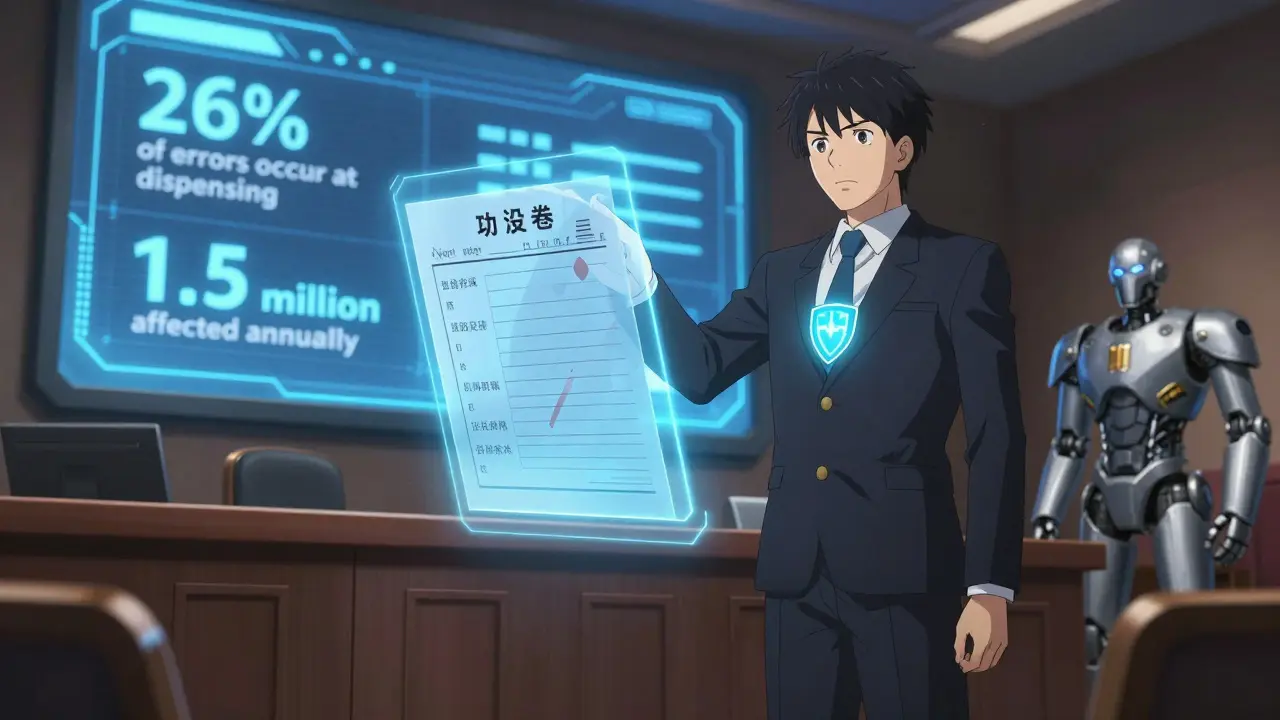
It’s not always the pharmacist’s fault. Sometimes the doctor’s handwriting is unclear. Sometimes two drugs have similar names-like hydroxyzine and hydralazine. Sometimes the pharmacy is overwhelmed. One pharmacist might be filling 120 prescriptions in a single shift. That’s not rare. In 2022, the National Coordinating Council for Medication Error Reporting and Prevention found that 26% of all medication errors happened during dispensing. But here’s the thing: most of these mistakes are preventable. Barcode scanning reduces errors by 85%. Yet only 62% of U.S. pharmacies use it. Double-check systems for high-risk drugs like insulin or blood thinners cut mistakes even more. If your pharmacy doesn’t use these tools, ask why. And if they say, “We’re too busy,” that’s a red flag.
How to Prevent It Next Time
- Always check your pills before leaving the pharmacy. Compare the label to what your doctor told you.
- Ask the pharmacist: “Is this what my doctor prescribed?”
- Use one pharmacy for all your prescriptions. They’ll catch conflicts and duplicates.
- Keep a list of every medication you take-name, dose, why you take it-and bring it to every doctor visit.
- If you refill online, check the confirmation email. Does it match what you were told?
- Don’t be afraid to say, “This doesn’t look right.” Pharmacists expect you to question it.
What Happens If You Don’t Act?
Ignoring a wrong medication can be deadly. The Journal of the American Medical Association found that patients who got the wrong drug had a 28% higher chance of dying within five years. That risk jumps to 42% if it was a heart or blood pressure medication. Even if you feel fine now, the damage might be silent-liver stress, kidney strain, nerve damage. And it doesn’t just affect you. Your family pays too-in medical bills, lost wages, emotional stress. The U.S. healthcare system spends $8.4 billion every year fixing pharmacy errors. That’s money taken from real care. Your silence lets the system keep failing.
Real Stories, Real Consequences
One woman in Georgia took what she thought was her anxiety pill. It was actually a powerful ADHD drug. She spent three days shaking, unable to sleep, terrified she was losing her mind. She didn’t tell anyone until she found the label mismatch. She ended up in the ER. Her case settled for $75,000 after proving the pharmacy didn’t match the prescription.
Another man in Ohio was given insulin for his wife instead of his own diabetes pills. He took it for four days. His blood sugar dropped so low he had a seizure. He survived, but his kidneys were damaged. The pharmacy had mixed up two similar names on the label. They didn’t have a double-check system. He sued. The case went to trial. He won $420,000.
These aren’t outliers. They’re examples of what happens when systems fail and people don’t speak up.
What You Can Do Today
Right now, if you’ve received the wrong medication:
- Stop taking it.
- Call your doctor.
- Go back to the pharmacy and ask for the manager.
- Take pictures of the pills and label.
- Save everything.
- Report it to the FDA and your state board.
You’re not just protecting yourself. You’re protecting the next person who walks into that pharmacy. And if you’re injured, you deserve to be heard. Don’t let them make you feel like you’re overreacting. You’re not. You’re doing exactly what you should.
What should I do immediately after realizing I received the wrong medication?
Stop taking the medication right away. Do not wait to see if you feel sick. Contact your prescribing doctor immediately. If you’re experiencing symptoms like dizziness, chest pain, or trouble breathing, go to the nearest emergency room. Do not return the medication to the pharmacy-keep it as evidence.
Can I get in trouble for keeping the wrong medication?
No, you cannot get in trouble for keeping the wrong medication if you’re holding it as evidence of a pharmacy error. In fact, authorities and legal experts strongly advise you to keep it. Returning or destroying it can hurt your ability to prove what happened. The pharmacy is responsible for the mistake, not you.
How common are pharmacy dispensing errors?
Pharmacy errors are more common than most people think. According to the National Coordinating Council for Medication Error Reporting and Prevention, 26% of all medication-related incidents happen during dispensing. The Institute for Safe Medication Practices estimates that 1.5 million people in the U.S. are affected by medication errors each year, with many originating at the pharmacy level.
Should I hire a lawyer if I got the wrong medication?
If you’ve suffered any harm-physical, emotional, or financial-you should consult a lawyer who specializes in medical errors. Even if you only had a few days of side effects, you may be entitled to compensation for medical bills, lost wages, or pain and suffering. Most pharmacy error cases settle out of court, but only if you have proper documentation and legal representation.
Can I report a pharmacy anonymously?
Yes, you can report a pharmacy error anonymously through the FDA’s MedWatch program or the Institute for Safe Medication Practices (ISMP). These organizations use reports to track patterns and enforce safety standards. While your identity isn’t required, providing contact information can help investigators follow up if needed.
How long do I have to file a legal claim for a pharmacy error?
The time limit, called the statute of limitations, varies by state. In most states, it’s between one and three years from the date you discovered the error. In Georgia, you have two years. Waiting too long can bar you from filing a claim entirely, so act quickly if you’re considering legal action.




12 Comments
Diana Dougan
lol so now i'm supposed to remember every single pill i've ever taken? my doctor scribbles like a drunk squirrel and the pharmacy gives me whatever fits in the bottle. i once took a blue oval for my anxiety and it made me want to fight a raccoon. no regrets, just bad luck.
Holly Robin
this is why i don't trust big pharma. they're all in cahoots. the pills are laced with tracking chips. i saw a guy on youtube who got the wrong med and his smart fridge started playing country music. that's not a coincidence. they're monitoring us. and don't even get me started on the barcode scanners-they're just for show. the real system? controlled by the illuminati. i'm keeping my pills in a tupperware under my bed. just in case.
KATHRYN JOHNSON
The failure to adhere to basic pharmaceutical safety protocols is a systemic disgrace. Every individual who neglects to verify medication upon receipt is complicit in their own endangerment. There is no excuse for negligence when lives are at stake. This is not a suggestion-it is a mandatory standard of care.
Sazzy De
i just always check the bottle before i leave. if it looks weird i say something. no big deal. pharmacists are people too. most of them are just trying to get through their shift. but yeah, if something feels off, don't ignore it. my aunt once took a red pill thinking it was her heart med. turned out it was for gout. she was fine but scared for a week. just ask. it's fine.
Beth Beltway
You're all missing the point. This isn't about 'checking your pills.' It's about the fact that pharmacies are understaffed because insurance companies refuse to pay pharmacists a living wage. The real villain is the corporate greed that turns healthcare into a conveyor belt. We don't need more 'tips'-we need universal healthcare funding that respects the profession. And no, taking pictures won't fix that.
Marc Bains
I've worked in pharmacy techs across three countries. The system's broken, but it's not hopeless. In India, they still hand-write scripts and use color-coded bins-no scanners, no computers-and they have fewer errors than some U.S. chains. Why? Because they slow down. They talk to patients. They double-check. We've optimized for speed, not safety. Fix the incentives, not the advice.
Adarsh Uttral
i read this in india and its crazy how similar it is here. last month my mom got metformin instead of losartan. the pharmacist just shrugged and said 'same color'. i showed him the script. he gave her a free chai and said sorry. no report. no follow up. i just took the pills home and kept them. now she checks every time. no one else does. but we do.
April Allen
The pharmacokinetic and pharmacodynamic variance between misdispensed agents can trigger iatrogenic cascades, particularly with narrow-therapeutic-index drugs like warfarin, digoxin, or insulin. The absence of barcode-assisted verification (BCMA) in 38% of U.S. retail settings constitutes a preventable systems failure at the operational level. Moreover, the psychological burden of medication error exposure induces anticipatory anxiety, which may manifest as non-adherence-a secondary risk factor. Documentation isn't just evidentiary; it's a form of patient advocacy embedded in the clinical workflow.
Bobbi Van Riet
i had this happen to me last year. i thought i was taking my thyroid med but it was a vitamin d pill that looked almost the same. i didn't feel anything at first, but after a week i was exhausted and weirdly cold. i went to the doctor and they said my tsh was through the roof. turns out i hadn't taken my real med in 10 days. i was so mad at myself but also at the pharmacy. they said 'it happens.' i kept the bottle, took photos, and called the state board. they called me back two weeks later. said they'd sent the pharmacy a warning. i still don't go there. but i tell everyone i know to check. even if you think you're being paranoid, you're not. better safe than sorry.
Shubham Dixit
This is why America is falling apart. You people complain about wrong pills but you don't even know how to read a prescription. Back in my village in Uttar Pradesh, we had one pharmacist for 5000 people and he knew every patient by name. He'd ask you if you were taking your blood pressure medicine, he'd remember your kid's asthma, he'd check the label three times. Here? You get a robot in a white coat who's on a timer. No wonder people die. The solution isn't more photos. The solution is to stop letting corporations run healthcare. We need community pharmacies. We need trained humans. Not machines. Not apps. People.
Kelly Weinhold
i know it sounds scary but you're not alone. i was terrified the first time i realized my pills looked wrong. i thought i was going crazy. but i did all the things they said-called my doctor, saved the bottle, took pics-and honestly? it felt like i took back control. now i always ask the pharmacist to show me the label next to the bottle. they don't mind. most of them are awesome. and guess what? i told my mom and now she does it too. it's not about being paranoid. it's about being smart. you're doing the right thing. keep going.
Kimberly Reker
i used to work at a pharmacy. we had a guy who always checked his meds. always. one day he came in holding a bottle and said, 'this isn't right.' we checked. he was right. it was someone else's blood thinner. if he hadn't noticed, he could've bled out. he didn't yell. didn't make a scene. just calmly said, 'can we look at this?' that's the kind of person we need more of. not the ones who scream, not the ones who ignore it. the quiet ones. the ones who care enough to check. you're one of them. thank you.