
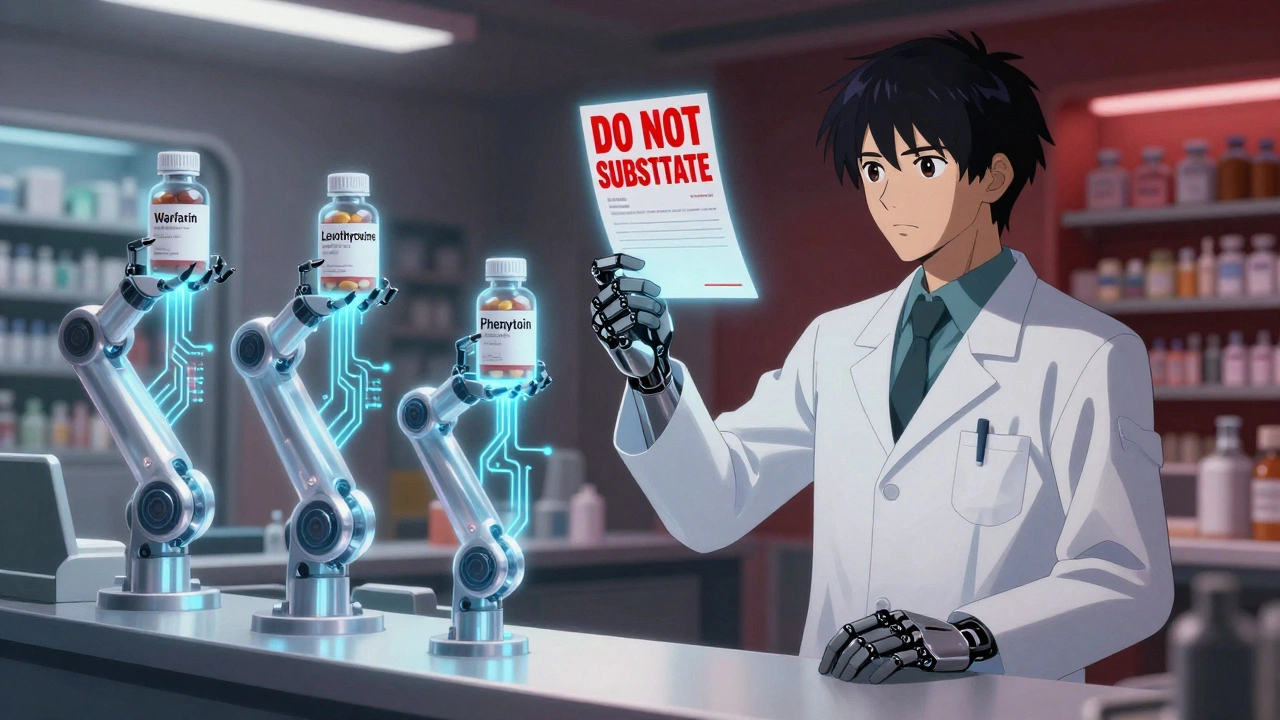
Most people assume that when a doctor writes a prescription, the pharmacy can swap in a cheaper generic version without asking. That’s usually true - and it saves billions every year. But sometimes, the doctor writes "Do Not Substitute" - or "Dispense as Written" - right on the prescription. And when that happens, the pharmacist can’t switch to the generic, no matter how much it costs less. Why? And when does this actually matter?
What Does "Do Not Substitute" Really Mean?
"Do Not Substitute" (DNS), also called "Dispense as Written" (DAW), is a legal instruction from the prescriber telling the pharmacist to give the exact brand-name drug listed - not a generic version. It’s not a suggestion. It’s a rule. In all 50 U.S. states, pharmacists are required to follow it, unless the patient specifically asks to switch and the doctor approves. This isn’t about brand loyalty. It’s about clinical safety. The FDA approves generics based on strict bioequivalence standards: they must deliver the same amount of active ingredient into the bloodstream as the brand-name drug, within a range of 80% to 125%. For most drugs, that’s more than enough. But for certain medications, even tiny differences can cause big problems.When Generic Substitution Can Be Dangerous
Not all drugs are created equal when it comes to substitution. The biggest red flags are drugs with a narrow therapeutic index (NTID). These are medications where the difference between a helpful dose and a harmful one is very small. If the level of drug in your blood shifts even a little, it can lead to treatment failure or serious side effects. Examples include:- Warfarin - a blood thinner. A small change in dose can cause dangerous bleeding or clots.
- Levothyroxine - used for hypothyroidism. Even minor fluctuations can cause fatigue, weight gain, or heart rhythm problems.
- Phenytoin - an anti-seizure drug. A slight drop in blood levels can trigger seizures.
Biologics and the Complexity of Substitution
Biologic drugs - like Humira, Enbrel, or insulin - are made from living cells, not chemicals. They’re far more complex than traditional pills. Even if two biologics have the same active ingredient, their structure can vary slightly. That’s why the FDA created a special category: interchangeable biosimilars. As of October 2023, only 12 biologics had been approved as interchangeable. That means out of hundreds of biologic prescriptions written each year, most still require a "Do Not Substitute" note. In fact, 65% of biologic prescriptions carry this designation, compared to just 10% for regular small-molecule drugs. And it’s not just about the active ingredient. Many biologics come in prefilled pens or syringes. Even if a generic version has the same drug, if the delivery device is different - say, a different needle size or injection mechanism - 43 states legally prohibit substitution. The system isn’t designed to swap those out safely.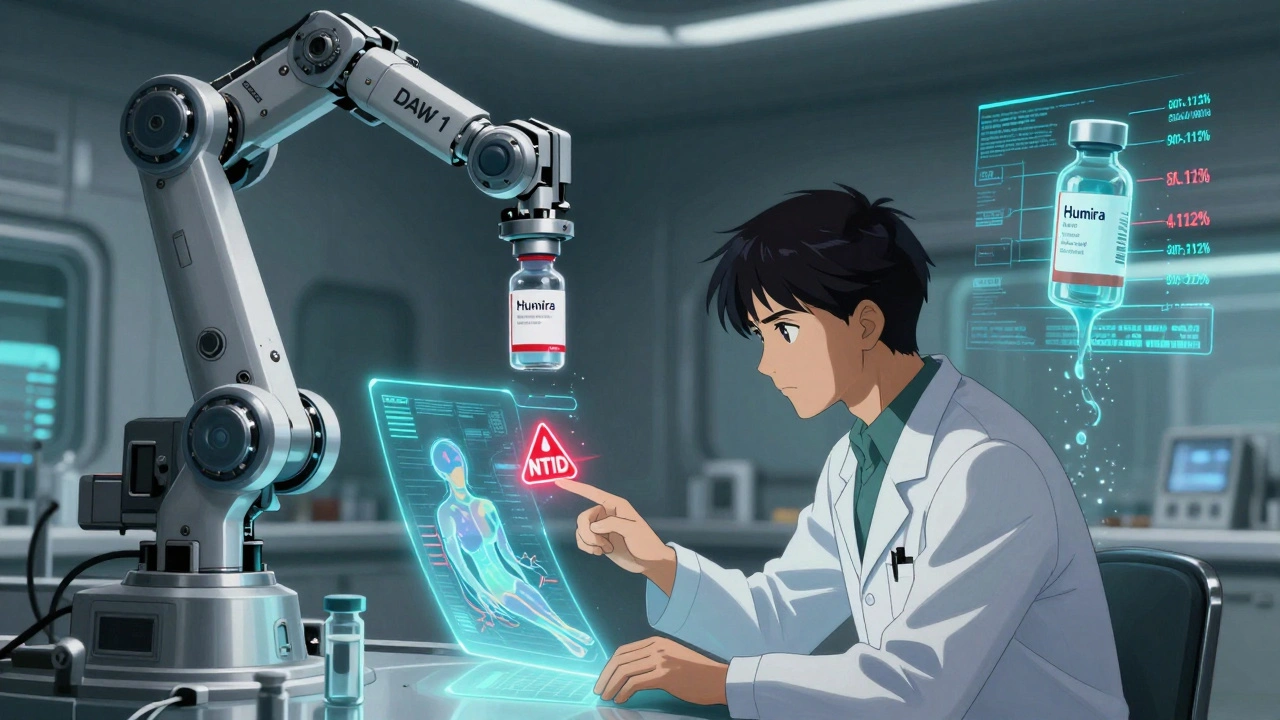
Why Doctors Write DNS - And Why Some Shouldn’t
The most common reasons doctors use DNS:- NTID drugs - 38% of all DNS prescriptions
- Patient had a bad reaction to a generic - 29%
- Special delivery systems - like inhalers, patches, or extended-release pills - 22%
What Patients Need to Know
If your prescription says "Do Not Substitute," you have a right to ask why. Don’t assume it’s automatic. Ask:- Is this a narrow therapeutic index drug?
- Have I had a reaction to a generic before?
- Is there a documented reason, or is this just how it’s always been done?
How Pharmacists Handle DNS
Pharmacists are trained to follow DNS orders - but they’re also the ones who see the cost impact. In a 2022 survey, 73% of community pharmacists said insurance systems incorrectly reject DNS prescriptions 15-20% of the time. That means the patient’s prescription gets stuck in limbo. The pharmacist has to call the doctor’s office, wait for clarification, and then resubmit. It’s frustrating, time-consuming, and delays care. Electronic health records make it worse. Many systems default to "allow substitution." So when a doctor forgets to uncheck the box, the pharmacy assumes they can switch - even if the doctor meant "Do Not Substitute." Epic Systems reports that 32% of DNS orders require manual override because of this glitch.State Laws and Electronic Rules
Each state has its own rules for how DNS must be written. In New York, you must write "Dispense as Written" and sign your initials. In California, you can use an electronic checkbox, but you still need to log in with your credentials. Some states require specific codes - DAW 1, DAW 2, etc. - in electronic prescriptions to tell the system whether substitution is allowed. Medicare Part D has higher DNS rates than private insurance - 12.7% versus 8.3%. That’s partly because older patients are more likely to be on NTID drugs like warfarin or levothyroxine. The Inflation Reduction Act now requires Medicare to track DNS usage starting in 2024. That means doctors and insurers will soon be held more accountable for when and why they use these directives.The Future of Generic Substitution
The FDA is investing $50 million over the next five years to improve bioequivalence testing for NTID drugs. The goal? Reduce the number of cases where substitution is risky. If successful, DNS rates for small-molecule drugs could drop from 8-12% to 5-7% by 2027. But for biologics? That’s a different story. The science is still catching up. Interchangeable biosimilars are rare. Delivery systems are locked in. And patients who rely on them often can’t afford to risk switching. So DNS will stay common for biologics - likely above 50% - for years to come. The bottom line? "Do Not Substitute" isn’t a loophole for drug companies. It’s a safety tool - when used correctly. But it’s also being overused. The goal isn’t to eliminate DNS. It’s to make sure it’s only used when it truly matters.Can a pharmacist refuse to fill a "Do Not Substitute" prescription?
No. Pharmacists are legally required to follow the prescriber’s instructions. If a prescription says "Do Not Substitute," they must dispense the brand-name drug, even if it’s more expensive. They cannot substitute a generic without the doctor’s permission.
Why does my insurance charge me more for a "Do Not Substitute" prescription?
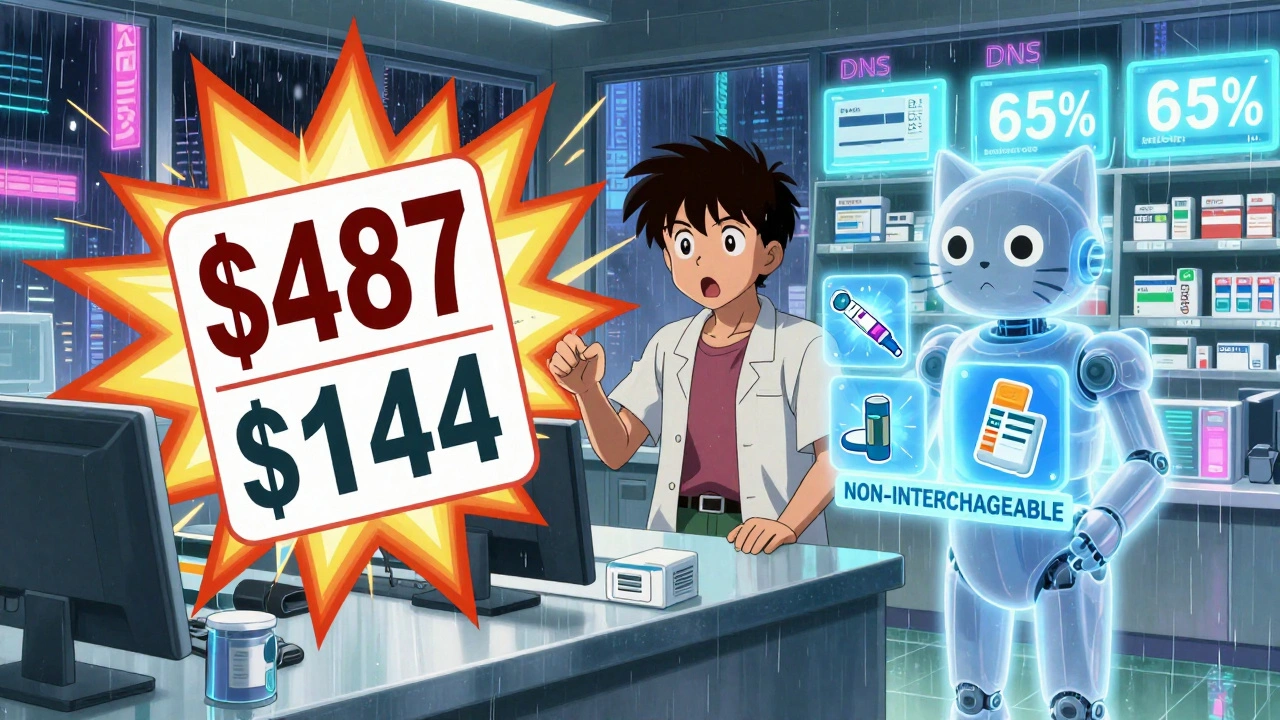
Insurance plans are designed to encourage generic use because they’re cheaper. When a prescription is marked "Do Not Substitute," the insurer can’t apply the lower generic copay. Instead, you pay the full brand-name price - which can be 3 to 5 times higher. This is standard across all major insurers.
Can I ask my doctor to remove "Do Not Substitute" from my prescription?
Yes - and you should, if you’re unsure why it’s there. Ask if your medication is a narrow therapeutic index drug or if you’ve had a reaction to generics. If the answer is no, you may be able to switch to a cheaper generic without risk. Many doctors will agree if you bring up cost and evidence.
Are generic drugs less effective than brand-name drugs?
For 99.5% of approved generic drugs, the answer is no. The FDA requires generics to meet the same strict standards as brand-name drugs. Bioequivalence studies show they deliver the same amount of active ingredient into the bloodstream. The difference in effectiveness is negligible - unless you’re taking a drug with a narrow therapeutic index.
Do "Do Not Substitute" prescriptions apply to over-the-counter drugs?
No. "Do Not Substitute" only applies to prescription medications. Over-the-counter drugs like ibuprofen or antacids don’t have this restriction. You can always choose the store brand unless your doctor specifically recommends a brand for a rare reason - which is uncommon.





13 Comments
Paul Dixon
I had no idea DNS was a legal thing, not just a suggestion. My grandma’s warfarin script always says it, and I thought it was just her doctor being old-school. Turns out she might’ve been saved from a clot because of it. Good to know.
Vivian Amadi
OMG YOU GUYS. This is why generics are a scam. My cousin had a seizure after switching to generic phenytoin. The pharmacist didn’t even tell her. DO NOT SUBSTITUTE ISN’T A REQUEST, IT’S A LIFESAVING ORDER. STOP BEING CHEAP WITH PEOPLE’S LIVES.
Jimmy Kärnfeldt
It’s wild how much trust we put in these little pills, right? We don’t think twice about swallowing something that’s literally altering our biology. And then we get mad when the system doesn’t account for how delicate that balance is. DNS isn’t about corporate greed-it’s about recognizing that our bodies aren’t factories. Some things just can’t be swapped like a lightbulb.
Also, props to pharmacists. They’re the unsung heroes caught between insurance bots and doctors who forget to uncheck boxes.
Ariel Nichole
My dad’s on levothyroxine and switched generics last year-felt like a zombie for 3 weeks. We went back to brand and he’s back to normal. I never asked why DNS was on there until now. Thanks for explaining. Maybe I’ll ask his doc to clarify next time.
matthew dendle
so like… generics are fine for most stuff but if u r on warfarin and u get the wrong one u die? wow. who knew. also why do docs even bother typing? just click the box and move on. epic system is a joke
Jean Claude de La Ronde
Canada’s got the same mess. We call it DAW1, but half the time the pharmacist just shrugs and gives you the generic anyway. Then the patient gets mad when the insurance denies it. The system’s broken, not the science. We need a national standard, not 50 different state rules and 300 different EHR glitches.
Mia Kingsley
Wait so you’re telling me the FDA says generics are fine but then says ‘but not for these’? That’s not consistency, that’s confusion. And why do biologics get special treatment? Are they magic? I’m calling BS. Probably just Big Pharma lobbying again.
Aman deep
Man, I’ve seen this in India too. People switch generics for epilepsy meds because they can’t afford brand, and then they end up in the ER. I’ve talked to families who’ve lost loved ones over this. It’s not about money-it’s about access. We need better education, not just laws. Doctors need to explain, not just stamp DNS. And pharmacies? They need to be the ones to say ‘hey, this might be risky’-not wait for someone to collapse.
Also, biosimilars? We’re still in the Stone Age with those here. No one knows what they are. The system’s not ready. But we’re trying.
Sylvia Frenzel
Why do we even have this conversation? If the doctor says don’t substitute, don’t substitute. End of story. America’s obsession with cutting costs at the expense of safety is disgusting. People die because someone’s spreadsheet says ‘save $300.’ This isn’t a debate. It’s a moral failure.
Regan Mears
Just had a 45-minute call with my doctor’s office because my EHR auto-checked ‘allow substitution’ on my levothyroxine script. My pharmacist flagged it. I didn’t even know it was happening. This is why we need mandatory training for EHR users. And doctors-please, for the love of all things holy, double-check your boxes before hitting submit. Your patient might be the one who gets the wrong pill.
Neelam Kumari
generic = bad. brand = good. period. who cares if it costs 5x? if you can’t afford it, don’t take it. your life isn’t worth more than a $50 copay. stop whining.
Queenie Chan
Interesting how we treat pills like they’re interchangeable Lego blocks, but we’d never swap out a car engine part without checking the model number. Why? Because we know cars have specs. Our bodies? We assume they’re just… flexible. Maybe we need a ‘compatibility label’ on meds. Like: ‘Do not substitute with non-identical formulation. Risk: Seizure. Warning: May cause thyroid chaos.’
Stephanie Maillet
Thank you for writing this. I’ve been a pharmacist for 18 years, and I’ve watched patients cry because they couldn’t afford their DNS script-and then watched doctors shrug when asked why it was there. I’ve called 37 doctors to clarify DNS orders. I’ve had insurance reps yell at me for ‘delaying care’ when I was just trying to keep someone alive. This isn’t just policy-it’s personal. Please, if you’re a doctor: write it clearly. If you’re a patient: ask why. If you’re an insurer: stop fighting it. We’re all just trying to keep people alive.