

Doctors aren’t just keeping up with new drugs-they’re being asked to understand generic medications better than ever. With generics making up over 90% of prescriptions filled in the U.S., but only 22% of drug spending, the financial and clinical stakes are high. Yet many physicians still hesitate to prescribe them confidently. Why? Because the education they received in medical school doesn’t always translate to today’s reality. Continuing medical education (CME) is filling that gap, but not always well-and not always uniformly.
Why Generics Matter More Now Than Ever
It’s not just about saving money. A 2022 RAND Corporation study found that switching patients from brand-name drugs to generics could save the U.S. healthcare system $156 billion a year-without hurting outcomes. Patients are more likely to stick with their treatment when it’s affordable. Studies show adherence jumps by nearly 24% when generics are prescribed. That’s not a small number. It’s the difference between a chronic condition being controlled and spiraling out of control.
The FDA doesn’t cut corners with generics. Every generic must prove it’s bioequivalent to the brand-name version-same active ingredient, same dose, same route, same performance in the body. The agency’s Orange Book lists these equivalencies, and it’s updated quarterly. Yet many doctors still don’t check it. Why? Because they weren’t trained to. And most CME programs still treat generics as an afterthought.
What CME Requirements Actually Look Like
There’s no national standard. Forty states require physicians to complete 20 to 50 hours of CME every two years. Ten states don’t require any at all. Even among states that do, the focus on pharmacology varies wildly.
California requires 50 hours of Category 1 CME every two years, but doesn’t specify how much must be on pharmacology. Maryland, on the other hand, mandates three hours of CME for controlled substance prescribers-with half an hour specifically on Prescription Drug Monitoring Programs. Georgia requires 10 hours of Category 1 credits every two years, including three hours on opioid prescribing. And starting January 1, 2024, California added two hours on biosimilars, recognizing these complex, high-cost generics are no longer rare.
The MATE Act, which went into effect in June 2023, changed the game. All DEA-registered practitioners-meaning nearly every doctor who prescribes opioids, stimulants, or benzodiazepines-must complete eight hours of training on substance use disorders by June 2025. That training must include education on generic alternatives to controlled substances. That’s not optional. It’s federal law.
What Doctors Are Actually Learning
Not all CME is created equal. Some courses are dry, generic lectures. Others are practical. Take the pharmacology modules from RenewNowCE: they explicitly teach physicians to distinguish generic from brand names and identify common drug interactions. That’s useful. That sticks.
According to the National Board of Medical Examiners, doctors who complete pharmacology-focused CME make better generic substitution decisions-17.3% better, to be exact. One California family physician reported that after taking a 10-hour course, her patients’ concerns about generics dropped by 40%. She could explain bioequivalence clearly. She could cite the FDA’s standards. She could answer questions with confidence.
But here’s the problem: not every doctor needs the same content. A radiologist doesn’t need 12 hours on opioid prescribing. A psychiatrist might need more on narrow therapeutic index drugs like lithium or warfarin, where even small differences in absorption can matter. A 2023 Sermo survey found that 68% of physicians found pharmacology CME helpful, but 32% said it felt irrelevant to their specialty. That’s a red flag. One-size-fits-all education doesn’t work.
The Real Barriers to Better Generic Prescribing
It’s not just about knowledge. It’s about access, timing, and relevance.
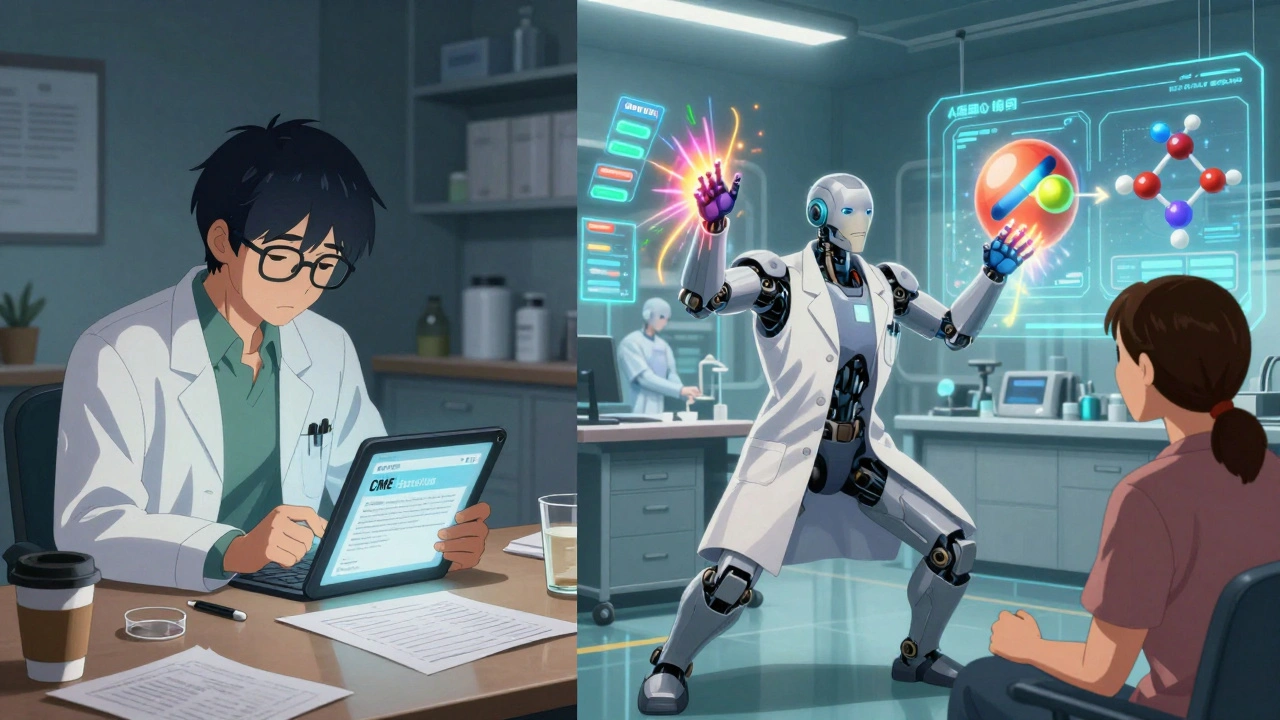
A 2022 study in Academic Medicine found physicians completed only 68% of required pharmacology CME modules-compared to 87% for clinical topics. Why? Because pharmacology feels like homework. It’s not integrated into daily practice. Most doctors don’t open a CME module during rounds. They wait until the last minute. And then they rush through it.
The solution? Embedding learning into workflow. UpToDate now gives 0.5 CME credits just for reviewing a drug monograph while looking up a patient’s medication in Epic. That’s smart. That’s how you change behavior. You don’t make doctors take time away from patients-you make learning part of caring for them.
And then there’s the trust issue. Some doctors still believe generics are inferior. Dr. Alan Cohen from Harvard reminds us: not all generics are created equal-especially for drugs with a narrow therapeutic index. That’s why ongoing education isn’t optional. It’s essential. You can’t assume you know what’s in the bottle. You have to check the Orange Book. You have to know the difference between AB-rated and un-rated generics. You have to understand bioequivalence thresholds.
Where the Industry Is Headed
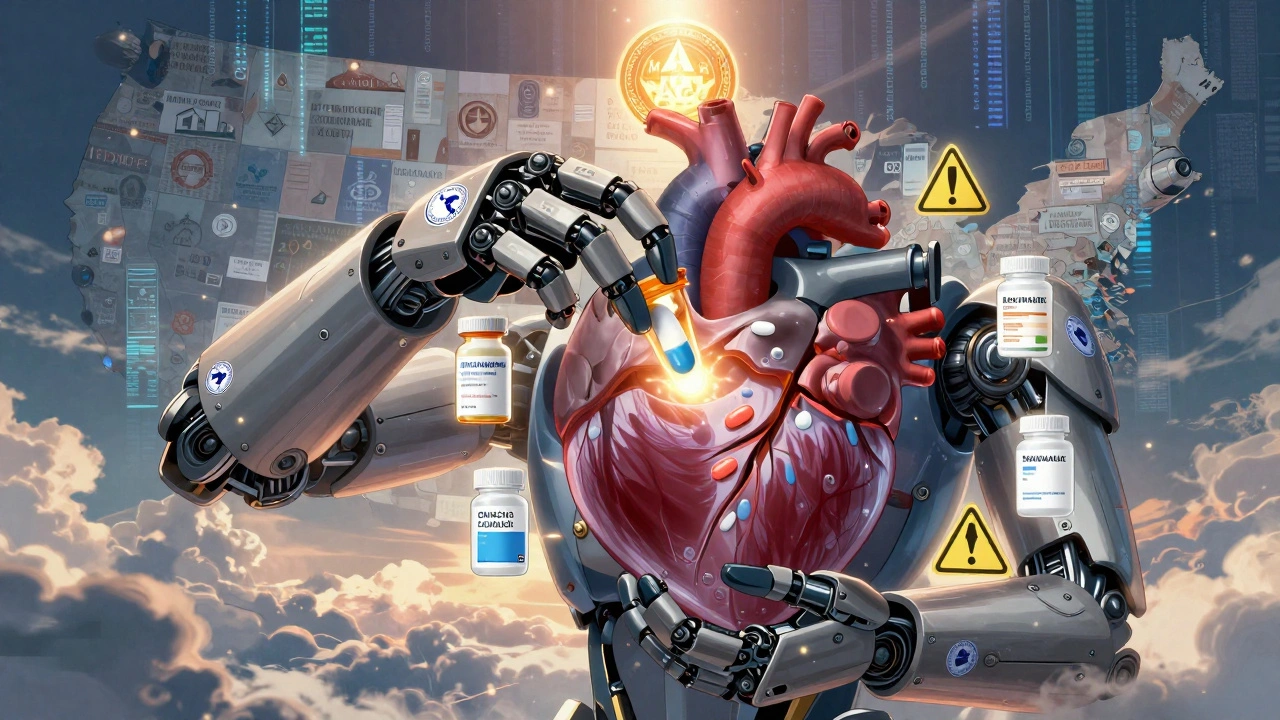
The CME market for pharmacology is worth $1.2 billion a year. UpToDate, Medscape, and WebMD control nearly two-thirds of it. And they’re changing fast. After the MATE Act passed, UpToDate rolled out new modules that automatically track compliance. They’re integrating AI-driven recommendations based on a doctor’s prescribing history. If you prescribe a lot of brand-name statins, the system might suggest a course on generic alternatives you haven’t tried.
By 2027, McKinsey predicts 95% of pharmacology CME will be personalized. That’s huge. It means your education will adapt to your practice-not the other way around. And the National Academy of Medicine is already testing competency-based assessments instead of hour-based requirements. You won’t just log 10 hours-you’ll prove you can correctly identify a bioequivalent generic, spot a dangerous interaction, and explain it to a patient.
What Doctors Should Do Now
If you’re a physician, here’s what you need to do:
- Check your state’s CME requirements. Don’t assume you know them. Look up your medical board’s website.
- Find out if your state requires opioid, controlled substance, or biosimilar education. If so, prioritize those courses.
- Use the FDA’s free Orange Book Primers. Bookmark them. Review them quarterly.
- Look for CME that’s interactive, not just a PDF to read. Platforms like UpToDate, Medscape, and ASHP offer case-based learning.
- Integrate learning into your EHR. Use drug monographs during patient visits. Earn credit while you work.
- Ask your hospital or clinic to offer in-house pharmacology sessions. Peer-led learning works better than solo online modules.
Don’t wait for the state to force you. Don’t wait until your license renewal is due. Generics aren’t going away. They’re the future of affordable, effective care. The doctors who master them won’t just save money-they’ll save lives.
What’s Next for Generics Education
The FDA approved over 1,000 new generic drugs in 2023 alone. That number will keep rising. New biosimilars for cancer, autoimmune diseases, and diabetes are hitting the market every month. If you’re not keeping up, you’re prescribing blind.
And patients are watching. They’re asking questions. They’re comparing prices. They’re checking GoodRx. If you can’t explain why a generic is safe, effective, and cheaper, you’re missing an opportunity-to build trust, to improve adherence, to reduce waste.
The system isn’t perfect. CME requirements are uneven. Courses are often poorly designed. But the data is clear: better education leads to better prescribing. And better prescribing leads to better outcomes. The ball is in your court. The next prescription you write could be the one that changes everything.


14 Comments
nikki yamashita
Finally, someone gets it! Generics aren't just cheaper-they're often just as good, and patients stick with them way more. I've seen it in my clinic: once I started explaining bioequivalence, no more 'I don't trust the blue pill' nonsense. 😊
Audrey Crothers
YES. My grandma switched to generic metformin and her blood sugar stabilized. She didn't even notice the difference. Why do we still act like generics are 'second class'? 🤦♀️
sandeep sanigarapu
Excellent analysis. In India, generics are the backbone of public health. The challenge is not quality but awareness. Doctors must be trained to communicate efficacy confidently to patients who fear 'cheap' medicine.
Laura Weemering
Let’s be real: CME is a joke. I spent 4 hours last year on 'pharmacology' that was just a slideshow of drug names with no clinical context. And now I’m supposed to trust this? The FDA’s Orange Book? Who has time to check that between 20 chart reviews? It’s performative education. We’re being gaslit by bureaucracy.
Robert Webb
I appreciate the depth here, and I think you're absolutely right about the mismatch between training and practice. I used to avoid generics too-until I started using UpToDate during patient visits. Now, I pull up the monograph right there in the room, show them the FDA equivalence data, and suddenly they’re asking for the cheaper option. It’s not just about knowledge-it’s about integration. When learning becomes part of care, not a chore, change happens. And honestly? Patients notice when you care enough to explain it.
Ashley Skipp
Generics are just Big Pharma’s way to keep profits rolling while pretending to help patients. The real active ingredients are different. The fillers? Toxic. The FDA? Bought and paid for. You think they’d let unsafe stuff through? Of course they would. Look at the opioid crisis. Same playbook. You’re being manipulated if you believe this 'bioequivalence' nonsense.
wendy b
As a former med student who actually read the pharmacology textbooks (unlike most of my peers), I can confirm: most CME is fluff. The Orange Book? Most docs don’t even know it exists. And biosimilars? Half of them think they’re just ‘brand-name generics with a fancy name.’ Pathetic. If you can’t differentiate between AB-rated and un-rated, you shouldn’t be prescribing. Period.
Lawrence Armstrong
So you’re telling me I should trust a pill that costs $4 instead of $40? And the FDA says it’s the same? 😂 I’ve had patients crash after switching. One guy had a seizure. Turns out the generic had a different release profile. You think that’s coincidence? No. It’s systemic negligence. This isn’t education-it’s a liability waiting to happen.
Nathan Fatal
Stacy’s comment is dangerously misleading. Yes, there are rare cases of bioequivalence issues with narrow therapeutic index drugs-but those are the exception, not the rule. The FDA’s bioequivalence threshold is 80–125% for AUC and Cmax. That’s not arbitrary. It’s statistically rigorous. The real problem is that we don’t teach this in med school. We teach fear. We teach suspicion. And then we wonder why adherence is low. The solution isn’t to scare doctors-it’s to equip them with real data. The Orange Book isn’t a conspiracy. It’s a public resource. Use it.
Donna Anderson
omg yes!! I just took a 2-hour CME on generics and now I feel like a superhero 🦸♀️ My patients actually asked me if I'd been reading up on stuff. I said 'yes, because I care.' Best feeling ever. We don’t need 50 hours. We need 2 hours that actually make sense.
Rob Purvis
Rob Purvis, you nailed it. I’m a radiologist-I don’t prescribe opioids. Why am I being forced to take 3 hours on controlled substances? Meanwhile, my colleague in psychiatry is drowning in patients on lithium and has never seen a CME module that explains the absorption differences between generic brands. This isn’t education. It’s checkbox compliance. We need specialty-specific, not one-size-fits-all.
Adam Everitt
Interesting piece, though I think the focus on CME hours is misplaced. In the UK, we don’t have mandatory hours-we have reflective practice. Doctors document how they’ve applied learning to patient care. That’s far more meaningful than ticking off a module. Maybe the US should stop measuring time and start measuring impact?
Reshma Sinha
As someone who works with generic manufacturers in India, I can say this: quality control is tight. The same labs test for both branded and generic drugs. The difference? Transparency. US docs don’t know how to read the ANDA filings. That’s the real gap. Not trust. Not safety. Knowledge. And yes, AI-driven CME? Long overdue. I’ve seen systems that flag when a prescriber’s generic rate drops below 70%-then auto-suggest relevant modules. That’s next-level.
Stacy Foster
Lawrence, you think UpToDate is helping? Please. They’re owned by IBM. They’re tracking your prescribing habits to sell data to pharma. Every time you click on a drug monograph, you’re feeding the machine. They know you’re prescribing brand-name statins. They’re nudging you to switch… because they’re paid by the generic makers. This isn’t education. It’s surveillance capitalism wrapped in a white coat.