
The Hidden Danger in Your Morning Glass
Imagine sipping a fresh glass of grapefruit juice, enjoying your breakfast routine, unaware that this healthy choice is quietly turning your heart medication into a potential toxin. It sounds unlikely, but this isn't a myth; it is a well-documented medical phenomenon that has been causing hospital admissions for decades. In fact, if you take certain prescriptions, one single glass of juice can spike drug levels in your bloodstream by up to ten times.
This isn't just about avoiding orange juice because it tastes bad; it is about chemistry happening inside your gut. When specific compounds in the fruit meet the enzymes responsible for breaking down drugs, they don't play nice. The result? You get too much medicine circulating in your body, leading to severe side effects that your doctor never intended. Understanding this dynamic is critical for patient safety.
How Does Grapefruit Block Drug Metabolism?
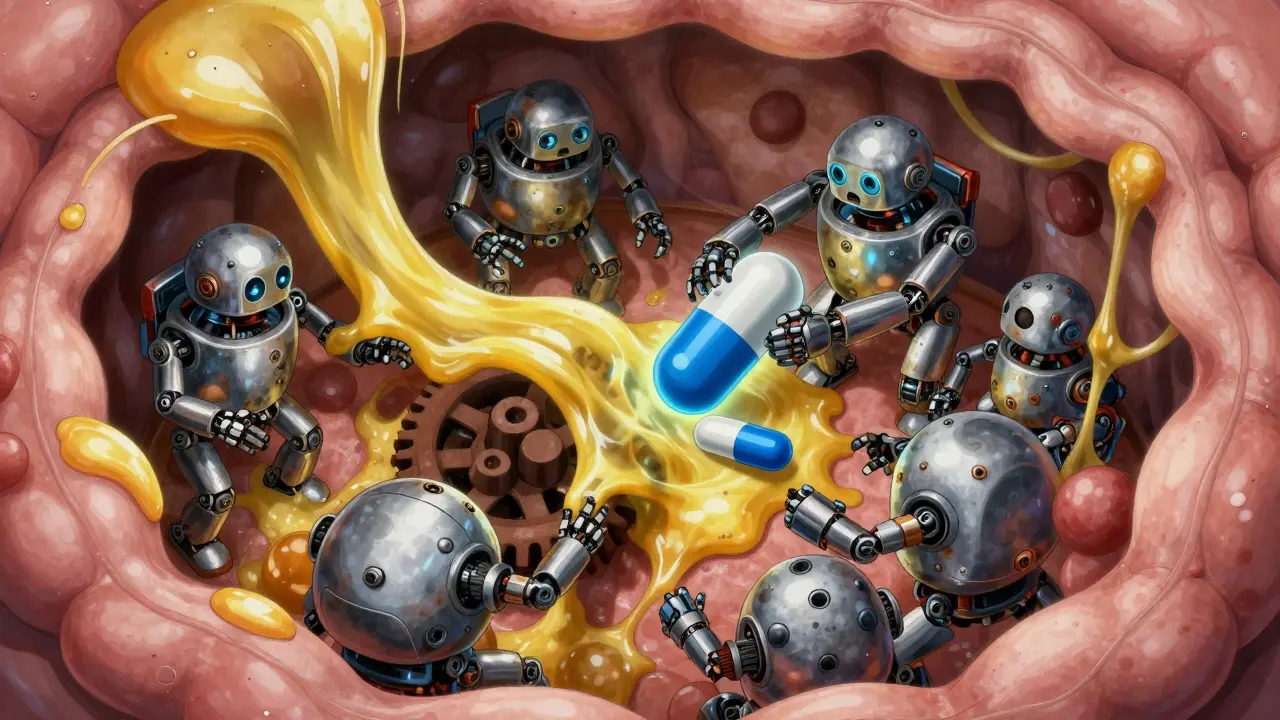
To understand the risk, we need to look at how your body handles medication. Most oral drugs pass through the intestinal wall where they meet a key enzyme system called Cytochrome P450 3A4CYP3A4. This enzyme acts like a gatekeeper, metabolizing about 50% of all prescribed medications before they even enter your bloodstream. It effectively controls the dose your body actually receives.
Grapefruit juice contains natural chemicals known as furanocoumarins, primarily bergamottin and dihydroxybergamottin. These compounds irreversibly bind to the CYP3A4 enzyme in your intestines. Think of it like pouring superglue into a lock-the key still looks the same, but it can no longer turn. Once blocked, the enzyme cannot process the medication efficiently. Consequently, much more of the active drug slips through to your blood than calculated in your dosage regimen.
This inhibition lasts far longer than the juice itself. Even after digestion, the body takes 24 to 72 hours to generate new enzymes. This means skipping grapefruit for just an hour before your morning pill won't help. If you drank grapefruit yesterday, tomorrow's medication could still be dangerously potent. Clinical studies have shown that a single 200-milliliter serving can inhibit intestinal function by nearly 50%, with peak interference occurring 24 hours post-consumption.
High-Risk Medications You Must Avoid
Not every pill reacts poorly with citrus, but some categories are significantly more sensitive than others. The U.S. Food and Drug Administration (FDA) tracks these interactions, noting that over 85 prescription medications available in North America have documented reactions with grapefruit products. Here are the primary groups you need to monitor:
- Statins: These cholesterol-lowering drugs are perhaps the most famous culprits. For example, simvastatinZocor can triple in concentration when combined with juice. This raises the risk of muscle breakdown, a condition known as rhabdomyolysis. Interestingly, pravastatin and rosuvastatin do not share this issue, making them safer alternatives.
- Calcium Channel Blockers: Used for high blood pressure, drugs like nifedipine and felodipine are highly susceptible. In one documented case involving felodipine, plasma levels increased fivefold. However, amlodipine tends to show minimal interaction, illustrating how different chemistries behave differently.
- Immunosuppressants: Patients taking cyclosporine after organ transplants face extreme risks. The juice can increase drug exposure by 50-60%, potentially causing kidney damage since the margin between a therapeutic dose and a toxic one is very narrow.
- Antiarrhythmics: Medications like amiodarone, used to control heart rhythm, show significant plasma increases (30-40%) which can trigger dangerous heart rhythms themselves.
| Drug Class | Specific Examples | Risk Level |
|---|---|---|
| Statins | Simvastatin, Atorvastatin | Severe |
| Heart Rhythm Meds | Amiodarone, Sotalol | Moderate to High |
| Blood Pressure Meds | Nifedipine, Felodipine | High |
| Transplant Meds | Cyclosporine, Tacrolimus | Severe |

Why Individual Susceptibility Varies So Much
You might wonder why some people consume daily grapefruit while on medication without immediate harm, while others suffer adverse effects quickly. The answer lies in genetics and individual physiology. Research published in the Canadian Medical Association Journal indicates that sensitivity varies dramatically from person to person.
In clinical trials, patients given the same amount of juice alongside a standard dose of felodipine showed drug levels ranging from zero change to eight times higher compared to water administration. This suggests that baseline enzyme activity in the intestines differs among us. While we cannot routinely test for this genetic variance in a standard clinic, the unpredictability is the very reason experts recommend total avoidance rather than "trying it to see what happens."
Furthermore, the variety of the fruit matters. White grapefruit generally contains higher levels of furanocoumarins than red varieties. Processing also plays a role; freshly squeezed juice often has a stronger effect than pasteurized commercial versions. Yet, relying on picking "mild" varieties is a gamble. Because the metabolic block persists for days, one unexpected glass during the week ruins the safety buffer for the entire treatment duration.
Safer Citrus Alternatives and Dietary Options
If you love the taste of tart citrus, does that mean you must give it up entirely? Not necessarily. The interaction is specific to compounds found in grapefruit, pomelo, and Seville oranges (often used for marmalade). Sweet oranges, tangelos, and lemons typically do not contain the furanocoumarins required to inhibit CYP3A4.
However, you must read labels carefully. Many processed juices blend flavors, meaning a bottle labeled "Citrus Blend" could hide a grapefruit ingredient. Plain apple juice or cranberry juice are safe bets, but always verify that no citrus additives are listed if your medication profile is high-risk. The European Medicines Agency specifically warns against Seville oranges and pomelos, categorizing them similarly to grapefruit regarding safety profiles.
For patients who cannot tolerate the switch to alternative beverages, the focus shifts to dietary adjustments. Some manufacturers are exploring breeding low-furanocoumarin varieties using gene-editing technologies, but these are not yet widely available in general markets. Until then, sticking to sweet oranges is the proven path to safety.

Actionable Steps to Protect Yourself
Knowing the risk is only half the battle. To keep yourself safe, you need to take proactive steps in managing your healthcare regimen. Here is a practical checklist derived from expert consensus:
- Audit Your Pill Cabinet: Look at your prescriptions. Do any names sound familiar from the lists above? Common brand names like Zocor, Plendil, or Neoral require extra vigilance.
- Talk to Your Pharmacist: Pharmacists receive alerts on dispensing software when interacting combinations occur. Ask them specifically about food interactions. Studies show that community pharmacists screen for this, but verbal confirmation ensures they double-check your unique situation.
- Review Your Labels: By law in the U.S. and Canada, manufacturers must include warnings on the packaging of affected drugs. Look for phrases like "Avoid grapefruit products" or check the Patient Information Leaflet.
- Consider Alternatives: If your doctor prescribes a risky medication, ask if there is a chemically similar option that doesn't carry this risk. For instance, switching from simvastatin to pravastatin keeps cholesterol management safe.
- Inform Specialists: Don't assume your cardiologist knows your dermatologist's prescription. Keep a master list of all supplements and medicines, including over-the-counter antihistamines, which can also interact.
Frequently Asked Questions
Can I eat grapefruit if I take my pill a few hours later?
No. Because the enzyme inhibition lasts 24 to 72 hours, simply spacing out the consumption does not prevent the interaction. The block remains active in your digestive tract regardless of timing.
Does this apply to other citrus fruits like limes or lemons?
Generally, no. Lemons, limes, and sweet oranges do not contain enough furanocoumarins to cause the same blockage. Seville oranges and pomelos are the exceptions that act like grapefruit.
Is the reaction worse if I drink wine along with the juice?
Alcohol itself interacts with many drugs, but the specific CYP3A4 blockade comes solely from the fruit compounds. Mixing alcohol adds a separate layer of risk, particularly if you take central nervous system depressants.
What symptoms should I watch for if I accidentally mix them?
Symptoms depend on the drug type. With statins, watch for severe muscle pain or dark urine. With heart meds, look for dizziness, rapid heartbeat, or swelling. Seek immediate medical help if these appear.
Can I switch to a safe statin without changing my diet?
Yes. Options like fluvastatin, pravastatin, or rosuvastatin do not interact with grapefruit. You can discuss these alternatives with your provider to safely resume your preferred diet.

10 Comments
Owen Barnes
This articel highlights a ver serious issue with medecation management. It is good we talk aboit these thigns openly so peopke dont get hurt. My family has been advised to skip the orange juice too. Teh science behind it makes sense whrn you read abt the enzymes. Thank you for posting this useful guide for us all.
Rod Farren
The mechanism of CYP3A4 inhibition is fascinating to observe in clinical settings. Most people overlook the irreversible binding nature of furanocoumarins on intestinal walls. It creates a permanent blockage until new enzymatic proteins are synthesized by the enterocytes. This process takes significantly longer than digestion usually requires. Pharmacokinetics dictates that plasma concentration peaks remain elevated for extended periods. Dose adjustments alone cannot mitigate this specific interaction risk safely. We see therapeutic windows narrow drastically when patients ignore dietary restrictions. Bioavailability increases beyond the predicted maximum tolerated dose often. Toxicity manifests through rhabdomyolysis or severe hypotension depending on the drug class. Renal clearance does not help clear the excess circulating active compound quickly enough. Hepatic metabolism pathways are bypassed entirely due to the intestinal block. Genetic polymorphisms in enzyme production do offer some protection but are unreliable for safety. Standard screening methods fail to detect individual susceptibility variations prior to adverse events. Healthcare providers must prioritize patient education regarding this specific food interaction profile consistently. Avoidance remains the only clinically proven strategy currently available for public use.
Rocky Pabillore
People really need to read labels more carefully instead of relying on vague advice.
Cara Duncan
Wow this is scary stuff! 🍊🚫 Please everyone stay safe and check your pills! 💊😊
Jenny Gardner
The grammar in this guide is excellent and the facts are presented very clearly!!!!!!!! It is so important to maintain awareness of such medical dangers!!. Everyone should double check their prescriptions before eating breakfast!!!!!
Russel Sarong
This information is absolutely critical!!! Nobody understands how dangerous it can be!!!! You might think it's fine but it's not!!!!
Cullen Zelenka
Glad this got posted because I did not know about the statin thing. Just swapped my juice recently after reading similar stuff. Stay healthy everyone.
Julian Soro
Sounds like a smart move on your part. Switching brands is always safer than risking heart damage. Hope you find a flavor you still enjoy though. Keep spreading the word to friends too.
Christopher Beeson
Modern medicine treats the symptom while ignoring the chaos of biology. We play with chemicals and wonder why our bodies revolt against us constantly. Grapefruit represents the ultimate irony of seeking health through poison. Control is an illusion when your gut decides what enters your blood. Fear drives compliance rather than understanding in most of these scenarios.
Arun Kumar
Education is the best way to prevent these accidents in our community. Sharing knowledge helps protect vulnerable members from accidental harm. We must look out for each other when managing complex regimens. Small changes in diet lead to big improvements in overall safety. Together we can reduce these risks significantly.