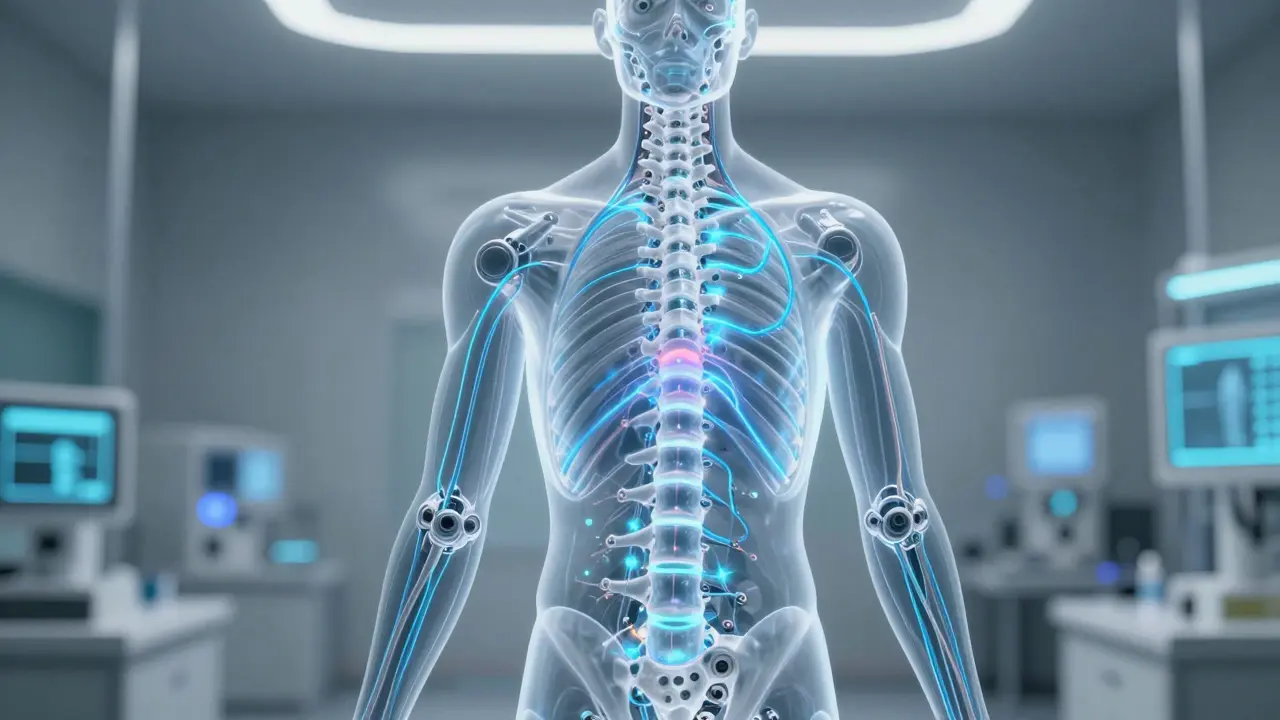
Imagine living with a constant, grinding pain that doesn't respond to medication, physical therapy, or even surgery. For many, the dream of a "cure" has been replaced by the goal of simply getting through the day. When the source of pain can't be surgically removed or fixed, Spinal Cord Stimulation is a neuromodulation technique that uses pulsed electrical energy delivered via implanted electrodes in the epidural space to disrupt pain signals before they reach the brain. Also known as SCS, it acts like a pacemaker for your pain, offering a way to reclaim quality of life without relying solely on heavy medications.
How Spinal Cord Stimulation Actually Works
The core idea behind Neuromodulation is simple: it changes how your nerves behave. Instead of the brain receiving a constant "pain" signal, the SCS system introduces a different electrical impulse that masks or replaces that sensation. This isn't about curing the underlying injury, but about managing the signal.
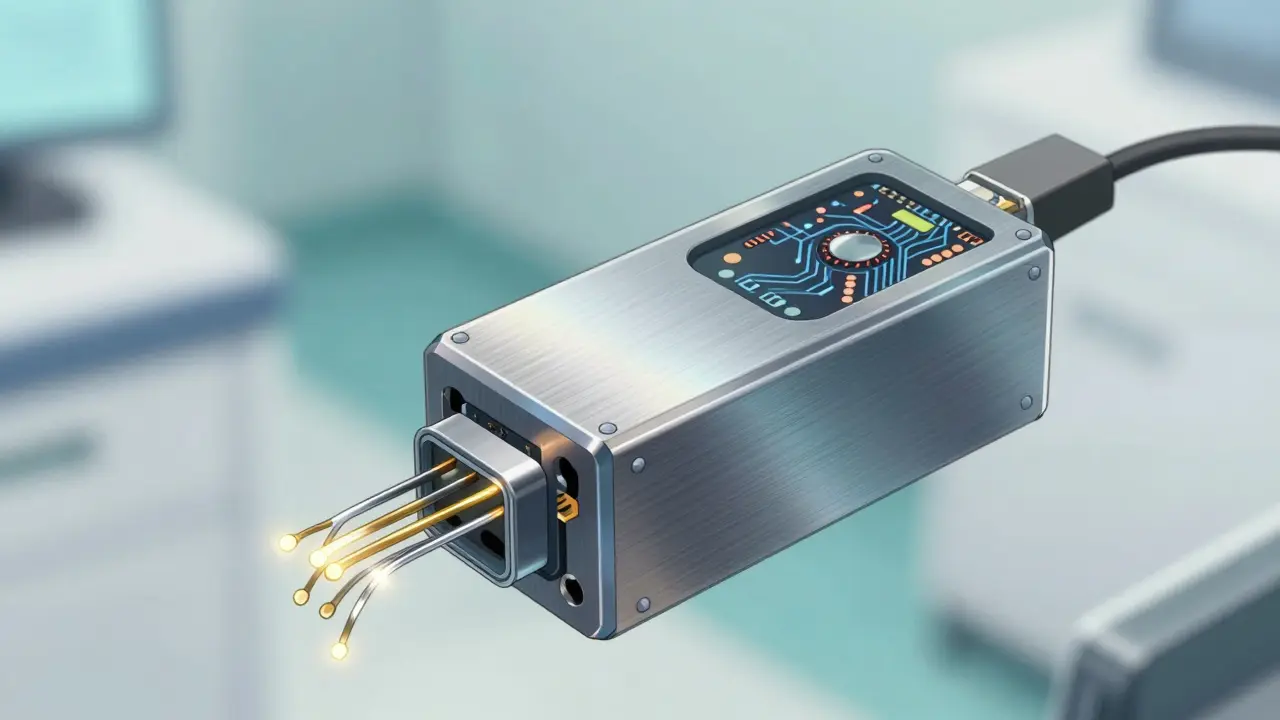
A modern system consists of two main parts: thin wires called leads that are placed in the epidural space, and an implantable pulse generator (IPG)-essentially a battery and computer-usually tucked away in your abdomen or buttock. These devices manipulate three key settings to find your "sweet spot" for relief:
- Frequency (Hertz): How fast the pulses hit. Traditional tonic stimulation usually sits around 50 Hz.
- Amplitude (Milliamps): The strength of the pulse.
- Pulse Width (Microseconds): How long each individual pulse lasts.
Depending on the technology, you might feel a tingling sensation (paresthesia) or nothing at all. For instance, high-frequency stimulation (up to 10,000 Hz) or Burst Stimulation-which mimics the body's natural nerve firing-can provide relief without that tingling feeling, which many patients find more comfortable.
Are You a Candidate for SCS?
Not everyone who has back pain is a good fit for this procedure. In fact, if the screening process is rushed, failure rates can climb above 40%. Doctors generally look for patients who have "failed" conservative treatments-meaning you've tried medications and physical therapy for 12 to 24 months without success.
The most common conditions that qualify include:
- Failed Back Surgery Syndrome (FBSS): When a spinal surgery didn't provide the expected relief or the pain returned. This makes up about 52% of all SCS cases.
- Complex Regional Pain Syndrome (CRPS): A chronic pain condition that usually affects a limb, often after an injury.
- Intractable Low Back and Leg Pain: Pain that resists all other standard medical interventions.
Beyond the physical, your mental health is a massive factor. Clinical data shows that people with untreated major depression have success rates that are 35% lower than those without. This isn't because the device doesn't work, but because chronic pain and depression are deeply intertwined; if the mind is in a state of crisis, the perceived benefit of the device often drops.
| Method | Invasiveness | Typical Success (≥50% Relief) | Primary Risk/Downside |
|---|---|---|---|
| Opioid Therapy | Low (Chemical) | 41% (Optimized Medical) | Dependence and tolerance |
| TENS Units | Non-invasive | Low (for chronic) | Short-term relief only |
| Spinal Cord Stimulation | Moderate (Surgical) | 56-85% (Properly selected) | Lead migration/Surgery risks |
| Back Surgery | High | Variable | Long recovery/Potential failure |
The Two-Step Process: Trial and Permanent Implant
You don't just wake up from surgery with a permanent device. There is a critical "test drive" phase to ensure you are actually a responder.
- The Trial Phase: For 5 to 7 days, a doctor places temporary leads under sedation using fluoroscopic guidance (real-time X-ray). These leads connect to an external controller you wear on your skin. If you experience at least 50% pain reduction during this week, you're considered a successful candidate.
- Permanent Implantation: This is a 60- to 90-minute procedure. The temporary leads are replaced with permanent ones, and the IPG is surgically implanted under your skin.
Once implanted, there's a learning curve. About 89% of patients need at least one follow-up session with their doctor to tweak the programming. You'll need to learn how to use the remote and recognize if the stimulation changes-which usually means a lead has shifted.
Real-World Trade-offs: The Pros and Cons
From a clinical perspective, the benefits are striking. One study involving over 2,000 patients found that SCS recipients had 57% lower opioid use after a year compared to those on medical management alone. For many, this means the ability to walk or return to work without a chemical fog.
However, the hardware isn't perfect. The most common headache is "lead migration," where the wire moves slightly, causing the stimulation to hit the wrong spot. This happens in about 15% of cases. Then there's the battery; depending on the model, you might face replacement surgery every 5 to 9 years.
Costs are another hurdle. While Medicare covers many indications, the total system cost in the U.S. can range from $25,000 to $45,000. Many patients still find themselves responsible for $5,000 to $10,000 out-of-pocket, which can be a significant barrier to treatment.
Comparing the Major Systems
Several big players dominate the market, each with their own approach to waveforms and battery life. Medtronic, Abbott, and Boston Scientific are the leaders. For example, Boston Scientific's WaveWriter Alpha™ Prime focuses on multiwave therapy and high-frequency options that remove the tingling sensation. Medtronic's Intellis™ platform offers adaptive stimulation that changes based on whether you are standing up or lying down.
If you need frequent MRIs, check the compatibility. Some older models have strict limitations, while newer ones, like the Precision Montage™ MRI, are designed to be compatible with 1.5T and 3.0T scanners, provided you follow the safety protocols.
What is the success rate of Spinal Cord Stimulation?
For patients who are properly screened and pass the trial phase, success rates (defined as 50% or more pain reduction) range between 56% and 85%. However, long-term efficacy can dip, with some data suggesting about 52% to 58% of patients maintain significant relief at the 3-to-5-year mark.
Does SCS replace all my pain medications?
While it may not replace all medications, it significantly reduces the need for them. Studies show a dramatic drop in opioid utilization-up to 63% lower after 24 months-allowing patients to lower their dosages or eliminate certain drugs entirely.
Is the surgery risky?
The surgery is considered moderately invasive. The main risks include infection (occurring in 3.8% to 7.2% of cases) and lead migration or breakage, which may require revision surgery in about 18.7% of patients within two years.
Can I get an MRI if I have an SCS implant?
Yes, but it depends on your specific device. Newer "MRI conditional" systems allow for full-body scans at 1.5T or 3.0T, but you must inform your technician and often switch the device to a specific MRI mode before the scan.
What happens if the trial fails?
If you don't achieve at least 50% pain relief during the 5-7 day trial, the temporary leads are simply removed. In this case, you are not a candidate for the permanent implant, and your doctor will explore other neuromodulation or pain management options.
Next Steps and Troubleshooting
If you're considering SCS, your first move should be a comprehensive pain evaluation. Don't just ask for the device; ask for a psychological screening to ensure you're in the best headspace for a successful outcome. If you already have an implant and notice your pain returning or the stimulation feeling "off," don't wait for your next appointment. Lead migration is common and can often be fixed with a simple programming adjustment or a minor revision surgery.
For those with insurance, start the "prior authorization" process early. Because of the cost, insurance companies often require documented proof that you've tried and failed multiple conservative therapies before they will approve the trial phase.