

When your pharmacist hands you a pill bottle with a different name than what your doctor wrote, it’s not a mistake. It’s generic substitution-a routine part of how insurance keeps drug costs down. But navigating this system isn’t always simple. You might be confused, frustrated, or even worried that the generic version won’t work the same. The truth is, most of the time, it does. But not always. And when it doesn’t, you have rights-and steps you can take.
What Exactly Is Generic Substitution?
Generic substitution means your pharmacy gives you a cheaper version of a brand-name drug because your insurance requires it-or because it’s the law in your state. These generics aren’t knockoffs. They’re required by the FDA to have the same active ingredient, strength, dosage form, and route of administration as the brand. For example, if your doctor prescribes Lipitor (atorvastatin), your pharmacy can legally give you generic atorvastatin instead. The FDA says they’re bioequivalent: the body absorbs them at nearly the same rate and amount. Studies show generics work just as well for most people. But here’s the catch: while the active ingredient is identical, the fillers, dyes, and coatings can differ. For most people, that’s harmless. For a small number, it causes side effects. One patient on Reddit switched from Synthroid to generic levothyroxine and ended up with thyroid levels that fluctuated for months. Another switched from Lipitor to generic and saved $45 a month with zero issues. The difference? Individual biology, not quality control.Why Do Insurers Push for Generics?
It’s simple math. In 2023, generics made up 90% of all prescriptions filled in the U.S. but only 18% of total drug spending. That’s a $373 billion annual savings for the whole system. Insurance companies don’t pay for drugs directly-they reimburse pharmacies. So if your brand-name drug costs $150 and the generic is $20, your insurer saves $130 per fill. They pass some of that savings to you in lower copays. Many plans charge $5 for generics and $50 or more for brands. That’s a powerful incentive. Some insurers go further. They make generic substitution mandatory. If you ask for the brand, you pay the full difference out of pocket. For example, Sun Life Financial in Canada saw brand-name claims average $72 versus $27 for generics-a 62.5% cost gap. That’s why they changed their policy. In the U.S., pharmacy benefit managers (PBMs) like Express Scripts and OptumRx control 85% of these rules. Their formularies decide what’s covered and at what cost.State Laws Vary-A Lot
Federal law lets pharmacies substitute generics unless the doctor says no. But states add their own rules. In 19 states, pharmacists must substitute unless told otherwise. In 7 states and Washington, D.C., they need your explicit consent before switching. In 31 states, they have to notify you-even if you don’t have to agree. And in 24 states, pharmacists have the same legal liability whether they give you the brand or the generic. Texas is one of the strictest. Their rules say substitution is only allowed if:- The generic costs you less than the brand
- You don’t refuse it
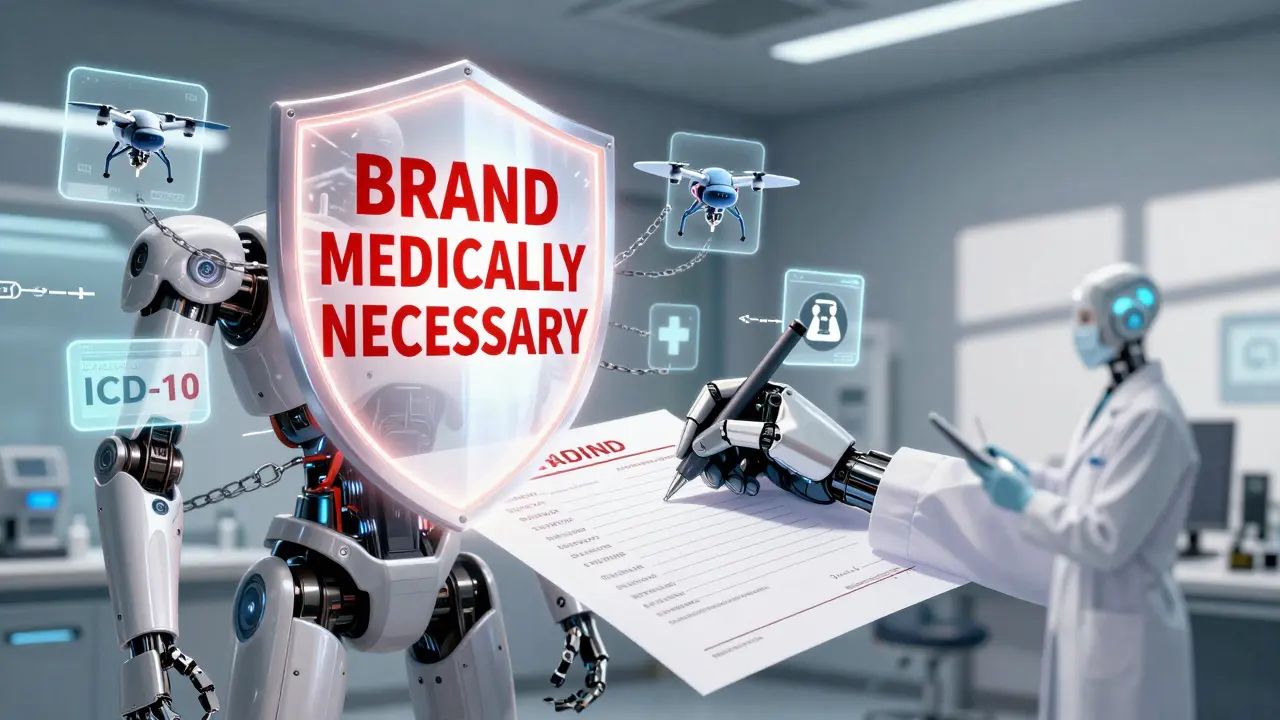
- Your doctor didn’t write “dispense as written” or “brand medically necessary” on the prescription
When You Can Fight Back: Medical Necessity
If a generic caused problems for you before-if your seizures got worse, your cholesterol spiked, or you had an allergic reaction to a filler-you can ask for the brand. The key is documentation. Your doctor must write “Dispense as Written” or “Brand Medically Necessary” directly on the prescription. That’s your legal shield. In most states, that overrides insurance rules. But insurers don’t make it easy. They often require prior authorization. Blue Cross Blue Shield of Michigan, for example, needs your doctor to submit ICD-10 codes showing you tried and failed on the generic. Their internal data shows 78% of these requests get approved when properly documented. Other insurers like Aetna want three clinical criteria met. UnitedHealthcare wants five. It’s inconsistent. That’s why many doctors hire staff just to handle prior auths. The process takes 2 to 14 business days. If you’re on a time-sensitive medication, that delay can be dangerous. That’s why it’s smart to ask your doctor to submit the request before your current prescription runs out.Biologics and Complex Drugs Are Different
Not all generics are created equal. Small-molecule drugs like antibiotics or blood pressure pills are easy to copy. But biologics-drugs made from living cells like Humira or Enbrel-are far more complex. Their copies are called biosimilars, not generics. And they’re not exact matches. The FDA requires extra clinical testing to prove they’re “highly similar.” As of November 2023, only 38 biosimilars have been approved in the U.S., compared to over 10,000 small-molecule generics. Insurance companies are pushing biosimilars too, but the rules are stricter. In 38 states, pharmacists must notify your doctor within 5 to 7 days if they switch you to a biosimilar. In 27 states, they need your separate consent. That’s because the risk of immune reactions is higher with these drugs. Even harder to substitute? Inhalers, injectables, and topical creams. These aren’t just about the chemical. The device matters. If your asthma inhaler has a different spray pattern or dose counter, switching could affect your control. That’s why substitution rates for these drugs are below 50%.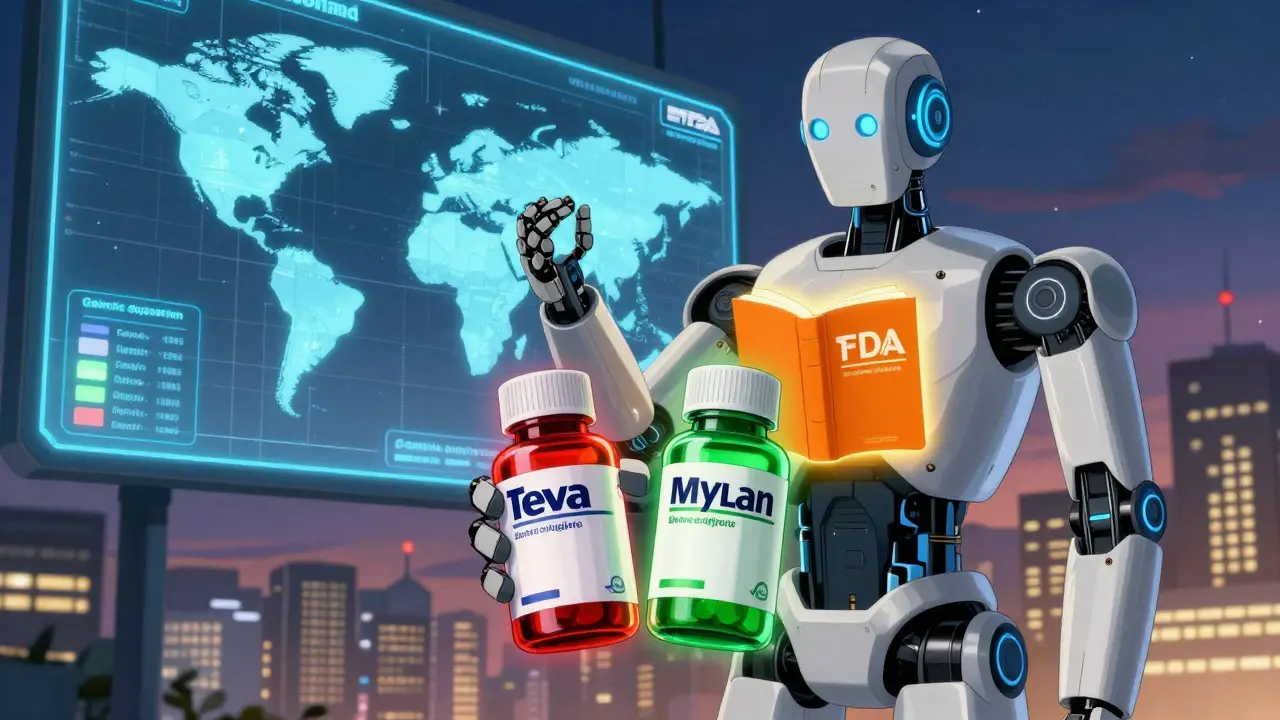
What Patients Are Saying
On Drugs.com, 68% of reviews for generic drugs are positive. People report saving an average of $327 a year per medication. But 37% of negative reviews complain about substitutions they didn’t agree to-even when the prescription said “dispense as written.” That’s a violation of both state law and pharmacy ethics. Another common complaint? Inconsistent generic manufacturers. One month you get a generic made by Teva, the next by Mylan. They’re both approved. But the fillers change. One patient on LinkedIn described a rash that disappeared only after they switched back to the same manufacturer. Your pharmacist can sometimes help you stick with one brand of generic-but you have to ask.How to Protect Yourself
Here’s what to do in real life:- Check your prescription. Does it say “dispense as written”? If not, your pharmacist can substitute.
- Ask your pharmacist. “Is this a generic? Is it the same as what my doctor ordered?” They’re required to tell you.
- Call your doctor. If you feel worse after switching, call them immediately. Don’t wait. Document symptoms.
- Request brand medically necessary. If you’ve had a bad reaction, ask your doctor to write it on future prescriptions.
- Know your insurance rules. Log into your plan’s website. Look up your drug. See what’s covered and what your copay will be for brand vs. generic.
- Keep records. Save your pharmacy receipts. Note dates and names of drugs you take. This helps if you need to dispute a claim or file a complaint.
What’s Next for Generic Substitution?
The push for generics isn’t slowing down. The Congressional Budget Office predicts Medicare could save $156 billion over the next decade just by expanding generic use. But the system is getting more complicated. As more complex drugs come to market-like gene therapies and personalized medicines-the old substitution rules won’t fit. States are already updating laws. The FDA is working on clearer guidelines for biosimilars. For now, the best defense is knowledge. Know your rights. Know your options. And don’t be afraid to speak up-if a change feels wrong, it might be.Can my pharmacist substitute my medication without telling me?
In most states, pharmacists are required to notify you if they substitute a brand-name drug with a generic. In 31 states and Washington, D.C., they must inform you regardless of whether you consent. In 7 states and D.C., they need your explicit permission. If you’re not told, that’s a violation of state law. Always check the label and ask if you’re unsure.
Why do I sometimes get a different generic than last time?
There are dozens of manufacturers approved to make the same generic drug. Your pharmacy may switch suppliers based on cost, availability, or contracts with your insurer. While the active ingredient is the same, inactive ingredients (like dyes or fillers) can differ. If you notice new side effects after switching generics, tell your doctor and pharmacist. You can ask to stick with one manufacturer if it works better for you.
What if my doctor says no substitution, but my insurance still forces it?
If your doctor writes “Dispense as Written” or “Brand Medically Necessary” on the prescription, federal and state laws protect you. The pharmacy must honor it. If they don’t, file a complaint with your state’s pharmacy board. You can also contact your insurer’s member services and request a formal exception. Most insurers will reverse the decision if medical necessity is clearly documented.
Are generics really as safe as brand-name drugs?
Yes. The FDA requires generics to meet the same strict standards as brand-name drugs for safety, strength, purity, and performance. Bioequivalence testing ensures they work the same way in the body. For 90% of medications, including antibiotics, blood pressure pills, and antidepressants, there’s no difference in outcomes. The exception is drugs with a narrow therapeutic index-like warfarin, lithium, or certain seizure meds-where small changes in blood levels matter. Even then, FDA-approved generics are considered safe substitutes, though closer monitoring may be needed.
How can I save money without switching to a generic?
If you need the brand name, ask your doctor about patient assistance programs. Many drug manufacturers offer free or discounted medications to people who qualify based on income. You can also use pharmacy discount cards like GoodRx, which often price generics lower than insurance copays. Some insurers allow you to pay the full cash price for a brand and get reimbursed later-check your plan’s policy.


12 Comments
Meina Taiwo
Generics are safe 95% of the time. If you have a reaction, it’s usually the fillers-not the active ingredient. Always tell your pharmacist if you’ve had issues before. They can request the same manufacturer.
Sandy Crux
Oh, of course-the FDA ‘approves’ everything… until you’re the one waking up at 3 a.m. with your heart racing because ‘bioequivalent’ somehow means ‘biologically indifferent.’
Sarah Williams
You’re not crazy if it feels different. Your body knows. Trust it. And don’t let anyone tell you it’s ‘all in your head.’
Theo Newbold
Insurance companies don’t care about your thyroid levels. They care about the 130-dollar difference per prescription. The system is designed to optimize profit, not patient outcomes. The FDA’s bioequivalence thresholds are statistically meaningless for individual physiology.
Jerry Peterson
I’ve been on the same generic for five years. Switched manufacturers twice. No issues. But I always check the label. A little vigilance goes a long way.
Grace Rehman
So we’re supposed to be grateful that corporations save money by turning our medicine into a lottery? Wow. What a system. We’re not patients-we’re cost centers with pulse rates
Peggy Adams
Did you know the same generic pill can be made in India, China, or Germany? And your insurance picks the cheapest one-even if it’s made in a factory that got shut down last year for safety violations? Just saying.
Orlando Marquez Jr
While the regulatory framework governing generic substitution is robust, it is not infallible. The FDA’s bioequivalence criteria, while statistically sound, do not account for inter-individual pharmacokinetic variance. Moreover, the commercial incentives embedded within pharmacy benefit manager formularies create systemic pressure to prioritize cost over clinical nuance. Patients with narrow therapeutic index medications require individualized consideration, which is often structurally absent in automated substitution protocols.
Erika Putri Aldana
Why do they even let pharmacists do this? My grandma got a different pill and thought it was her meds. She cried for three days. Someone should get fired.
Jay lawch
Let me tell you something. The U.S. government is not protecting you. It’s protecting Big Pharma and the insurance oligarchs. Generics are fine for peasants, but when your life depends on it, you deserve the real thing. Why do you think the rich never take generics? Because they know the truth. The FDA is a puppet. The Orange Book is a joke. And your pharmacist? He’s just a cog in the machine. Wake up.
Dan Adkins
It is a well-documented fact that pharmaceutical supply chains have become increasingly globalized and fragmented, leading to a significant degradation in quality control standards. The United States, despite its regulatory pretensions, imports over 80% of its active pharmaceutical ingredients from nations with minimal oversight. The notion that a generic pill manufactured in a facility with a history of FDA warning letters is therapeutically equivalent to its branded counterpart is, frankly, a myth perpetuated by corporate interests. The patient, as always, bears the risk.
Adrian Thompson
They call it substitution. I call it manipulation. The same company that makes the brand? They also make the generic. Same factory. Same workers. Just a different label. You think they’re saving you money? They’re just repackaging the same product and calling it ‘cheap.’ And you’re thanking them for it.