
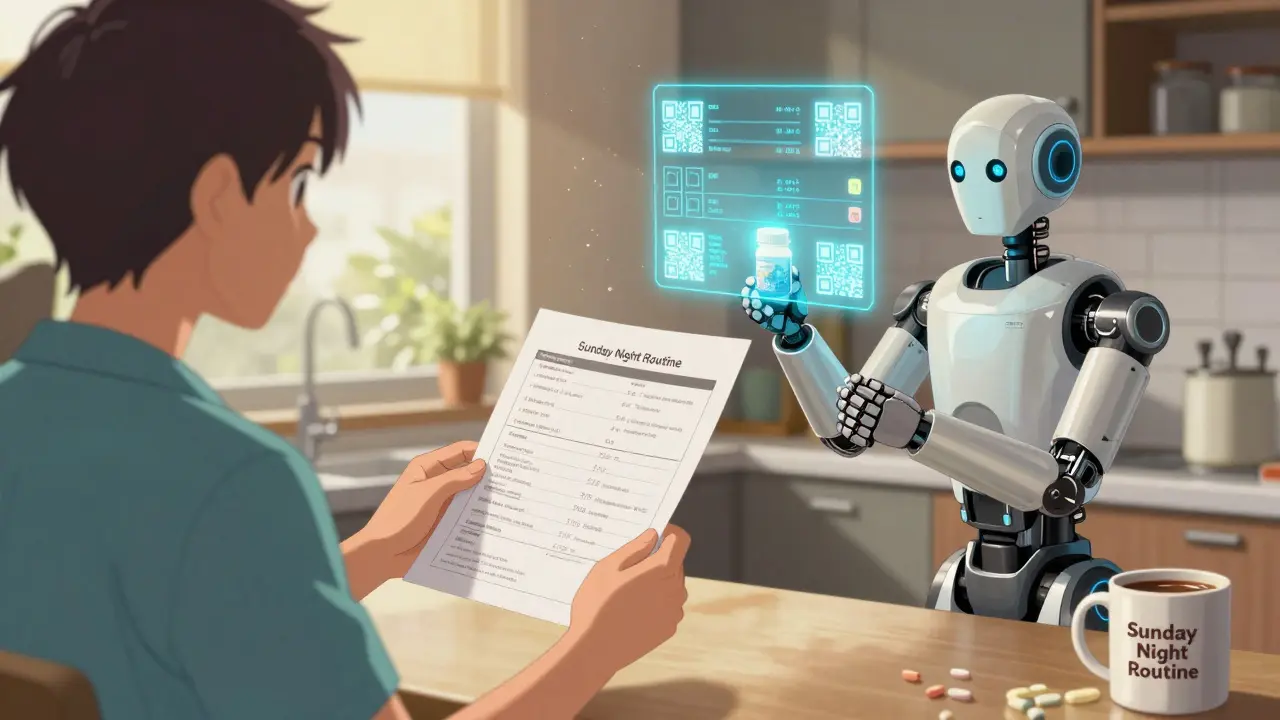
When someone you love is taking five, six, or even ten different medications, keeping track isn’t just helpful-it’s life-saving. Over 40% of older adults in the U.S. are on five or more medications, and each one carries risks: interactions, missed doses, or wrong timing. A simple mistake can land someone in the hospital. But here’s the good news: a clear, well-organized medication list cuts those risks by more than half. You don’t need to be a nurse. You just need a system.
What Goes on a Medication List?
A good list isn’t just a note on a napkin. It’s a complete record that tells your doctor, pharmacist, or ER staff exactly what your loved one is taking. The FDA recommends including these 12 key details for every medication:
- Brand and generic name - Write both. Lisinopril is the generic; Zestril is the brand. If the pill looks different next month, you’ll know why.
- Exact dosage - Not "one pill." Say "Lisinopril 10mg."
- How often to take it - "Twice daily," "every 8 hours," "as needed for pain." Be specific.
- Purpose - Why are they taking it? "For high blood pressure," "for arthritis pain," "for sleep." This helps spot duplicates or unnecessary drugs.
- Special instructions - "Take with food," "don’t crush," "avoid grapefruit," "take on empty stomach." These matter more than you think.
- Start date - When did they begin this one? That helps track side effects or changes.
- Prescribing doctor - Who wrote the script? Especially important if multiple doctors are involved.
- Pharmacy name and number - In case you need to call about refills or interactions.
- National Drug Code (NDC) number - Found on the bottle. Reduces dispensing errors by nearly 30%.
- Stop date - For time-limited meds like antibiotics. If it’s been 6 months and they’re still taking it, ask why.
- Allergies and reactions - Not just "penicillin allergy." Say "rash and swelling after penicillin."
- Potential side effects to watch for - "Dizziness," "upset stomach," "confusion." Helps catch problems early.
Missing any of these? You’re leaving room for error. A 2022 FDA study found 92% of medication mistakes happen because someone didn’t know when or how to take a pill.
Choose Your Format: Paper, Digital, or Both?
You have options. But the smartest approach uses both.
Paper lists are still used by 63% of caregivers. Why? They work in emergencies. If the power’s out, the phone dies, or the hospital needs info fast, a printed list in a wallet or binder is gold. Use a three-ring binder with tabs: one for meds, one for appointments, one for questions for the doctor. Many caregivers say this "Caregiver’s Notebook" system is the most helpful tool they’ve ever used.
Digital tools like Medisafe, MyMeds, or pharmacy apps (CVS, Walgreens) are better for complex regimens. If someone takes more than four medications, digital tools cut errors by 42%. They send reminders, track refills, and can even alert you to possible interactions. But here’s the catch: 62% of caregivers over 65 struggle with these apps. And 71% quit using them within three months because they’re too hard to update.
So what’s the winning combo? Keep a printed master list laminated and stored in a wallet or binder. Then use a digital app as a backup. Sync it weekly. That way, if the paper list gets lost, you’ve got a backup. If the app glitches, you’ve got the paper.
How to Build the List (Step by Step)
Don’t try to wing it. Follow these six steps. It’ll take a few hours, but you’ll save hours-and maybe lives-later.
- Collect everything. Go through every cabinet, drawer, purse, and medicine box. Include pills, liquids, patches, inhalers, and supplements. Don’t forget the aspirin bottle in the bathroom or the melatonin gummies on the nightstand. These count.
- Write down each one. Use the 12-point checklist above. Take your time. Don’t guess. If you’re not sure what a pill is, bring it to the pharmacy. They’ll identify it for free.
- Organize by time of day. Group meds by when they’re taken: morning, noon, evening, bedtime. Use arrows or color-coding. One caregiver on Reddit used red for morning, blue for night-and cut errors by 65%.
- Make two copies. One stays with you. One goes in the care recipient’s wallet. Give a third to their primary doctor. Keep a fourth with a trusted family member.
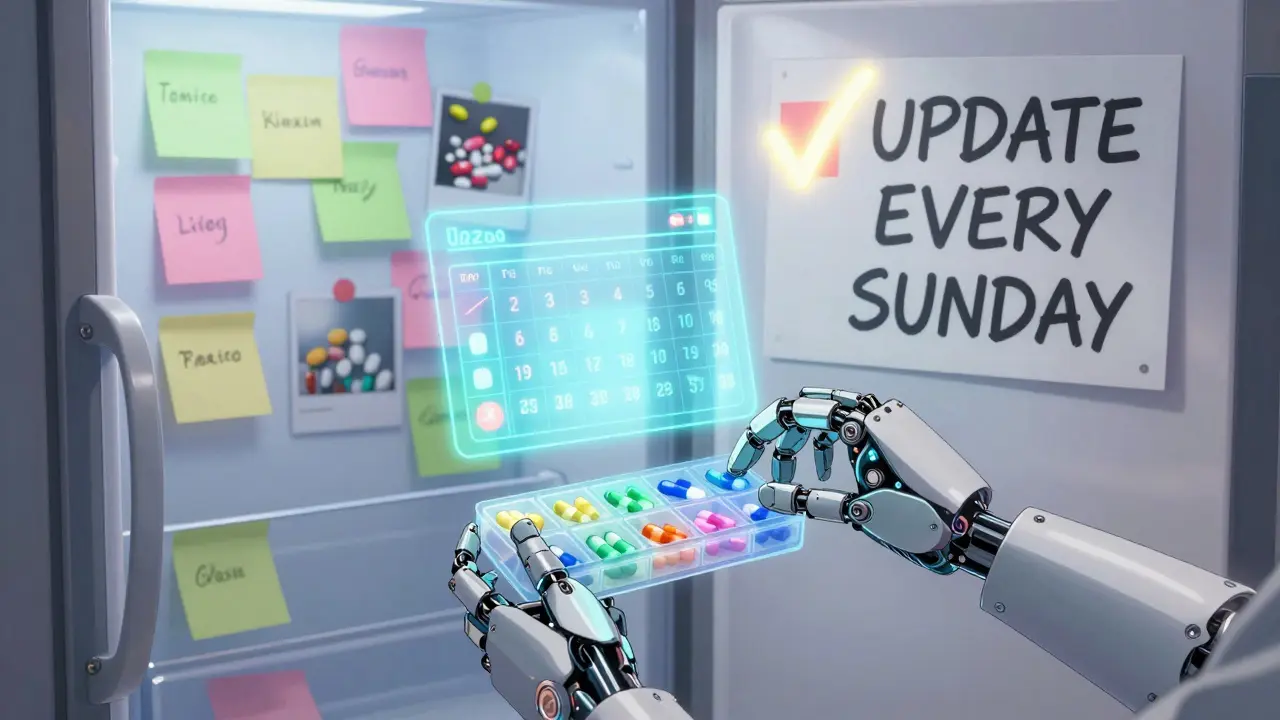
- Set a weekly update routine. Pick Sunday evening. Five minutes. Check for new prescriptions, discontinued meds, or changes. If a doctor changes a dose on Tuesday, update it that day. Don’t wait.
- Bring it everywhere. To every doctor visit, ER trip, or pharmacy stop. Use the "brown bag method"-put all meds in a bag and hand it to the provider. 89% of caregivers who tried this said it was "extremely helpful."
What to Do When Things Change
Hospitals are where things go wrong. A patient gets discharged with new meds, but the home list hasn’t been updated. That’s how 58% of caregivers end up confused.
After any hospital visit, clinic appointment, or ER trip:
- Ask: "Did anything change?"
- Get the new list in writing.
- Update your master list immediately.
- Call the pharmacy and confirm the new prescriptions are in the system.
Also, watch for "zombie medications"-drugs that were meant to be temporary but keep getting refilled. Dr. Michael Steinman says every list should have a "stop date" for short-term meds. If it’s been six months and they’re still on it, ask why.
Common Pitfalls and How to Avoid Them
Here’s what goes wrong-and how to fix it:
- "As needed" meds get forgotten. Create a separate PRN log. Write down when it was taken and why. "Painkiller: 3pm, after knee pain." This helps spot overuse.
- Too many doctors. Designate one person as the "medication coordinator." They’re the one who talks to all the doctors and updates the list.
- Supplements are ignored. Treat them like prescriptions. Vitamin D, fish oil, turmeric-they can interact with blood thinners, diabetes meds, and more.
- Outdated lists. 78% of hospital readmissions for seniors happen because the medication list was wrong. Update it within 24 hours of any change.
- Not sharing it. If your sister doesn’t know about the new blood pressure pill, she might give a dose that’s already been taken. Share the list with everyone involved.
What’s New in 2026
Tools are getting smarter. The FDA rolled out a new "My Medicines" template in March 2023 with QR codes. Scan one, and you see a photo of the pill and its side effects. Over 47% of pharmacies now use it.
CVS and Walgreens now offer free medication synchronization. When you refill, the app updates automatically. That cuts update time by 75%.
By 2026, voice-activated lists are expected to be common. Imagine saying: "Alexa, what meds did Mom take this morning?" And it reads back the list. Amazon and Google are already testing caregiver-focused health tools.
But here’s the truth: none of that matters if you don’t keep the list updated. The most advanced app won’t help if you forget to enter the new dose. The best paper list is useless if it’s tucked away in a drawer.
Final Tip: Make It Stick
Successful caregivers all have one thing in common: they treat the medication list like a daily routine, not a chore.
Set a weekly reminder-Sunday night, after dinner. Keep the list where you see it: on the fridge, taped to the medicine cabinet, in a notebook next to the coffee maker. Use color, photos, or sticky notes if it helps. One caregiver took pictures of each pill and glued them next to the name. "Now I know it’s the little white one, not the big yellow one," she said.
And when you’re done? Give yourself a pat on the back. You’re not just organizing pills. You’re preventing hospital stays, avoiding dangerous interactions, and giving your loved one a safer, calmer life. That’s not caregiving. That’s hero work.
What if I don’t know what a pill is?
Take the pill bottle or the actual pill to any pharmacy. Pharmacists will identify it for free. Don’t guess. Many medications look alike but do very different things. If you’re unsure, ask for the National Drug Code (NDC) number on the label-that’s the unique identifier for each drug.
Should I include over-the-counter meds and supplements?
Yes, absolutely. Aspirin, ibuprofen, vitamin D, fish oil, and herbal supplements like St. John’s Wort can interact with prescription drugs. Many dangerous reactions happen because caregivers forget to list these. Treat them the same way you treat prescriptions: name, dose, purpose, frequency.
How often should I update the list?
Update it within 24 hours of any change-whether it’s a new prescription, a dose change, or a medication stopped. Also, review the full list every week. Most successful caregivers do this on Sunday evening. It takes five minutes, but it prevents big mistakes.
Is a digital app better than paper?
For regimens with more than four medications, digital tools reduce errors by 42%. But paper is more reliable in emergencies. The best solution is both: use a digital app for reminders and syncing, and keep a printed, laminated copy for doctors, ER visits, and power outages.
What should I do during a hospital visit?
Bring the full medication list and a "brown bag" with all current medications. Ask the doctor: "Did anything change?" Get any new instructions in writing. Update your list immediately after discharge. Don’t assume the hospital updated your records-they often don’t.
Can I get help from my pharmacist?
Yes. Pharmacists are medication experts. Ask them to review the list every three months, especially if five or more medications are involved. Many pharmacies now offer free Medication Therapy Management (MTM) services. They’ll check for duplicates, interactions, and unnecessary drugs.
How do I know if a medication is no longer needed?
Look for "stop dates" on prescriptions. If a medication was meant to be short-term (like antibiotics or post-surgery painkillers) and it’s been refilled for months, ask the doctor: "Is this still necessary?" The American Geriatrics Society Beers Criteria lists common drugs that should be avoided in older adults. Ask your pharmacist for a review if you’re unsure.





11 Comments
Michelle Jackson
I can't believe people still use paper lists. It's 2026. If you're not using a digital app with automatic refill tracking and interaction alerts, you're basically gambling with someone's life. The FDA data is clear: 42% fewer errors with digital. Stop clinging to binders like they're holy relics.
jerome Reverdy
Honestly? Paper + digital is the only way. I've seen too many ER docs stare at a phone screen that's dead or a tablet that's locked behind a passcode. But the app? It's gold for reminders. My mom's on 8 meds. Without Medisafe, she'd be taking her BP pill at 2am. And yeah, I update it every Sunday. No drama. Just done.
gemeika hernandez
You think supplements don't matter? My aunt took turmeric with warfarin. Ended up in the hospital bleeding. They didn't even know she was taking it. I wrote it down. I told everyone. Now I carry a laminated card. Every single thing. Even the gummy vitamins. They're not harmless. They're silent killers.
Nicole Blain
I use color-coded sticky notes on the fridge 🧠💊 One color for morning, one for night. My grandma can't read but she knows the red ones go with breakfast. Also, I take pics of each pill and stick them next to the name. No more guessing if it's the little white one or the big yellow one. Simple. Works.
Kathy Underhill
The list isn't about organization. It's about presence. Every time you update it, you're saying I see you. I'm here. I'm paying attention. That matters more than the format. Whether it's paper or app, the act of keeping it current is the real medicine.
Srividhya Srinivasan
This is all a distraction. Big Pharma and the FDA want you to believe you need a 12-point checklist. Meanwhile, they're pushing 30 new drugs every year that are just repackaged placebos. And don't get me started on the NDC numbers-those are tracking codes. They're not for safety. They're for surveillance. The real solution? Less medicine. Not more lists.
Prathamesh Ghodke
I love how the post says 'you don't need to be a nurse'-but then lists 12 details only a nurse would care about. Honestly? Just get the pharmacist to review it quarterly. They're trained for this. They'll catch the duplicates, the interactions, the zombie meds. No need to turn caregiving into a spreadsheet war.
Sanjana Rajan
Paper lists? In 2026? Who even uses paper anymore? And why are we still trusting pharmacies? My cousin's meds got mixed up because the pharmacist misread the handwriting. Now she's on antidepressants she doesn't need. Digital apps are the only way. But they're all garbage. None of them let you add photos. None. It's a scam.
Kyle Young
I wonder if the emphasis on documentation is actually shifting the focus away from the human experience. Are we managing pills or caring for people? The list is a tool, not the goal. The real question is: does the person feel heard? Does their rhythm matter? Sometimes, the most accurate list is the one that lets them sleep through the night without alarms.
Aileen Nasywa Shabira
Oh wow. A 12-point checklist. And you call this 'simple'? This is bureaucratic overkill. Next thing you know, we'll need a signed waiver before giving someone aspirin. And who's going to update this? The 75-year-old with dementia? Or the 22-year-old who works two jobs? This isn't helpful. It's a guilt trip disguised as advice.
Kendrick Heyward
I tried the digital app. It crashed. Twice. Then it started sending notifications at 3am. My mom got so stressed she stopped taking her meds. Now I use paper. Laminated. In her wallet. And I write 'DO NOT IGNORE' on the front in Sharpie. It's not fancy. But it works. And it's not trying to sell me a subscription.