
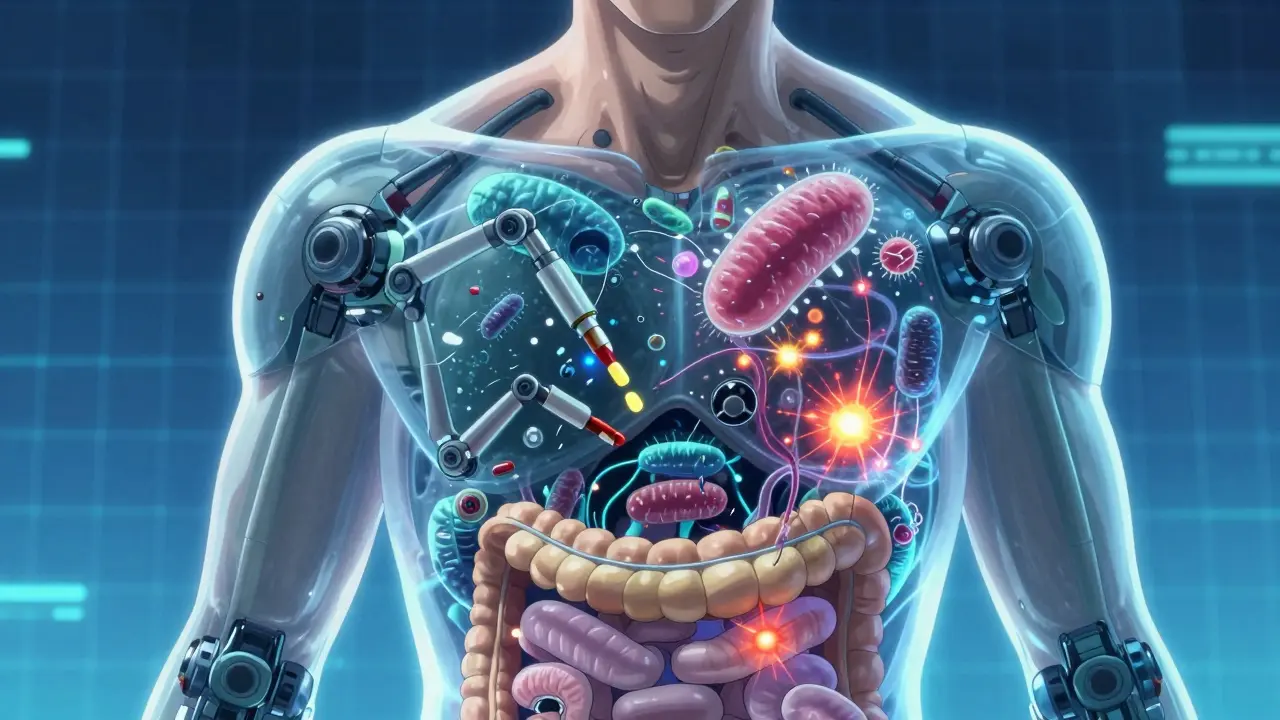
Gut Bacteria Drug Interaction Checker
Check if your medication interacts with gut bacteria
Enter a drug name to see if gut bacteria may affect its effectiveness or cause side effects.
Results
What if the reason your medication gives you terrible diarrhea, makes you dizzy, or doesn’t work at all isn’t your body-but the trillions of bacteria living in your gut? This isn’t science fiction. It’s happening right now, in real patients, every single day. Researchers have found that the microbes in your intestines don’t just digest your food-they actively change how your drugs work. Sometimes they make them stronger. Sometimes they turn them toxic. And in many cases, this is why two people taking the same pill have completely different experiences.
The Hidden Players in Your Drug Response
For decades, doctors assumed that how a drug behaves in your body depended mostly on your liver, kidneys, and genes. But starting in 2019, a team at Yale University proved something startling: gut bacteria were responsible for turning three common drugs into harmful compounds that caused serious side effects in some patients. In fact, up to 80% of the toxic byproducts found in those patients’ blood came directly from bacteria, not human cells. This wasn’t a fluke. Since then, over 117 drugs have been linked to microbiome-driven changes. That includes chemotherapy agents, antidepressants, heart medications, and even common painkillers. The gut microbiome isn’t just a bystander-it’s an active participant in drug metabolism. And because every person’s gut bacteria are unique, your drug response can be wildly different from your neighbor’s-even if you’re both taking the exact same dose.How Bacteria Change Drugs (And Why It Matters)
Your gut bacteria don’t just break down food-they have their own set of enzymes, and they use them to chemically alter drugs. Here are the most common ways:- Reactivating toxins: The chemotherapy drug irinotecan is turned into a harmless form by your liver, then sent to the gut. But certain bacteria-especially those making beta-glucuronidase-flip it back into its toxic form. That’s why 25-40% of patients on this drug get severe, sometimes life-threatening diarrhea. The more of these bacteria you have, the worse your side effects.
- Deactivating drugs: The heart medication digoxin, used for irregular heartbeat, can be completely broken down by a single bacterial species called Eggerthella lenta. In some people, this bacteria is so active that the drug becomes useless. No amount of dose increase helps if your gut is eating it before it can work.
- Activating prodrugs: Some drugs are designed to be inactive until bacteria turn them on. Prontosil, an early antibiotic, only works because gut microbes split it into sulfanilamide-the real active ingredient. Without those bacteria, the drug does nothing.
- Creating new toxins: The antiviral drug studied by Yale researchers had 73% of its toxic metabolites made by gut bacteria. That’s why some patients got liver damage or nerve problems while others didn’t. It wasn’t dosage-it was their microbiome.
Antibiotics Aren’t Just Killing Bad Bacteria
One of the most overlooked risks? Taking antibiotics. While they clear infections, they also wipe out the bacteria that help metabolize your other drugs. That’s not always good. A 2014 study found that people on long-term antibiotics had 35% less effectiveness from lovastatin, a cholesterol-lowering drug. Why? Because the bacteria that normally help process statins were gone. The drug didn’t work as well-and their cholesterol stayed high. On the flip side, antibiotics can also reduce side effects. In rodent studies, giving antibiotics before the sedative nitrazepam cut its harmful birth defects by 78%. That’s because the bacteria that turned it toxic were eliminated. The takeaway? Antibiotics don’t just affect your gut health-they can change how every other drug you take works. That’s why doctors are now asking patients: “Have you taken antibiotics recently?” before prescribing new medications.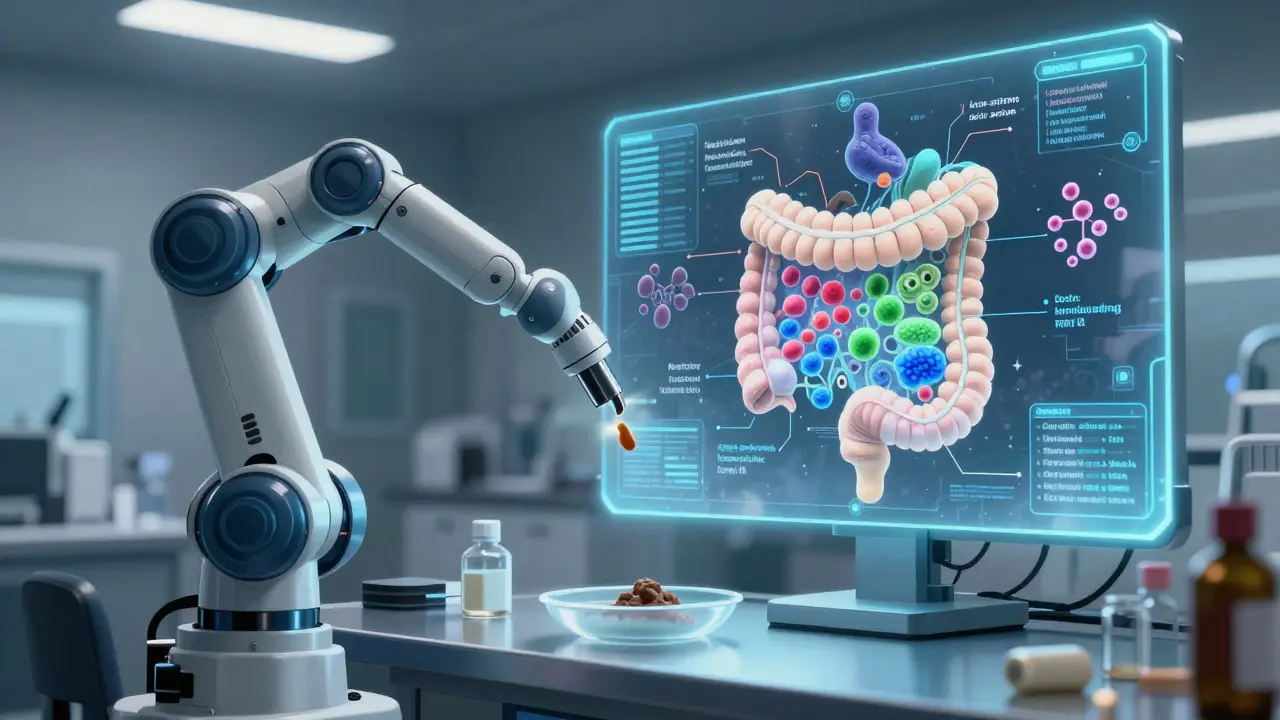
Why This Changes Everything for Precision Medicine
Right now, doctors prescribe drugs based on weight, age, and genetics. But that’s incomplete. Two people with identical genes can have totally different drug responses because of their gut bacteria. This is where precision medicine steps in. Instead of giving everyone the same dose, future treatments could be tailored to your microbiome. Imagine a simple stool test before you start a new drug-checking for bacteria that break down or activate it. That test could tell your doctor:- Should you get a lower dose?
- Do you need a different drug?
- Should you take a probiotic or enzyme blocker to prevent side effects?
What’s Being Done Right Now?
This isn’t just theory. The pharmaceutical industry is already adapting. Since 2020, Pfizer, Merck, and other big drugmakers have started testing new drugs against human gut bacteria in the lab before they even reach human trials. Why? Because if a drug gets destroyed or turned toxic by common bacteria, it’s likely to fail later-costing hundreds of millions. Regulators are catching up, too. The FDA and European Medicines Agency now recommend microbiome testing for new cancer drugs. Some require it. In oncology, 65% of new drug applications now include microbiome data. Neurology and cardiology are following. Diagnostic tools are improving fast. A stool test that checks for drug-metabolizing genes now costs $300-$500 and is 95% accurate. Fecal transplants-once used only for C. diff infections-are being tested to fix drug metabolism problems. And companies are developing targeted probiotics that can be taken with your meds to block harmful reactions.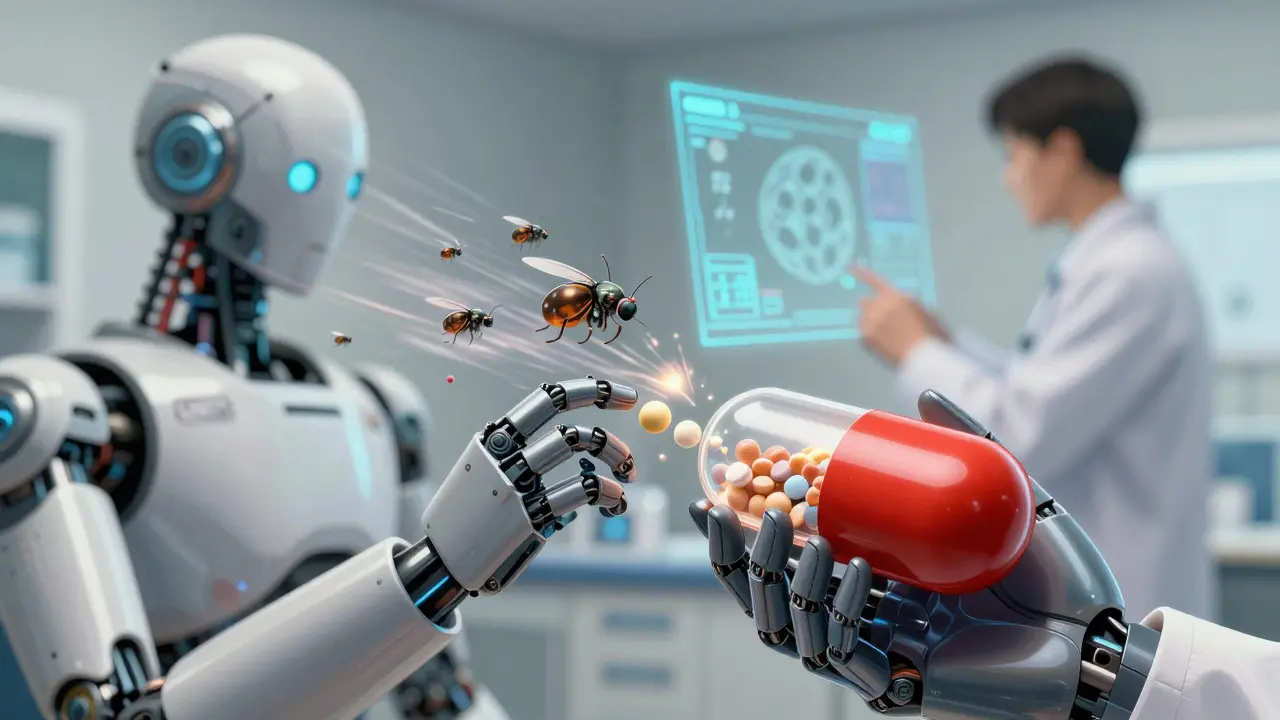
What You Can Do Today
You can’t change your genes. But you can start paying attention to your gut.- Track your side effects: If you’ve had unexpected reactions to a drug-especially diarrhea, nausea, dizziness, or no effect at all-note it. Tell your doctor. Mention your gut health.
- Don’t self-prescribe antibiotics: Only take them when absolutely necessary. They can alter your drug response for months.
- Ask about microbiome testing: If you’re on a high-risk drug (chemo, heart meds, antiseizure), ask your doctor if microbiome-related reactions are known for that drug.
- Consider your diet: Fiber-rich foods support healthy bacteria. Processed foods and sugar can shift your microbiome toward more harmful types. While diet alone won’t fix drug metabolism, it helps maintain balance.
The Future: Personalized Dosing Based on Your Gut
Within the next five to seven years, doctors may routinely check your microbiome before prescribing certain drugs. Imagine getting a personalized pill that includes not just the active ingredient, but a tiny probiotic to prevent its breakdown-or an enzyme blocker to stop toxin formation. The NIH has already invested $14.7 million into this research between 2023 and 2025. Clinical trials are underway for microbiome-targeted probiotics that can be taken with chemotherapy, antidepressants, and statins. Early results suggest these could reduce side effects by 25-35%. This isn’t about replacing medicine. It’s about making it work better-for you.What if your next medication didn’t just treat your condition-but also respected your body’s unique biology? That’s the future. And it’s already here.
Can my gut bacteria make my medication stop working?
Yes. Certain gut bacteria can break down or inactivate drugs before they reach your bloodstream. For example, the bacteria Eggerthella lenta can completely deactivate digoxin, a heart medication, making it useless in some people. This isn’t about your liver or kidneys-it’s about the microbes in your colon.
Do probiotics help with drug side effects?
Some targeted probiotics are being tested to reduce side effects. For example, a probiotic designed to block the bacterial enzyme beta-glucuronidase has cut chemotherapy-induced diarrhea by 60-70% in trials. But over-the-counter probiotics aren’t proven for this yet. Only specific, research-backed strains show promise.
Should I avoid antibiotics if I’m on other medications?
Not necessarily, but be cautious. Antibiotics can wipe out bacteria that help metabolize your drugs, making them less effective-or more toxic. If you’re on statins, antidepressants, or chemotherapy, tell your doctor you’re taking antibiotics. They may adjust your dose or timing.
Can a stool test tell me how my body will react to a drug?
Not yet for all drugs, but it’s getting close. Tests can now detect specific bacterial genes linked to drug metabolism with 95% accuracy. They’re already used in clinical trials for cancer drugs. In the next few years, these tests may become routine before prescribing high-risk medications.
Why don’t doctors know about this yet?
This science is new. Until 2019, most medical schools didn’t teach microbiome-drug interactions. But major drug companies and regulators are now requiring microbiome data for new drugs. As more evidence builds, it’s becoming standard knowledge. Ask your doctor if your medication is affected by gut bacteria-it’s a smart question.



13 Comments
Monte Pareek
This is wild but makes total sense. I’ve been on statins for years and my cholesterol never budged until I stopped antibiotics after a sinus infection. My doc didn’t even connect the dots. Turns out my gut flora got wiped out and the drug just sat there useless. Now I ask every prescriber if my meds interact with my microbiome. They look at me like I’m speaking Klingon but I’m not wrong.
Vicki Belcher
OMG I’m crying 😭 this explains EVERYTHING. I thought I was just ‘bad at taking meds’ but turns out my gut was eating my antidepressants. I’m getting a stool test next week. If this works, I’m writing a thank-you letter to my bacteria.
Alex Curran
Been saying this for years. Gut bugs are the real pharmacists. We’ve been treating the body like a closed system when it’s actually a floating ecosystem. Antibiotics are like nuking your kitchen because a fly landed on the counter. You kill the good, the bad and the ones that help you digest your pills. Simple as that
holly Sinclair
It’s fascinating how we’ve spent centuries reducing medicine to chemistry and genetics while ignoring the fact that we’re walking biomes. The human body isn’t a machine with parts-it’s a symbiotic colony. And we’ve been treating our microbial tenants like pests instead of partners. The fact that 80% of toxic metabolites come from bacteria? That’s not a side effect-it’s a betrayal by our own inner ecosystem. We’ve been blaming the patient’s liver, their genes, their compliance, when the real culprit has been living in their colon the whole time, quietly editing the script. This isn’t just science. It’s a philosophical reckoning. We’ve anthropocentrized medicine to the point of absurdity. If your gut bacteria can turn a heart drug into a paperweight or a chemo agent into a poison, then your identity as a patient isn’t defined by your DNA-it’s defined by your microbiome. And yet we still don’t test for it. We still don’t ask. We still prescribe like we’re giving out cookies at a bake sale. The future isn’t personalized medicine. It’s personalized ecology. And we’re five years behind.
Kelly Mulder
How utterly pedestrian. This is not news. It’s been peer-reviewed since 2017. You’re reading this like it’s a TikTok trend. The FDA has mandated microbiome profiling for Phase II oncology trials since 2021. If you’re surprised your digoxin isn’t working, you’ve been living under a rock. And no, your ‘fiber-rich diet’ won’t fix it. You need targeted enzyme inhibitors, not kale smoothies. This isn’t wellness culture-it’s biochemistry. And you’re treating it like a yoga retreat.
Jedidiah Massey
Microbiome-driven pharmacokinetics. The paradigm shift is here. Beta-glucuronidase inhibition = game changer. We’re moving from pharmacogenomics to pharmacomicrobiomics. The clinical implications are staggering. Imagine a probiotic co-formulation with irinotecan. That’s not sci-fi. That’s 2025. We’re not talking about ‘gut health’-we’re talking about metabolic reprogramming at the microbial level. This is the future. And if you’re still prescribing based on weight and age? You’re practicing paleomedicine.
Emily P
So… if I take a probiotic before my antidepressant, will it help? Or make it worse? I don’t know which bacteria I have. I just know I feel like a zombie on 20mg.
anthony funes gomez
Interesting. But you’re missing the bigger picture. The microbiome isn’t just modifying drugs-it’s reflecting environmental toxicity, dietary stressors, and epigenetic drift. The real issue is not the bacteria-it’s the host’s metabolic signature shaped by decades of processed food, glyphosate exposure, and chronic stress. The gut flora are just the messengers. The real culprit is the industrial food system. And no, a stool test won’t fix that. You need systemic change. Not just probiotics. Revolution.
Lynsey Tyson
I just want to say thank you for writing this. I’ve been terrified to talk about my side effects because everyone just says ‘it’s normal’. But now I know it’s not me. It’s my gut. I’m going to ask my oncologist about testing. I’m not alone in this.
Edington Renwick
Wow. So my 12-year struggle with Zoloft wasn’t ‘treatment-resistant depression’-it was my colon eating it. I’ve been depressed because my bacteria are lazy. I’m crying. I’m angry. I’m relieved. I’m filing a lawsuit against Big Pharma for not telling us.
Allison Pannabekcer
Everyone’s talking about the science-but what about the access? This is amazing… but only if you’re rich. A $500 stool test? A custom probiotic combo? Most people can’t even afford their prescriptions. We need this to be covered by insurance. Not a luxury for the privileged. This is healthcare equity. If your gut decides if your drug works, then we have to test everyone-not just the ones who can pay.
Sarah McQuillan
Wow, another ‘gut bacteria’ article. Next they’ll say your WiFi router is causing your headaches. I’ve been on 12 different meds and never had a problem. My gut is fine. This is just fear-mongering by the probiotic industry. Also, Australia doesn’t even have good healthcare so why are they even in this conversation? Stick to your kangaroos.
Aboobakar Muhammedali
Bro this changed my life. I was on antibiotics for bronchitis last year and my blood pressure went nuts. Doc said it was stress. I knew it wasn't. Now I see it was my gut bacteria dying. I started eating kimchi daily. My BP is normal now. I didn't know bacteria could do this. Thank you for sharing. I will tell my whole family.