

For many people struggling with major depressive disorder, waiting weeks for traditional medication to kick in feels impossible. You need help now. Ketamine is a rapidly acting pharmacological intervention originally approved as an anesthetic agent that now offers significant relief for treatment-resistant depression. Alongside it, we have Esketamine, known commercially as Spravato, which is the S-enantiomer form of ketamine approved specifically for depression delivery via nasal spray. Both options promise relief much faster than standard SSRIs, but they come with distinct differences in how they work, how you take them, and what you pay.
Understanding the Two Molecules
Before comparing results, we need to understand what you are actually putting into your system. Chemically, they are very similar cousins. Ketamine is a mixture of two molecules called enantiomers, the R-form and the S-form. Think of them like left and right hands; they look almost the same but interact differently with your body. Esketamine contains only the S-form.
This structural difference matters because it changes how strong the effects feel. Racemic ketamine (the full mix) tends to produce more noticeable "dissociative" feelings-that floating or detached sensation often reported by patients. Esketamine was designed to reduce that intensity while keeping the antidepressant benefits. The FDA (U.S. Food and Drug Administration) approved Esketamine in 2019 specifically for adults with major depressive disorder who have acute suicidal thoughts or behavior when used alongside a standard oral antidepressant.
Ketamine has been around longer in clinics, though technically using it for depression remains an off-label practice since 1970, even though doctors prescribe it daily. Because regulations differ, one requires a certified clinic with intravenous access, while the other is administered under supervision in certified care centers.
Efficacy: Which One Works Better?
The biggest question isn't just whether they work, but which one works better for severe cases. A major retrospective analysis released by researchers from Mass General Brigham a large healthcare network affiliated with Harvard Medical School conducting psychiatric research in late 2025 gave us some hard numbers to compare against. They looked at 153 adults with Treatment-Resistant Depression (TRD), defined as failure to respond to at least two different antidepressant medications.
- Intravenous Ketamine: Patients showed a 49.22% reduction in depression scores by the final dose.
- Intranasal Esketamine: Patients showed a 39.55% reduction over the same period.
These numbers suggest that the IV route delivers the medicine more directly to your bloodstream, resulting in higher potency. The study noted that IV ketamine patients often felt symptom relief immediately after the first infusion. In contrast, the nasal spray users typically needed two treatments before seeing significant shifts in their mood. If your depression is life-threatening, speed might be the deciding factor.
However, efficacy isn't everything. A meta-analysis published in 2020 also supported these findings, concluding that while both are viable, the intravenous route often yields stronger outcomes. But remember, individual biology plays a huge role. Some brains respond beautifully to the nasal route, while others need the direct hit of an IV drip.
The Patient Experience: Clinic Visits Explained
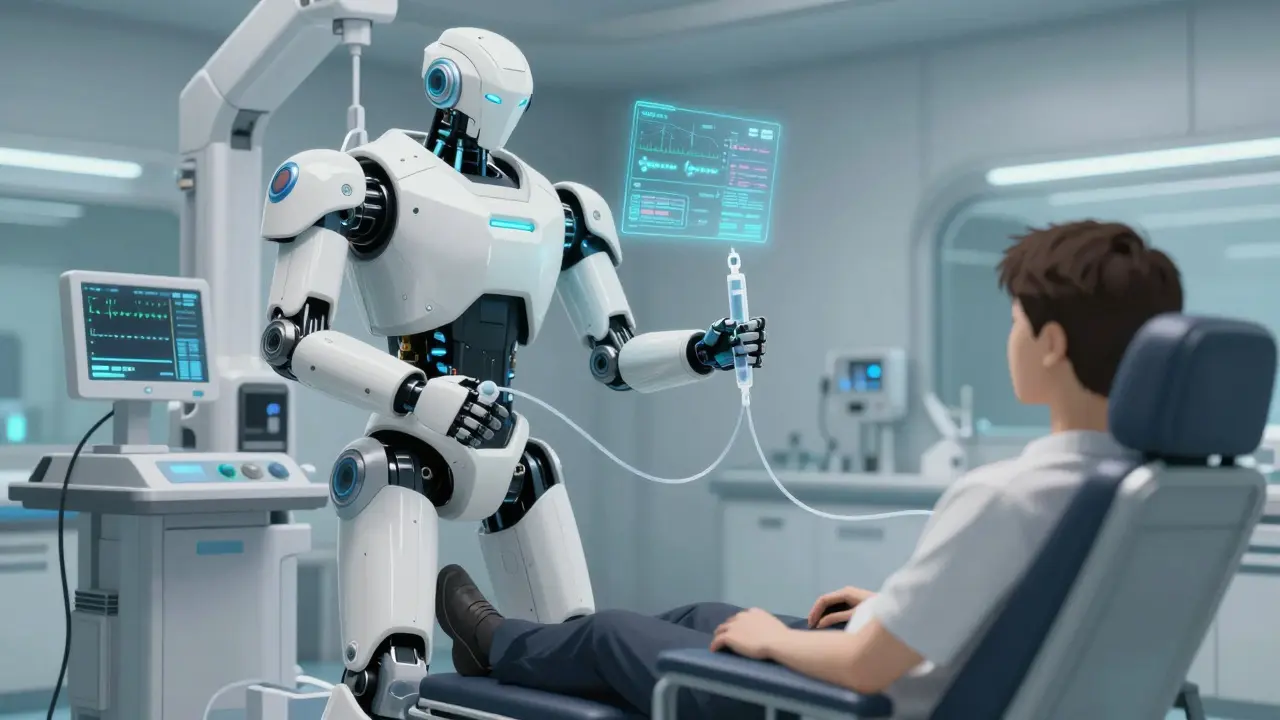
How does the actual appointment feel? This is where the user experience differs significantly between the two options. For IV ketamine, you arrive at a clinic equipped for medical procedures. A nurse places an IV line in your arm, and you receive the medication over about 40 minutes. The dosage is precise, typically calculated by your weight (around 0.5 mg per kilogram).
You will spend time lying down, watching a movie or listening to music. Many patients describe this session as a "trip." You might feel dizzy, see colors, or feel disconnected from reality. While intense, these effects usually fade within an hour of finishing the infusion. Afterward, you must stay at the clinic for about 2 hours for monitoring. You cannot drive yourself home.
Esketamine treatment involves a self-administered spray. You are monitored closely by a nurse or doctor in a comfortable chair. You take a set number of sprays in each nostril. You then sit quietly for two hours until your blood pressure and symptoms stabilize. Because the dissociation is generally milder with esketamine, the experience often feels less overwhelming for nervous patients.
| Feature | Ketamine (IV) | Esketamine (Nasal) |
|---|---|---|
| Route of Administration | Intravenous Drip | Nasal Spray |
| Typical Session Time | 40 min infusion + 2 hr observation | Spray + 2 hr observation |
| Dissociation Intensity | Moderate to High | Mild to Moderate |
| Medical Oversight Required | Anesthesia-trained provider | Licensed healthcare professional |
| Regulatory Status | Off-label for depression | FDA Approved for depression |
Safety and Side Effects
Safety is the flip side of efficacy. The most common concern is the psychological impact during the treatment. In the Mass General Brigham study, 42.3% of IV ketamine patients reported dissociation, compared to 28.7% of esketamine users. Hallucinations can occur with both, though they are rare when managed correctly. Physical side effects like nausea, dizziness, and increased blood pressure are standard for both treatments.
Because esketamine is delivered via the nose, there is no risk of IV infection or vein irritation. However, the drug is absorbed through the nasal mucosa, which can sometimes cause congestion or numbness in the nose. Long-term safety data is still maturing. We know from 2024 trials that maintaining remission requires ongoing sessions-either weekly for a few months, then tapering to monthly. About 56% of responders to IV ketamine maintained remission for six months with regular maintenance.
Both substances are classified as Schedule III controlled substances by the DEA. This means they have abuse potential, particularly with ketamine due to its dissociative properties used recreationally. In a clinical setting with proper oversight, this risk is managed, but patients with a history of substance use disorders should discuss this openly with their provider.

Cost and Insurance Reality
This is often the hardest part. Pricing varies wildly depending on location and facility, but we have some concrete estimates for 2025-2026. A typical initial induction course involves eight treatments. For IV ketamine, this runs roughly between $4,200 and $5,600 out of pocket if paying cash. For Spravato (esketamine), the comparable course costs approximately $5,800 to $6,900.
Here is the tricky part regarding coverage. Commercial insurance plans cover Spravato much more frequently. Reports indicate around 67% of commercial plans approve coverage for esketamine. For IV ketamine, only about 38% of plans provide coverage since it is off-label. Medicare policies often differ, and prior authorization is frequently required for Spravato. Before starting, always call your insurer and ask about "medication-assisted therapy" or specific codes for Spravato.
Some clinics offer financing plans or sliding scales. If you decide IV ketamine is medically necessary for you but insurance denies it, you may need to budget for the higher upfront cost, knowing that the long-term QALY (quality-adjusted life year) benefit suggests it provides more value per dollar spent in terms of efficacy gains.
Deciding What Is Best for You
There is no perfect winner, only what fits your specific situation. Dr. John Krystal from Yale New Haven suggests IV ketamine is preferable for severe, life-threatening depression requiring rapid response. Conversely, experts like Dr. Christine Denny from Columbia University note that esketamine is better suited for outpatient maintenance once stability is reached.
Ask yourself these three questions before booking:
- How severe are my symptoms? If you have active suicidal ideation, the superior onset of IV ketamine might save lives sooner.
- How do I handle altered states? If the idea of dissociation scares you, the gentler profile of the nasal spray might make the process sustainable.
- What does my insurance allow? Financial barriers are real. If you cannot afford out-of-pocket costs for IV, Spravato might be your only accessible path.
Access remains a barrier regardless of choice. Only about 12% of U.S. counties have certified centers for Spravato, and fewer offer comprehensive IV ketamine programs. Geography dictates your availability as much as medicine does.


8 Comments
walker texaxsranger
the government wants you weak so big pharmacy profits stay high while real medicine gets locked behind insurance walls nobody talks about the r form efficacy really
Richard Kubíček
I think we need to focus on the relief rather than blaming everything on hidden agendas
There are genuine solutions available now that can help people get back on their feet
Hope this thread helps someone find their way out of darkness soon
Kameron Hacker
The numbers shown here highlight a broken system where access depends on money instead of actual need. People suffering shouldn't have to fight bureaucracies just to get basic relief options approved. Insurance companies prioritizing profit over patient outcomes is unethical behavior that needs changing. We need clearer regulations to protect those seeking rapid intervention for severe cases immediately.
Eva Maes
It is absolutely glaring that the study ignores the nuance of individual metabolic rates when claiming superiority in reduction percentages. One must consider how the pharmacokinetic profile alters the blood serum concentration over time regardless of the delivery method. Many practitioners fail to disclose that the S-enantiomer binds with different receptor affinities compared to the racemic mixture. We see a massive discrepancy in pricing structures that heavily favor the corporate entity holding the patent rights. Safety profiles are often downplayed by marketing materials released directly by pharmaceutical giants. The narrative surrounding off-label usage suggests a regulatory vacuum where patient safety takes a secondary position. Dissociative effects can linger for hours if the dosage is miscalibrated during the induction phase. Some individuals report severe nausea that renders the treatment experience completely untenable for daily living. Insurance hurdles create a socioeconomic barrier excluding those who genuinely need rapid intervention. It is tragic that geography dictates access rather than medical necessity alone. Mental health infrastructure remains woefully underfunded in rural counties without certified centers. Patients are essentially testing new protocols while researchers gather more longitudinal data. Cost benefit analysis rarely factors in the emotional toll of waiting weeks for traditional antidepressants to work. Everyone claims novelty while ignoring decades of clinical research preceding this approval cycle. The true measure of success should be sustained remission rather than transient symptom relief. We need transparent discussions about substance abuse risks before prescribing controlled substances.
Monique Louise Hill
You need to stop making medical decisions based solely on internet statistics without consulting your provider 🙄 The ethical implications of discussing controlled substances in public forums are quite concerning to me 🛑 Personal experiences vary wildly so generalizations are dangerous for vulnerable populations 💉 Always prioritize professional guidance over forum speculation 🤷♀️
Sarah Klingenberg
Just wanted to drop a note saying stay strong everyone going through this journey :)
Healing isn't always a straight line but small steps matter a lot <3
Community support makes such a difference when things feel heavy :)
Shawn Sauve
That is a very kind sentiment Sarah thank you for sharing that perspective with us :)
Boundaries are indeed essential for maintaining progress without burnout :)
Take care of yourselves out there :)
Rachael Hammond
it is amazing how much our bodies can heal given the right tools and environment i love seeing the optimism here lol sometimes i worry about the future of medice but people are resilient wuow