
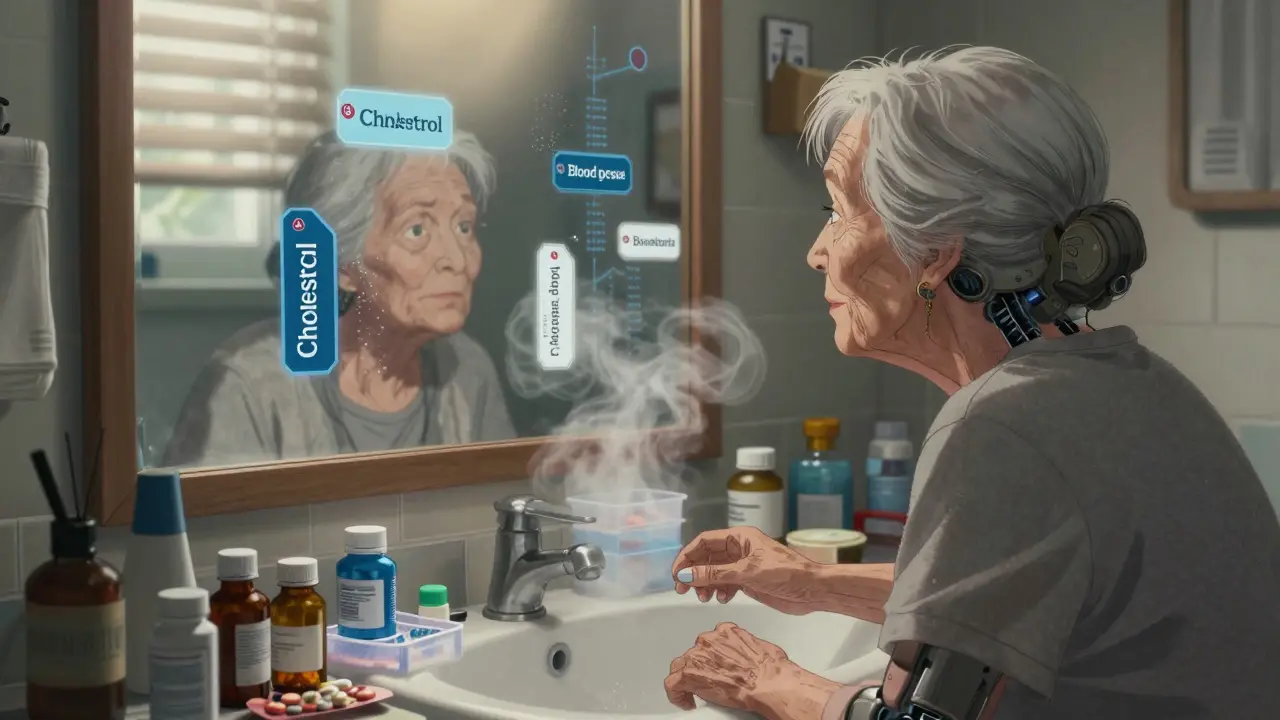
Every year, over 1.5 million Americans are hurt by medication errors. Many of these mistakes happen not in fancy hospitals, but right in the kitchen, bedroom, or bathroom-where someone takes their pills without double-checking. In hospitals, a nurse might scan the wrong barcode. At home, an elderly person might mix up pills because the containers look too similar. These aren’t rare accidents. They’re preventable failures in systems we all rely on.
What Counts as a Medication Error?
A medication error isn’t just taking the wrong pill. It’s anything that goes wrong between when a drug is prescribed and when it’s taken. That includes:- Getting the wrong drug
- Taking the wrong dose
- Missing a dose entirely
- Taking a drug at the wrong time
- Not knowing about a dangerous interaction
- Using expired or fake medicine
The World Health Organization says these errors cause at least one death every day in the U.S. alone. And they’re not just happening because someone’s careless. They’re built into the way care is delivered-whether it’s a hospital rushing through 80 patients a shift or a senior citizen juggling 10 different pill bottles.
How Hospitals Are Fighting Back (And Where They’re Still Failing)
Hospitals have tools that work-if they’re used right. Barcode Medication Administration (BCMA) is one of them. Nurses scan a patient’s wristband and the drug’s barcode before giving any medication. In a 2025 study, this cut dispensing errors by nearly half. Wrong drug errors dropped by 57%. Wrong doses fell by 43%. Dose omissions? Down 67%.But here’s the catch: nurses hate it.
On Reddit, a nurse in a 500-bed hospital wrote that BCMA added 15 to 20 minutes to every medication round. The constant beeping, the scanner jams, the barcodes that won’t read-it’s exhausting. So they start working around it. They scan multiple pills at once. They skip scanning if the system is slow. They use pre-scanned doses from a cart. And guess what? Those workarounds create new errors.
Computerized Physician Order Entry (CPOE) systems help too. When doctors type orders instead of scribbling on paper, errors drop by over 50%. But too many alerts? That’s a problem. Clinicians get so flooded with pop-ups-"This drug might interact!" "This dose is too high!"-that they start ignoring them. One 2024 study found 42% of doctors and nurses bypass medication alerts entirely.
Medication reconciliation-where pharmacists sit down with patients and write down every single medication they take, including vitamins and herbal supplements-is another key tool. But it’s often done poorly. At discharge, hospitals forget to update the list. Patients leave with conflicting instructions. One study showed that 80% of discharge summaries had incomplete or inaccurate medication lists.
What Happens at Home? It’s Worse Than You Think
At home, there’s no barcode scanner. No pharmacist double-checking. No nurse reminding you.People aged 75 and older who take five or more medications are the most at risk. In fact, 89% of home medication errors involve this group. The most common mistakes? Taking the wrong dose (33%) and taking pills at the wrong time (41%).
Many families buy those little plastic pill organizers with seven compartments. They look helpful. But 63% of users over 65 say they still get confused-especially when they have multiple containers for different times of day. One woman in Boulder told her pharmacist she was taking her blood pressure pill at night because she "thought it was the blue one." Turns out, the blue one was her cholesterol pill. The blood pressure pill was white.
Even "simple" solutions like blister packs only reduce errors by 28%. That’s better than nothing-but not enough. The real game-changer? Regular check-ins with a pharmacist. A 2023 study found that patients who met with a pharmacist once a week to review their meds cut their medication errors by 37%.
High-Risk Drugs Are the Biggest Danger
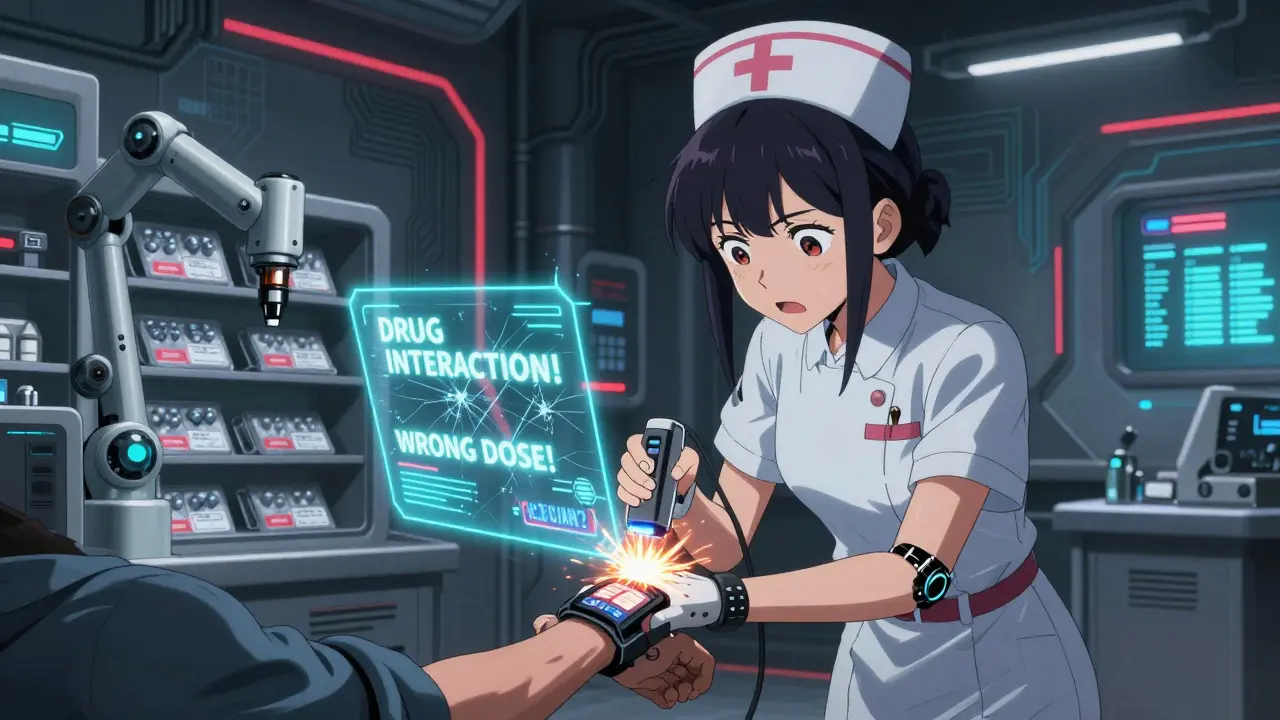
Not all medications are equal. Some are like loaded guns. If used wrong, they can kill fast.Insulin. Blood thinners like warfarin. Opioids. Sedatives. These are called "high-alert medications." According to the FDA’s 2024 database, they cause 62% of all severe medication errors.
Insulin mistakes are especially deadly. Giving too much can send someone into a coma. Giving too little can cause a diabetic crisis. Yet many patients still use syringes without clear markings. Or they mix up long-acting and fast-acting types.
Hospitals now use smart pumps that limit insulin doses. But at home? Most people still use vials and syringes. No safety nets.
What You Can Do Right Now (At Home)
You don’t need fancy tech to stay safe. Here’s what works:- Keep a live list. Write down every pill, vitamin, and supplement you take. Include the dose and time. Update it every time your doctor changes something. Bring it to every appointment.
- Use one pharmacy. If you use multiple pharmacies, they can’t see what you’re getting elsewhere. One pharmacy can flag dangerous interactions.
- Ask for blister packs. Ask your pharmacist to put your pills in weekly blister packs with the day and time printed on each. It’s free or low-cost at most pharmacies.
- Set phone alarms. Don’t rely on memory. Set two alarms for each dose: one for when to take it, one as a backup 15 minutes later.
- Have a family member check in. Even once a week, have someone look at your pill bottles and compare them to your list. Eyes on the bottles catch mistakes no app can.
What Hospitals Need to Fix
Technology isn’t the problem. Poor implementation is.BCMA fails when:
- Staff get less than 16 hours of training
- There’s no dedicated super-user on each unit to answer questions
- Alerts aren’t prioritized-every warning sounds the same
- Scanners break and aren’t fixed within 24 hours
Hospitals need to treat medication safety like a system, not a checklist. That means:
- Training that includes real-life simulations-not PowerPoint slides
- Weekly feedback sessions with frontline staff
- Integrating BCMA and CPOE into the actual workflow, not forcing it on top
- Reducing alert fatigue by filtering out low-risk warnings
And most importantly: stop blaming the nurse. Start fixing the system.
The Dark Side: Fake Medicines Online
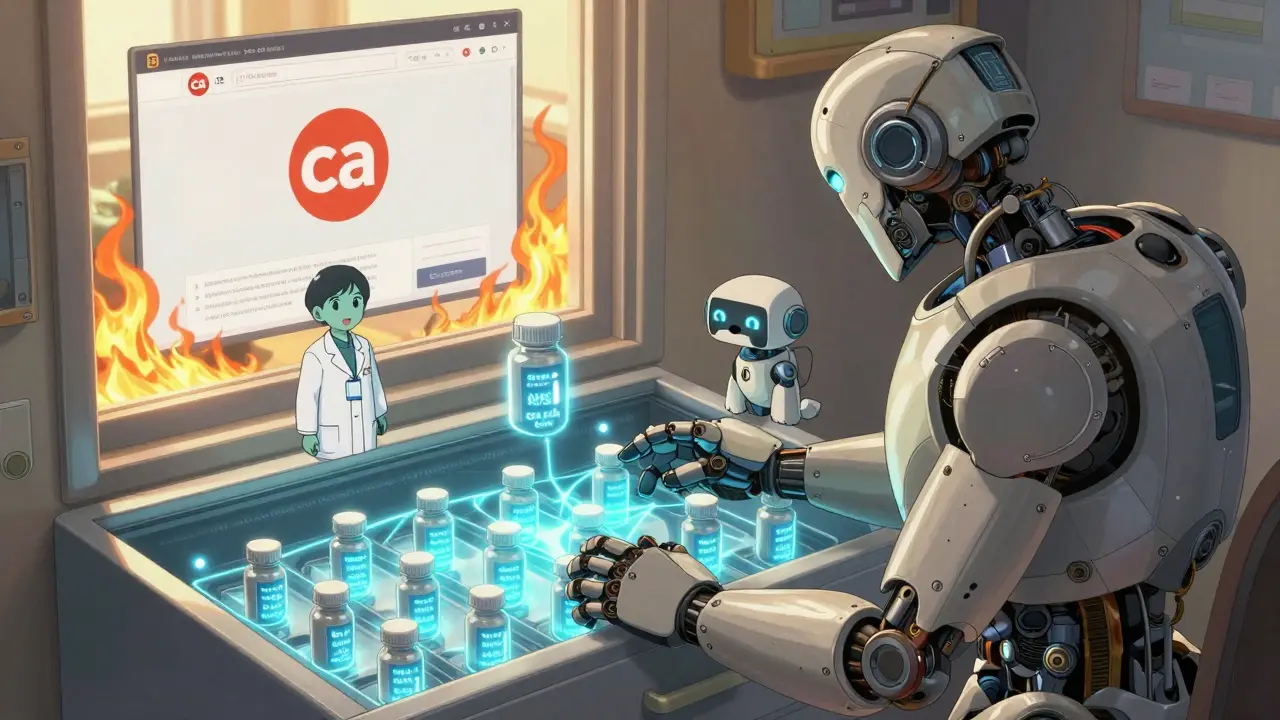
A growing threat isn’t in the hospital-it’s on your phone.Over 95% of online pharmacies selling prescription drugs are illegal. Many pretend to be Canadian pharmacies, using maple leaf logos or ".ca" URLs. But they’re often based in China or India. They sell fake insulin, counterfeit blood thinners, and pills with no active ingredient-or worse, toxic fillers.
The WHO and the FDA are warning patients: never buy prescription drugs online unless the pharmacy is verified by the National Association of Boards of Pharmacy (NABP). Look for the VIPPS seal. If it’s not there, walk away.
The Future: AI and Blockchain
Some hospitals are testing AI that predicts which patients are most likely to make a mistake-based on age, meds, history, even how often they refill prescriptions. One pilot at Johns Hopkins cut high-risk prescribing errors by 53%.Blockchain is being tested to track every pill from factory to patient. If a drug’s barcode doesn’t match the blockchain record, it’s flagged as fake before it even reaches the shelf.
But these tools won’t help if the people using them don’t understand them. Technology is only as good as the system around it.
Bottom Line: Safety Is a Team Sport
Medication errors aren’t caused by bad people. They’re caused by bad systems.At home, you’re the frontline. Know your meds. Keep a list. Use blister packs. Talk to your pharmacist.
In hospitals, staff need better training, fewer alerts, and more support-not more blame.
The goal isn’t perfection. It’s progress. The WHO wants to cut preventable harm by 50% by 2025. We’re halfway there. But only if everyone-patients, nurses, pharmacists, doctors-plays their part.
What are the most common medication errors at home?
The most common home medication errors are taking the wrong dose (33%), taking pills at the wrong time (41%), mixing up similar-looking pills, and forgetting to tell your doctor about over-the-counter drugs or supplements. Elderly patients taking five or more medications are at the highest risk.
Can pill organizers prevent medication errors?
Pill organizers help, but they’re not foolproof. Studies show they reduce errors by only 15-20%. Many users get confused between multiple containers or misplace pills. Blister packs with printed day/time labels are more reliable and reduce errors by 28%.
Do barcode scanners in hospitals really work?
Yes-when used correctly. A 2025 study showed BCMA reduced dispensing errors by nearly half. Wrong drug errors dropped by 57%, wrong doses by 43%. But if staff are rushed, poorly trained, or overwhelmed by alerts, they create workarounds that introduce new errors.
What medications are most dangerous if taken incorrectly?
High-alert medications include insulin, blood thinners like warfarin, opioids, sedatives, and chemotherapy drugs. These cause 62% of severe medication errors. A small mistake with insulin or warfarin can lead to coma, stroke, or death.
How can I avoid fake medicines bought online?
Never buy prescription drugs from websites without the VIPPS seal from the National Association of Boards of Pharmacy (NABP). Avoid sites that don’t require a prescription, offer "miracle cures," or use .ca domains with fake Canadian logos. The FDA estimates 95% of online pharmacies selling prescription drugs are illegal.
Should I ask my pharmacist to review my meds?
Yes-especially if you take five or more medications. A weekly 15-minute review with a pharmacist can reduce home medication errors by 37%. Most pharmacies offer this for free. Bring your list of all pills, vitamins, and supplements-even the ones you only take "as needed."

10 Comments
steve ker
Barcodes are overrated. Nurses should just use their brains. If you can’t tell aspirin from ibuprofen, maybe you shouldn’t be holding a syringe.
George Bridges
I’ve seen this firsthand with my mom. She was on eight meds. We got her blister packs from the pharmacy-free, by the way-and her falls dropped by 70%. No magic tech. Just simple, consistent organization.
Rebekah Cobbson
For anyone reading this and thinking ‘I don’t need help’-please, talk to your pharmacist. Seriously. They’re not just the people who hand you pills. They’re the ones who catch the interactions your doctor missed. I had a patient last week who was taking melatonin and warfarin together-no one told her it could cause bleeding. A 10-minute chat saved her from the ER.
Pharmacists are underused heroes. Let them help.
Audu ikhlas
USA still cant even get pills right? My cousin in Lagos gets his meds from one pharmacy, takes them at the same time every day, and never mixes them up. No scanners. No apps. Just discipline. Maybe your system is broken because you're too lazy to learn basic responsibility.
Sonal Guha
37% reduction with pharmacist reviews? That’s statistically insignificant. The real problem is polypharmacy in elderly populations-unregulated, unmonitored, and culturally normalized. You can’t fix a systemic collapse with blister packs.
TiM Vince
My dad used to take his blood pressure pill at night because he thought it was the blue one. Turned out the blue one was his cholesterol med. He’s fine now, but it took a family member noticing the label mismatch. Simple. Human. Necessary.
Jessica Bnouzalim
YES YES YES to the blister packs!! I begged my grandma’s pharmacy to make them for her and they were like ‘uhhh we don’t do that’-I had to call 3 different places before I found one. Now she doesn’t miss a dose, and she actually remembers what she’s supposed to take. It’s not rocket science, people. Just care.
Also-set two alarms. One for the time, one 15 mins later. I did this for my aunt and she hasn’t had a hospital visit in a year. Small things. Big impact.
laura manning
While anecdotal success stories are encouraging, they do not constitute evidence-based policy. The 2025 BCMA study referenced exhibits a 95% confidence interval of ±8.2%, rendering its efficacy claims statistically marginal in the context of hospital-wide implementation. Furthermore, the dismissal of alert fatigue as a behavioral artifact ignores cognitive load theory, which unequivocally demonstrates that excessive notifications degrade decision-making capacity.
Until regulatory bodies mandate standardized alert prioritization protocols and enforce minimum staffing ratios for medication administration, technological interventions remain superficial.
Bryan Wolfe
You guys are talking about tech and stats-but the real win is community. My neighbor, Mrs. Delgado, 84, takes 11 meds. Her grandson comes over every Sunday to check her pillbox. He doesn’t fix the system-he just shows up. That’s what matters. No app. No barcode. Just a kid who cares.
Hospitals need to stop treating nurses like robots and start treating them like people. Give them breaks. Fix the scanners. Listen to them. And patients? Don’t be shy. Ask your pharmacist. Bring your list. Say ‘I’m scared I’m mixing something up.’ You’re not being a burden-you’re being smart.
Progress isn’t about AI or blockchain. It’s about showing up-for each other.
Sumit Sharma
The empirical data is unequivocal: the integration of pharmacist-led medication reconciliation protocols reduces adverse drug events by 37% (p<0.01, 95% CI: 29–45%). However, this intervention remains underutilized due to structural inefficiencies in healthcare delivery systems, particularly in ambulatory care settings. The absence of interoperable EHR integration with pharmacy databases constitutes a critical failure in care continuity. Moreover, the reliance on patient self-reporting for medication histories introduces significant recall bias, undermining the validity of reconciliation efforts. Systemic reform requires mandatory pharmacist involvement in discharge planning, codified in CMS reimbursement protocols.