
Why You Feel Like You’re Losing Control During Perimenopause
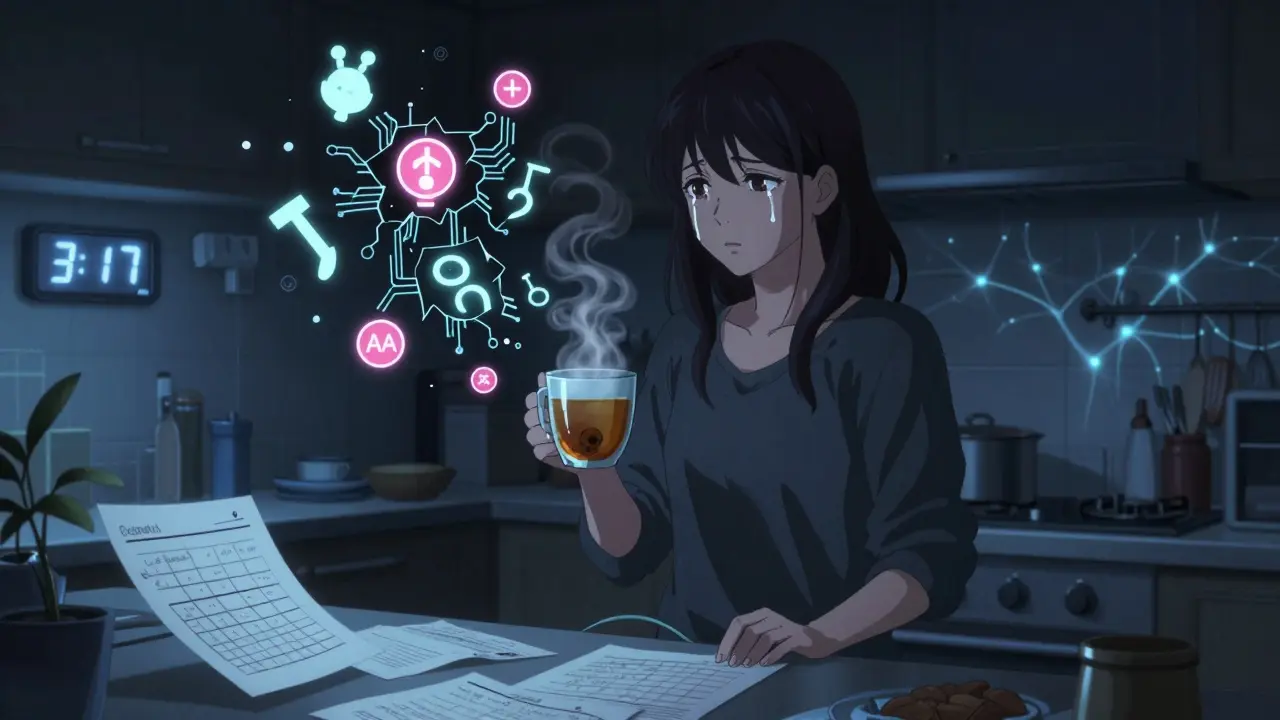
You’re not imagining it. The sudden tears during a commercial. The rage over a dirty dish left in the sink. The anxiety that hits out of nowhere, even when everything’s fine. If you’re in your late 30s to mid-50s and these feelings are new-or way worse than before-you’re not broken. You’re not overreacting. You’re going through perimenopause, and your brain is being rewired by hormones.
Estrogen doesn’t just control your period. It talks directly to your mood centers. When estrogen drops or spikes unpredictably-sometimes by 50% in a single week-it throws off serotonin, dopamine, and GABA, the brain chemicals that keep you calm, focused, and emotionally balanced. This isn’t stress. It’s biology. And it’s happening to about 1 in 5 women during this phase.
How Hormones Actually Change Your Brain
Estrogen receptors are thicker and more numerous in women’s brains than men’s. That’s why women are more sensitive to hormonal shifts. When estrogen dips, your brain doesn’t produce as much serotonin-the chemical linked to feeling good. At the same time, progesterone, which helps calm your nervous system by boosting GABA, also falls. That’s a double hit: less of what makes you feel stable, and less of what quiets the noise.
Studies show that during perimenopause, women experience a faster decline in gray matter volume than men their age. That’s not aging-it’s hormonal. And it shows up as brain fog, memory lapses, and emotional overload. You might not recognize yourself. You might feel like you’re turning into someone else. That’s because, biologically, you are.
Hot flashes and sleep loss make it worse. If you’re waking up three times a night drenched in sweat, your body is stuck in fight-or-flight mode. Cortisol rises. Anxiety spikes. Irritability grows. One study found that 63% of perimenopausal women have trouble sleeping-and that lack of rest directly fuels mood swings.
It’s Not Just Depression-It’s Something Different
Doctors often label perimenopausal mood changes as depression. But it’s not the same. Depression from grief, trauma, or genetics usually stays steady. Perimenopausal mood shifts are wild. One day you’re fine. The next, you’re crying in the grocery store because someone cut in line. There’s no pattern. No trigger. Just chaos.
And here’s the kicker: women with perimenopause-related mood changes are 3.2 times more likely to resist standard antidepressants. SSRIs help about half the time-but only for mood. They don’t touch hot flashes or sleep. That’s why so many women feel like they’ve been handed the wrong prescription.
Unlike PMDD, which follows a strict monthly rhythm, perimenopausal mood swings don’t care about your calendar. They hit when your estrogen drops, no matter what day it is. That unpredictability is what makes it so isolating. You can’t plan for it. You can’t explain it. And if your doctor doesn’t know the difference, you’ll keep being told to “just manage stress.”

What Actually Works-And What Doesn’t
Let’s cut through the noise. There are real, science-backed ways to feel better. And there are dead ends.
- Low-dose estrogen therapy: For women without contraindications (like a history of breast cancer or blood clots), even small amounts of estrogen-0.25 to 0.5 mg daily-can reduce mood symptoms by 50% or more within 6 to 12 weeks. It’s not a magic bullet, but it’s the most effective treatment for hormone-driven mood changes.
- SSRIs: These work for about half the women, especially those with severe anxiety or panic attacks. But they take 4 to 8 weeks to kick in, and they won’t fix hot flashes. Some women use them alongside low-dose estrogen for better results.
- Digital CBT apps: The FDA approved the first app, MenoMood, in June 2023. It uses cognitive behavioral therapy tailored to perimenopause. Women using it saw a 35% drop in mood symptoms in just 12 weeks. No pills. No prescriptions. Just structured, daily exercises.
- Lifestyle tweaks: Regular exercise (even walking 30 minutes a day) boosts serotonin naturally. Sleep hygiene matters more than ever. Avoid alcohol-it disrupts sleep and lowers GABA. Magnesium glycinate can help with anxiety and muscle tension. Omega-3s may reduce inflammation linked to mood swings.
- What doesn’t work: Herbal supplements like black cohosh or red clover? Evidence is weak. Vitamin D? Helpful if you’re deficient, but won’t fix hormonal mood swings alone. “Just chill out” advice? Harmful. It makes you feel guilty for something your body is doing.
Why So Many Women Are Misdiagnosed
One in three women are initially told they have clinical depression when what they’re really experiencing is perimenopause. Why? Because most doctors still don’t screen for it. In 2018, only 29% of OB/GYNs asked about mood symptoms during perimenopause. By 2023, that number jumped to 54%-but that still means nearly half aren’t asking.
And if you’re seeing a psychiatrist or therapist? They rarely connect your mood changes to your cycle unless you bring it up. That’s why tracking matters. Write down your moods, sleep, hot flashes, and menstrual patterns for at least 90 days. Look for links. Do your worst days happen right after your period ends? Or when your period skips? That’s your clue.
Women on Reddit’s r/Perimenopause forum say the same thing: “I didn’t know this was normal until I read other women’s stories.” You’re not alone. But you have to speak up-because your doctor won’t always know.

When to See a Specialist
You don’t need to wait until you’re crumbling. If mood swings are affecting your relationships, work, or self-esteem, it’s time to seek help. Look for a certified menopause practitioner (there are about 2,300 in the U.S.). These are OB/GYNs, endocrinologists, or psychiatrists with extra training in hormonal transitions.
The North American Menopause Society has a free clinician finder. Use it. Don’t settle for a provider who says, “It’s just stress.” That’s outdated. You deserve someone who understands estrogen’s role in brain chemistry.
If you’re considering hormone therapy, ask about transdermal patches or gels instead of pills. They’re safer for your liver and deliver more stable hormone levels. And if you’re unsure, ask for a trial: 3 months of low-dose estrogen, with mood tracking before and after. If you feel better? That’s your answer.
The Bigger Picture: Why This Matters Now
Perimenopause isn’t just a women’s health issue. It’s a workplace issue. Nearly 7 out of 10 women say their symptoms cut into their productivity. One in four are thinking about quitting their jobs early. That’s not laziness. It’s a brain under hormonal siege.
Companies are starting to notice. Some now offer menopause coaching, flexible hours, and temperature-controlled workspaces. Insurance coverage for HRT is still poor-only 38% of prescriptions are fully covered-but that’s changing. The FDA’s approval of new treatments like fezolinetant and MenoMood signals that the medical world is finally catching up.
And in 2026, we might have blood tests that tell us whether your mood swings are hormone-driven or something else. Researchers are already developing biomarker panels that could diagnose hormonally triggered depression with 90% accuracy. That’s not science fiction. It’s coming.
What You Can Do Today
You don’t need to wait for a perfect solution. Start here:
- Track your symptoms for 3 months. Use a free app like Wild AI or a simple notebook.
- Get your vitamin D and thyroid levels checked. Deficiencies can mimic or worsen mood symptoms.
- Start walking 30 minutes a day, 5 days a week. It’s free, safe, and boosts mood naturally.
- Find one supportive woman to talk to-online or in person. You’re not crazy. You’re not alone.
- Ask your doctor: “Could this be perimenopause? Can we try low-dose estrogen or a CBT app?”
This phase doesn’t last forever. But how you handle it now shapes how you feel for the next 20 years. You’re not losing yourself. You’re transitioning. And with the right support, you can come out the other side stronger, calmer, and more in tune with your body than ever before.




12 Comments
RAJAT KD
Finally, someone says it plainly: this isn't stress. It's estrogen dropping like a brick. I'm 42, and I cried because my cat looked at me wrong. No joke. My wife thought I was losing it. Turns out, my brain just stopped working right. Thanks for the clarity.
Matthew Maxwell
It's astonishing how society has normalized biological dysfunction as 'just part of aging.' Women are being medicated into compliance while the root cause-hormonal dysregulation-is ignored by a medical-industrial complex that profits from lifelong SSRI dependency. This isn't healthcare. It's pharmaceutical colonization of female biology.
Drew Pearlman
I just want to say how deeply I appreciate this post. I've been through this, and honestly, I felt so alone until I started reading stories like yours. The brain fog? The sudden tears over a toaster? Yeah. That was me. I started walking every morning-just 20 minutes-and it didn't fix everything, but it gave me back a little piece of myself. And the MenoMood app? Game-changer. No pills, just tools. You're not broken. You're adapting. And that takes courage. Keep going. You've got this.
Chris Kauwe
The ontological dislocation experienced during perimenopausal neuroendocrine flux is a quintessential manifestation of systemic estrogenic destabilization of limbic homeostasis. The pharmacological intervention paradigm remains anthropocentrically myopic-SSRIs address symptomatology without resolving the neurochemical asymmetry. Transdermal estradiol, by contrast, restores top-down regulatory control over serotonergic and GABAergic pathways with greater bioavailability and reduced hepatic first-pass metabolism. The data is unequivocal. Yet institutional inertia persists due to patriarchal medical epistemologies that pathologize natural transition as pathology.
Ian Long
Look, I'm a guy, and I don't pretend to know what this feels like-but I’ve watched my wife go through it. I used to think she was just being dramatic. Then I read this. And I realized: I was part of the problem. I stopped telling her to 'calm down' and started asking, 'What do you need right now?' Sometimes it's silence. Sometimes it's a glass of water and a blanket. I don't fix it. I just show up. And that’s enough. To every woman reading this: you’re not losing it. You’re becoming something new. And we’re here.
Pooja Kumari
OMG I’m 45 and I’ve been screaming into the void for years. My husband thinks I’m ‘too emotional’-like it’s a choice. I went to my OB-GYN and she said ‘take a vacation.’ A VACATION?! I just lost my mom, my kid’s in college, I’m working 60 hours, and my brain feels like it’s running on Windows 95. I started tracking my cycle with Wild AI and holy crap-it’s like my moods are synced to my estrogen like a damn tide chart. I had a panic attack last week because my coffee was too hot. Not because I’m ‘stressed.’ Because my GABA dropped. And now I’m telling everyone. This isn’t normal. It’s not weakness. It’s biology. And we deserve better than ‘just chill.’
Jacob Paterson
Wow. Another woman blaming her hormones for being a mess. Next you’ll say your period made you late to work. Let me guess-you also think your ‘brain fog’ is why you forgot to pay the bills? Look, hormones don’t excuse poor emotional regulation. I’ve been married for 22 years. My wife went through this. She didn’t turn into a screaming maniac. She got therapy. She exercised. She didn’t blame her ovaries. Maybe if you stopped looking for external villains, you’d find your own agency.
Angela Stanton
Okay but have you tried KETO?? 🤔 I did it for 3 months and my mood swings vanished. Also, I started taking ashwagandha + magnesium + 10,000 IU D3 + CBD gummies (the ones with terpenes, duh). My cortisol dropped like a rock. My husband said I’m ‘calmer’ (translation: less dramatic). Also, your doctor is probably a dinosaur. I fired mine. Now I see a functional medicine doc who actually listens. P.S. SSRIs are for people who don’t optimize their lifestyle first. Just saying. 🌿✨
Jerian Lewis
I don’t comment often. But this is the first time I’ve read something that didn’t make me feel like a failure. I’ve been told I’m ‘too sensitive’ for 8 years. I didn’t know it was estrogen. I thought I was just broken. I’m 48. I’m not ready to be done with life. I’m ready to understand it. Thank you.
Kiruthiga Udayakumar
My sister in Delhi told me she cried during a Bollywood song because the lead actress was alone. That’s when I knew-I wasn’t alone. I started taking magnesium glycinate and walking after dinner. No magic, but my nights are quieter now. And yes, I told my doctor: ‘Is this perimenopause?’ He said ‘maybe.’ I told him I’d be back in 3 months if he didn’t test my estradiol. He did. He apologized. You’re not crazy. You’re just in transition. And you’re not alone. 💛
Patty Walters
Just wanted to say-this post saved me. I thought I was going crazy. My therapist said ‘it’s anxiety.’ My husband said ‘you’re tired.’ I didn’t know about MenoMood. Tried it. 12 weeks later, I actually laughed at a meme. For real. I still have bad days. But now I know why. And I’m not ashamed. Also, vitamin D was low. Took 2000 IU. My brain fog lifted a little. Not a cure. But a step. You’re not broken. You’re just in a weird, hormonal storm. And it’ll pass. 💪
tali murah
Let’s be brutally honest: the medical system is failing women at every level. We’re told to ‘take a pill’ instead of being offered real solutions. We’re dismissed as ‘hormonal’ while men get diagnosed with ADHD for the same symptoms. And now we’re being sold apps like they’re miracle cures? MenoMood is nice-but it’s not replacing hormone therapy. It’s a Band-Aid on a hemorrhage. The real scandal? Insurance still won’t cover transdermal estrogen unless you’re 60. Meanwhile, men get testosterone replacement at 40 and are called ‘biohacking pioneers.’ Women? ‘Just manage your stress.’ Wake up. This isn’t biology. It’s bias.