
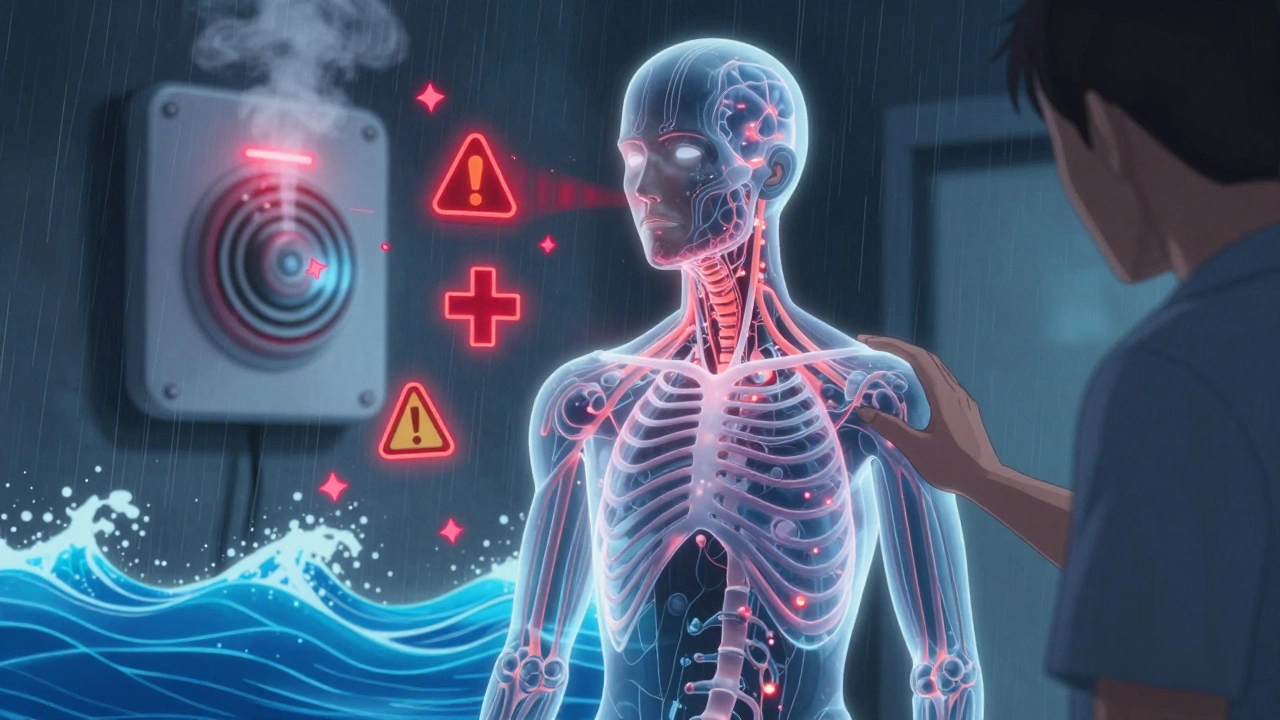
For years, if you had back pain, knee pain, or fibromyalgia, doctors and therapists told you the same thing: pain means damage. Get an MRI. Find the torn ligament, the slipped disc, the worn cartilage. Fix that, and the pain will go away. But for millions of people, that didn’t work. The scan showed "normal aging," the surgery didn’t help, and the pain stayed - even when nothing was structurally wrong. That’s where Pain Neuroscience Education (PNE) comes in. It doesn’t ignore your pain. It just explains it differently. And that difference changes everything.
Why Your Brain Isn’t Broken - It’s Too Sensitive
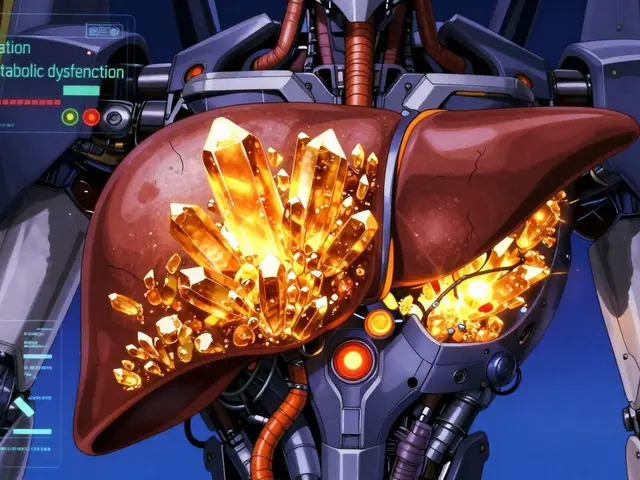
Pain isn’t a simple alarm clock that goes off when you hurt yourself. It’s more like a smoke detector that’s been turned up to 11. In chronic pain, your nervous system stops being a reliable messenger and starts acting like a nervous guard dog. It’s not that your tissues are more damaged. It’s that your brain has learned to interpret even small signals - a stretch, a cough, a change in weather - as threats. This isn’t in your head like "it’s all psychological." It’s biological. Your nerves have changed. Your spinal cord has become more reactive. Your brain’s threat map has rewired itself. That’s called central sensitization. And it’s real. fMRI scans show that after PNE, the part of the brain that processes threat (the insula) becomes less active. Your pain isn’t fake. It’s just misunderstood.How PNE Works - No Jargon, Just Clarity
PNE isn’t a treatment you get. It’s a conversation you have. A typical session lasts 30 to 45 minutes. A trained physical therapist sits down with you and says: "Let me explain why your pain is still here even though your tissues have healed." They use simple metaphors. One common one: "Your pain system is like a smoke alarm that’s been set off by burnt toast for years. Now, even a puff of steam makes it scream. That doesn’t mean there’s a fire. It means the alarm is too sensitive." They explain neuroplasticity - your brain’s ability to rewire itself - not as a buzzword, but as hope. "Your nervous system learned to hurt. It can unlearn it too." They talk about how stress, sleep, fear, and emotions all turn up the volume on pain. This isn’t blaming you. It’s giving you control. You’re not a broken machine. You’re a system that got stuck in overdrive - and now you know how to calm it down.What the Science Says - Numbers That Matter
In 23 randomized trials involving over 2,000 people with chronic pain, PNE reduced pain intensity by an average of 1.8 points on a 10-point scale. That might sound small. But for someone who’s lived with constant pain for years, dropping from an 8 to a 6 is life-changing. Disability scores improved by 12%. Pain catastrophizing - the spiral of "this will never end," "I can’t handle this," "I’m ruined" - dropped by over 6 points on a standard scale. That’s not just a number. That’s the difference between staying in bed and walking to the mailbox. When PNE is paired with movement or manual therapy, outcomes improve by another 30-40%. You don’t need to choose between education and exercise. You need both.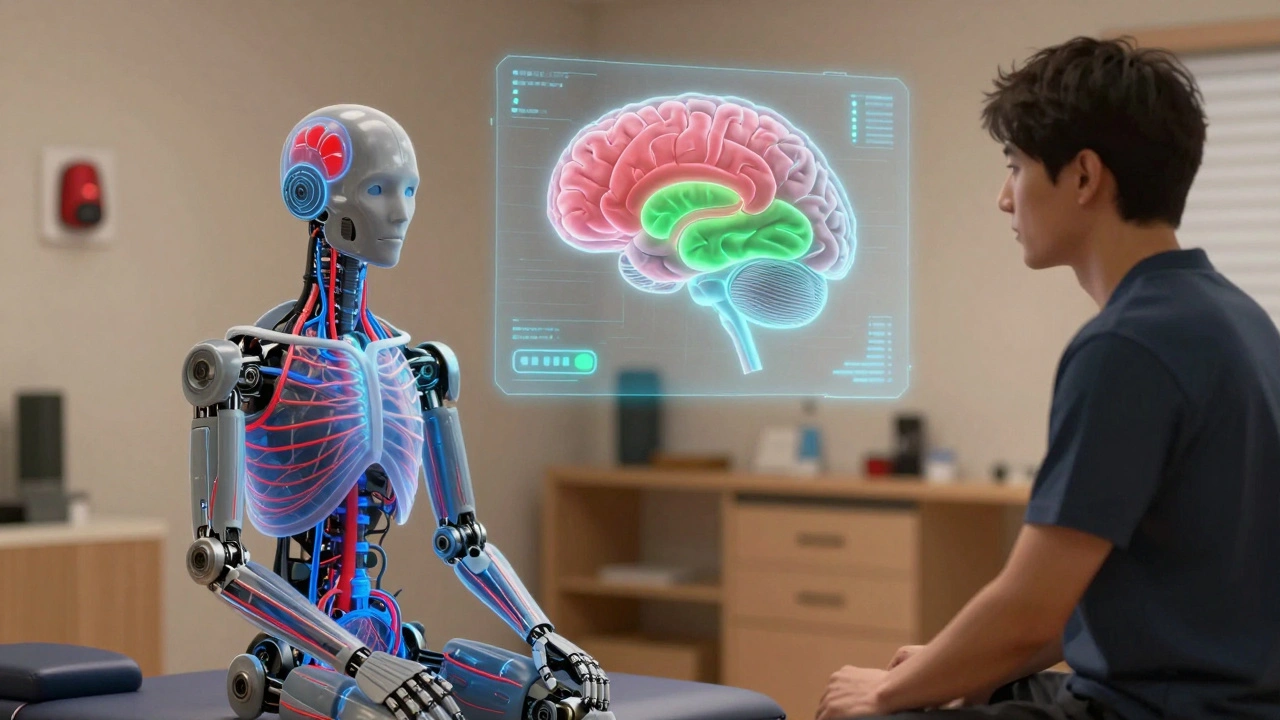
Who Benefits Most - And Who Doesn’t
PNE works best for people with chronic pain that’s lasted more than three months - especially low back pain, fibromyalgia, complex regional pain syndrome, and persistent neck pain. In these cases, 82% of studies show clear benefit. For acute pain - like a broken bone or recent surgery - it doesn’t help as much. That’s because in those cases, pain really is signaling tissue damage. PNE isn’t magic. It’s targeted. It also doesn’t work well for people with severe cognitive impairment or very low health literacy. If someone can’t follow a story about a smoke alarm, explaining neurophysiology won’t help. But that’s not a failure of PNE. It’s a failure of delivery. Good practitioners adapt. They use pictures. They simplify. They say "pain biology" instead of "pain neuroscience." The goal isn’t to impress with science. It’s to empower with understanding.What It Feels Like to Go Through PNE
One patient, a 42-year-old nurse with fibromyalgia, was taking six pain pills a day. After six sessions of PNE combined with gentle movement, she cut that to one pill every three days. She didn’t become pain-free. But she stopped fearing every twinge. She started walking again. She stopped canceling plans. Another person on Reddit wrote: "I thought movement would destroy my spine. The smoke alarm metaphor made me realize my pain was lying to me. I hiked last weekend for the first time in five years." But not everyone has that story. About 17% of patient reviews mention feeling overwhelmed - "too much science," "it didn’t help," "I just wanted the pain gone." That’s not PNE failing. That’s mismatched expectations. If you go in thinking PNE will magically erase pain, you’ll be disappointed. It doesn’t remove pain. It changes your relationship with it. It turns pain from an enemy into a misfiring signal you can learn to ignore.How Clinicians Do It Right - And Where They Fall Short
The best PNE isn’t a lecture. It’s a dialogue. The therapist asks: "What do you think is causing your pain?" Then they listen. Then they gently correct. They don’t say, "You’re wrong." They say, "That’s a common belief. Here’s what the science actually shows." They use stories. They draw diagrams. They give you a one-page handout to take home. The biggest hurdle? Time. Most clinics are rushed. Sixty-three percent of therapists say they don’t have enough time to do PNE properly. That’s why digital tools are growing. Apps like "Pain Revolution" have over 186,000 downloads. VR programs in trials show 30% better knowledge retention than paper handouts. Insurance now covers PNE under physical therapy codes (CPT 97160-97164) since 2021. That’s huge. But training is still uneven. Only 28% of physical therapists feel confident delivering it. That’s changing. In 2023, 72% of U.S. physical therapy programs teach PNE - up from 12% in 2010.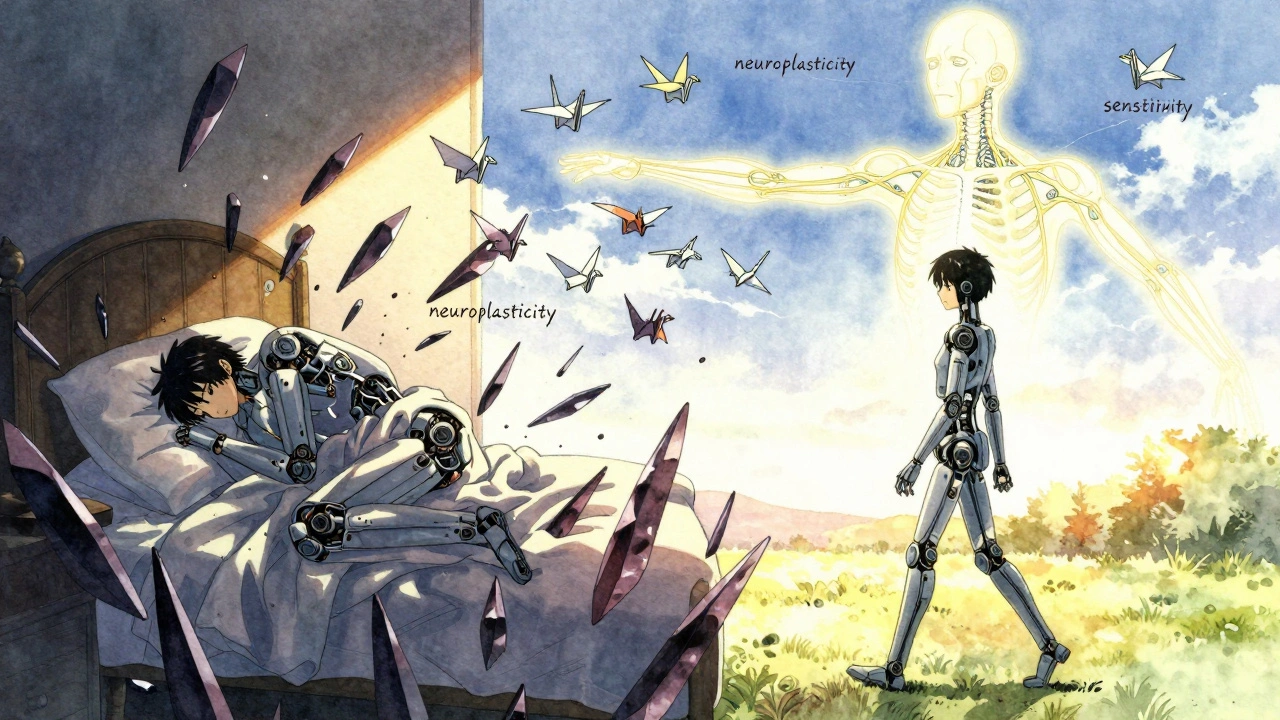
Where PNE Fits - Not Instead of, But Alongside
PNE isn’t a replacement for exercise, manual therapy, or even medication. It’s the foundation. Think of it like teaching someone how to drive before handing them the keys. You can’t fix chronic pain with stretches alone if the person believes every movement will tear them apart. PNE removes the fear. Then movement becomes safe. Then strength returns. Then function follows. It also works better than some alternatives. Compared to cognitive behavioral therapy (CBT), PNE has slightly higher patient satisfaction (68% vs. 62%). But CBT is better for depression. The best approach? Often, both. PNE teaches you why your pain is happening. CBT helps you manage the thoughts and emotions that make it worse. Together, they’re powerful.What’s Next for PNE
Researchers are now testing PNE for acute pain - like after knee replacement surgery. Early results suggest it might reduce opioid use and speed recovery. A new framework called APNE (Acute Pain Neuroscience Education) is being rolled out in 12 U.S. hospitals. Virtual reality is being tested to make learning immersive. And scientists are looking at using brain scans to personalize PNE - matching the explanation to your nervous system’s specific pattern. The big picture? Pain care is shifting. The opioid crisis pushed us away from pills. Value-based care now rewards function over pain scores. PNE fits perfectly. It’s low-cost, low-risk, and high-impact. Companies like Liberty Mutual are using it in workplace injury programs - and seeing 22% shorter claims. That’s not just good for patients. It’s good for business.How to Get Started
If you’re struggling with long-term pain and haven’t found relief, ask your physical therapist: "Have you been trained in Pain Neuroscience Education?" Look for providers who mention "Explain Pain" or "Therapeutic Neuroscience Education" - those are the two main models. The International Spine and Pain Institute offers a 24-hour certification course (around $495), but you don’t need to be certified to deliver it well. You just need to understand it. Start with a simple question: "Is my pain a sign of damage - or a sign of sensitivity?" If the answer is the latter, you’re on the right path. You don’t need to fix your body. You need to recalibrate your nervous system. And that starts with understanding.Is Pain Neuroscience Education the same as CBT?
No. CBT (Cognitive Behavioral Therapy) focuses on changing thoughts and behaviors around pain. PNE focuses on changing your understanding of what pain is. CBT helps you manage fear and negative thinking. PNE helps you realize your pain isn’t proof of damage. They’re different tools that work well together.
Does PNE work for acute injuries like a sprained ankle?
Not usually. In acute injuries, pain is a reliable signal of tissue damage. PNE is designed for chronic pain - where the nervous system has become overly sensitive long after healing should have happened. For a fresh sprain, rest and movement are key. PNE might help later if pain lingers past 3 months.
Can I learn PNE on my own with a book or app?
You can start with books like "Explain Pain" by Butler and Moseley, or apps like "Pain Revolution." But the most effective PNE happens in conversation with a trained clinician. They can tailor the message to your beliefs, answer your questions, and correct misunderstandings in real time. Self-learning helps - but it’s not a replacement.
Why doesn’t my doctor talk about PNE?
Most doctors were trained in the old model - pain = tissue damage. That’s what they learned in medical school. PNE is still new in mainstream medicine. It’s more common in physical therapy, especially in clinics focused on chronic pain. Ask your PT, chiropractor, or pain specialist - they’re more likely to know about it.
Will PNE make my pain go away completely?
Not always. PNE doesn’t promise pain elimination. It promises pain reduction and improved function. Many people still feel some pain, but they no longer fear it. They move more. They sleep better. They stop avoiding life. That’s the real win - not zero pain, but a life that isn’t ruled by pain.


11 Comments
Mindy Bilotta
I used to think my chronic back pain meant I was broken. Then my PT showed me the smoke alarm metaphor and I cried in the hallway. It wasn’t that I was weak-it was that my nervous system had gone full panic mode. I’m not cured, but I can walk to the store now without sweating. Thank you for writing this.
Michael Bene
Oh here we go again with the ‘it’s all in your head’ nonsense. You know what’s in my head? The fact that my L4-L5 disc is crushed like a soda can and my surgeon said I’d be in a wheelchair by 40. This PNE crap is just pharma’s way of avoiding liability. My MRI doesn’t lie, your ‘neuroplasticity’ does.
Ignacio Pacheco
So let me get this straight-you’re telling me my pain is real, but my MRI isn’t? That’s like saying a smoke alarm is real, but the fire isn’t. Either the alarm’s broken or the fire’s real. Pick one.
Katherine Gianelli
My sister had fibro for 12 years. She tried everything-acupuncture, opioids, yoga, even a shaman in Colorado. Then she got PNE. Not magic. Not a cure. But she stopped crying every time she bent over to pick up her cat. That’s worth more than any pill. If you’re skeptical, try listening first. Not fixing. Just listening.
Ethan McIvor
There’s something deeply human about this. We’ve been taught pain is a flaw to be erased, not a signal to be understood. It’s like being told your sadness is a glitch in your soul. But what if your pain is just your body screaming for a different kind of attention? Not to be fixed-but to be held. I’ve felt both kinds of pain. The tissue kind. And the ‘why does no one get it’ kind. PNE doesn’t fix the first. But it helps you stop hating the second.
Brian Perry
OMG I just read this and I’m like-WAIT I’M NOT CRAZY?? My knees hurt when it rains and my doc just said ‘it’s arthritis’ and gave me ibuprofen. But now I get it-my nervous system is like a toddler with a fire alarm. Every. Little. Thing. Triggers it. I’m gonna print this out and tape it to my fridge. Also, can someone send me that app? I need to stop Googling ‘is my spine collapsing’ at 3am
Jim Schultz
Let’s be real: this is just CBT with fancy neuroscience jargon. You’re not teaching anything new-you’re just repackaging cognitive reframing as ‘pain biology.’ And don’t get me started on the ‘82% of studies show benefit’-most of those are small, unblinded, and funded by rehab startups. This isn’t science. It’s wellness marketing with a white coat.
Francine Phillips
I tried PNE. Felt like being lectured by a grad student who read one paper. I just wanted to know how to stop hurting. Not learn about the insula. I left feeling more confused than before. Maybe it works for some. Not for me.
Gene Linetsky
Ever wonder why the same people who say ‘pain is all in your head’ are the ones who’ve never had real pain? This whole thing smells like corporate wellness theater. They don’t want to fix your spine-they want to avoid paying for your surgery. PNE is the opioid crisis’s quiet cousin. Same outcome: people left suffering while someone makes a profit off their confusion.
Kidar Saleh
I’ve worked with chronic pain patients in London for 18 years. The ones who improved? They weren’t the ones who got the best scans. They were the ones who stopped fighting their bodies. PNE isn’t about erasing pain. It’s about giving people back their lives. One woman I worked with-used to cry every time her grandson hugged her. After six sessions? She started dancing with him in the kitchen. That’s not science. That’s grace.
Archie singh
So you’re saying my 10/10 pain is just a misfire? Then why does it feel like my spine is being shredded by a lawnmower? You can call it neuroplasticity all you want. I’ll believe it when I can walk without a cane. Until then, stop gaslighting people with real damage.