
What pharmacist-led substitution programs actually do
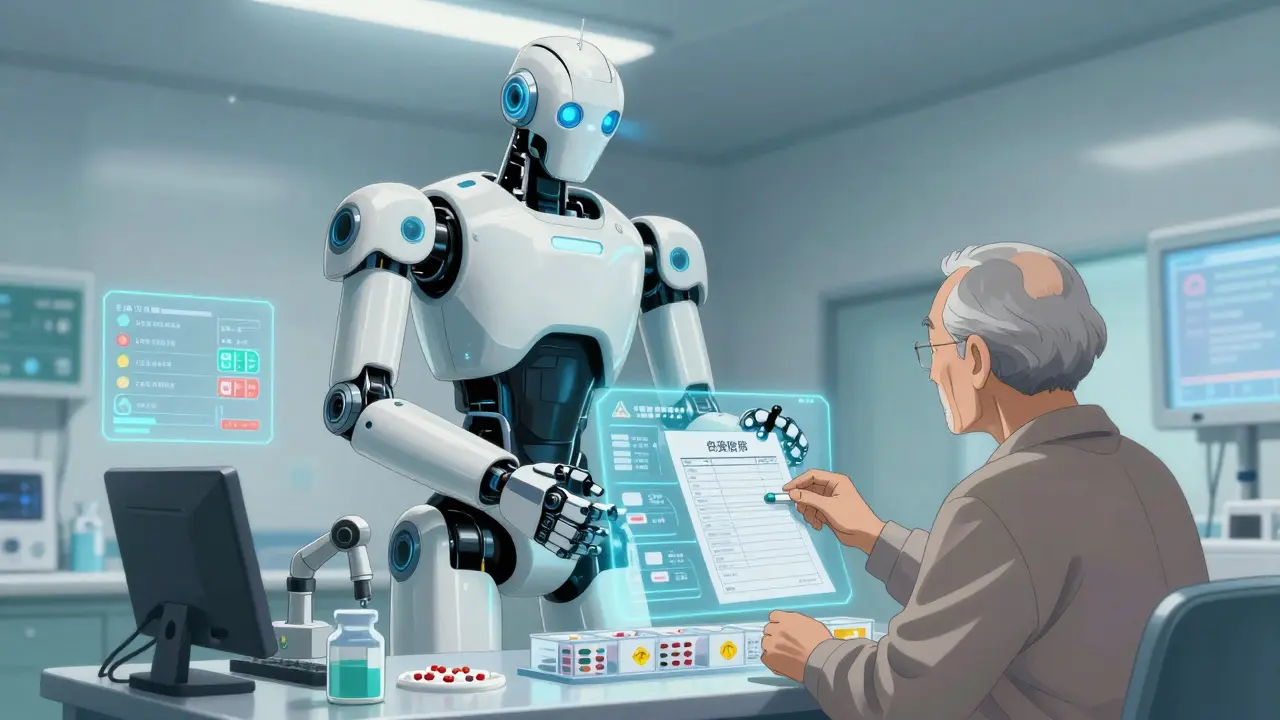
These programs aren’t just about swapping one pill for another. They’re structured clinical services where pharmacists step in to fix dangerous medication gaps-like when a patient gets discharged from the hospital with a drug they shouldn’t be on, or when their home meds don’t match what the hospital recorded. This isn’t guesswork. It’s a precise process: pharmacists compare every medication a patient was taking before admission to what’s listed in the hospital system, find mismatches, and then recommend safe, evidence-based changes.
Before 2006, this kind of review was rare. But when The Joint Commission made medication reconciliation a national safety goal, hospitals had to act. By 2012, pharmacists began leading these efforts full-time. Today, 87% of U.S. academic medical centers and 63% of community hospitals have formal programs. And the results? A 49% drop in adverse drug events. That’s not a small win-it’s life-saving.
How these programs are built and run
Successful programs don’t rely on one person doing everything. They’re teams. One pharmacist, often supported by two full-time medication history technicians and part-time interns, handles a high-volume hospital floor. Technicians collect medication lists from patients and families during triage. Pharmacists then verify those lists against electronic records and flag discrepancies. On average, each patient has 3.7 mismatches-like a missed blood pressure pill, or an outdated diabetes dose.
Training is strict. Technicians need at least two hours of classroom instruction and five eight-hour supervised shifts before working alone. After training, they hit 92.3% accuracy in recording medication histories. That’s critical. If the list is wrong from the start, the whole program fails.
Technology helps. Electronic health records automatically flag non-formulary drugs-medications the hospital doesn’t normally stock. When that happens, the pharmacist checks if there’s a safer, cheaper, equally effective alternative. In many hospitals, 68.4% of those non-formulary drugs get switched out. That’s not just cost-saving-it’s risk-reducing.
Why pharmacists beat doctors and nurses at this job
Doctors are busy. Nurses are stretched thin. Pharmacists? They’re the only ones trained to see the full picture of every drug a patient takes, how they interact, and what side effects might pop up.
A review of 123 studies found that 89% of pharmacist-led programs reduced 30-day hospital readmissions. Compare that to non-pharmacy-led efforts, where only 37% showed the same benefit. The difference is stark in high-risk groups-patients over 65, those on five or more medications, or with low health literacy. For Medicare patients under the Hospital Readmissions Reduction Program, adding pharmacist services cut readmissions by 22% more than usual care.
The OPTIMIST trial showed it clearly: patients who got full pharmacist intervention-including education, follow-up, and deprescribing-had a 38% lower chance of being readmitted within 30 days. The number needed to treat? Just 12. That means for every 12 patients who get this service, one hospital stay is prevented.

Deprescribing: The quiet revolution in medication safety
One of the most powerful parts of these programs is deprescribing-taking drugs away. Not because they’re useless, but because they’re dangerous now.
For elderly patients, anticholinergic drugs (used for allergies, bladder issues, depression) increase fall risk. Proton pump inhibitors (PPIs) for heartburn can lead to C. difficile infections if taken long-term. Pharmacist-led programs identify these risks and recommend stopping them.
In one study, over half of all pharmacist recommendations focused on discontinuing medications. But here’s the catch: doctors only accept about 30% of those suggestions. Why? Lack of communication, fear of backlash, or just not being in the loop.
Successful programs solve this by building automatic alerts into the EHR. When a pharmacist recommends stopping a drug, the system notifies the prescriber with a clear rationale: “Discontinue omeprazole-no active GI diagnosis, high risk for C. diff in patient over 70.” That kind of specificity increases acceptance.
The hidden costs-and how to pay for them
These programs aren’t cheap. Managing one patient’s medication reconciliation takes about 67 minutes. That’s time pharmacists could spend counseling or filling prescriptions. And in most community settings, insurance doesn’t cover the full cost.
Only 32 states reimburse pharmacist-led substitution services through Medicaid. Medicare Part D covers them for 28.7 million beneficiaries, but the paperwork is so heavy that many pharmacies don’t bother. That’s why 68% of community programs struggle to break even.
But the savings are real. Preventing one hospital readmission saves between $1,200 and $3,500 per patient. Hospitals that run these programs pay 11.3% less in Medicare readmission penalties. The U.S. medication reconciliation market hit $1.87 billion in 2022 and is growing at 14.3% a year. That’s because payers are starting to see the math: investing in pharmacists now saves money later.

What’s next? AI, policy, and rural gaps
Technology is speeding things up. AI tools now scan patient records and auto-generate medication lists, cutting data collection time by 35%. Fourteen academic hospitals are testing these tools right now.
Policy is catching up too. The 2022 Consolidated Appropriations Act now requires medication reconciliation for all Medicare Advantage patients-opening a $420 million market. CMS’s 2024 interoperability rules could boost reimbursement by 18-22% if pharmacists document substitutions properly.
But not everyone benefits. In rural areas, only 22% of critical access hospitals have full programs. Urban academic centers? 89%. The gap is real. Pharmacist shortages in small towns mean these life-saving services aren’t available where they’re often needed most.
The future? More integration with value-based care. Sixty-three percent of accountable care organizations (ACOs) now tie pharmacist performance to quality metrics. That’s the real sign this isn’t a passing trend-it’s becoming standard care.
Why this matters for every patient
Think about your parent, your neighbor, or even yourself after a hospital stay. You’re tired. You’re confused. You’re handed a bag of pills with no clear instructions. That’s when mistakes happen.
Pharmacist-led substitution programs are the safety net. They catch the wrong dose. They stop the dangerous combo. They take away the drug that’s doing more harm than good. And they do it without yelling, without bureaucracy-just clear, expert, human care.
This isn’t about expanding pharmacists’ roles. It’s about fixing a broken system. One medication at a time.



13 Comments
Curtis Younker
This is the kind of stuff that actually saves lives, not just fills charts. I work in a community pharmacy and we do this daily - catching someone on five benzos they don’t need, or realizing their ‘heart pill’ is actually for anxiety. It’s not glamorous, but it’s everything.
My favorite part? When the patient says, ‘Wait, I’ve been taking this for 12 years and no one ever told me it could make me fall?’ That’s the moment you know this work matters.
Shawn Raja
You know what’s wild? We treat pharmacists like glorified pill dispensers while they’re the only ones who actually know what’s in your body and why it’s there. Doctors write scripts. Nurses give ‘em. But pharmacists? They’re the ones reading between the lines of 17 different meds and saying, ‘This combo will kill you.’
And yet we still don’t pay them like frontline clinicians. The system is broken.
Conor Flannelly
I’m from Ireland, and we’re just starting to roll this out in our hospitals. The cultural resistance is real - doctors still see pharmacists as ‘the guy who hands out the pills.’ But the data doesn’t lie. In Galway, after we piloted this, 30-day readmissions dropped by 41%.
It’s not about expanding roles. It’s about finally giving the right person the authority to fix the problem. The pharmacist isn’t overstepping - they’re just doing the job they were trained for.
Henry Jenkins
I’ve been reading up on this for months. What’s fascinating is how much of this is about communication, not just meds. The real breakthrough isn’t the algorithm or the EHR alert - it’s the pharmacist sitting down with the patient and saying, ‘Let’s go through your pills together.’
That human interaction is what reduces anxiety, improves adherence, and cuts readmissions. Tech helps, but connection heals. We need more of both.
Dan Nichols
So let me get this straight - pharmacists are now doing the job of doctors, nurses, and case managers, but they’re still paid like clerks? And the system calls this ‘cost-saving’?
It’s not saving money. It’s shifting labor onto underpaid professionals while pretending we’re fixing healthcare. The real fix? Pay doctors more so they can do their job. Not make pharmacists the unsung first responders of medication chaos.
Neil Thorogood
I work in a rural ER. We had a guy come in with a seizure because his neurologist didn’t know he was still on that old anticholinergic. The pharmacist on call found it in his pill organizer - the one his daughter had to dig out of his junk drawer.
He’s alive today because someone cared enough to ask, ‘What are you actually taking?’ Not ‘What did your doctor say?’
God bless pharmacists. 🙏
Jessica Knuteson
Deprescribing is the quiet revolution. But let’s be real - most doctors won’t touch it. They’re afraid of liability, or worse, they don’t understand the pharmacology. The system rewards prescribing, not stopping. That’s the real cancer here.
Allie Lehto
I’m a nurse and I’ve seen this firsthand. My mom was on 14 meds after her stroke. The pharmacist spent 45 minutes with us and cut it to 6. She’s been walking better since. But the doctor who wrote half those scripts? He didn’t even know she was on them. That’s not negligence - that’s the system.
Conor Murphy
My cousin’s grandma got discharged with three new meds and no one told her why. She took them all at once and ended up in the psych ward. The pharmacist who caught it later said, ‘She was on a dementia drug, an antihistamine, and a muscle relaxer - that’s a recipe for hallucinating your cat into a dragon.’
That’s not a joke. That’s Tuesday.
eric fert
Let’s not pretend this is some noble innovation. This is just another way for hospitals to cut costs by offloading work onto underpaid pharmacists while billing it as ‘value-based care.’ The real problem? Doctors don’t get paid to coordinate care. So they don’t. And now we’re asking pharmacists to fix the mess they made.
It’s not a solution. It’s a band-aid on a hemorrhage.
Marian Gilan
You know who really runs these programs? Big Pharma. They push the non-formulary drugs so hospitals have to switch. Then they pay the pharmacists to recommend their cheaper alternatives. It’s all a game. The ‘life-saving’ stats? Manufactured. The real goal is market share. Wake up.
Patrick Merrell
I don’t care how many studies say this works. If a pharmacist can’t write a prescription, they shouldn’t be deciding what people take. This is a slippery slope. Next thing you know, they’ll be diagnosing diabetes and doing physicals. Where does it end?
Aishah Bango
I’ve worked in 3 hospitals. Every time a pharmacist suggested stopping a drug, the doctor said ‘I’ll think about it.’ And then they never did. So yes, the system is broken. But the real problem? Doctors don’t respect pharmacists. And until that changes, none of this matters.