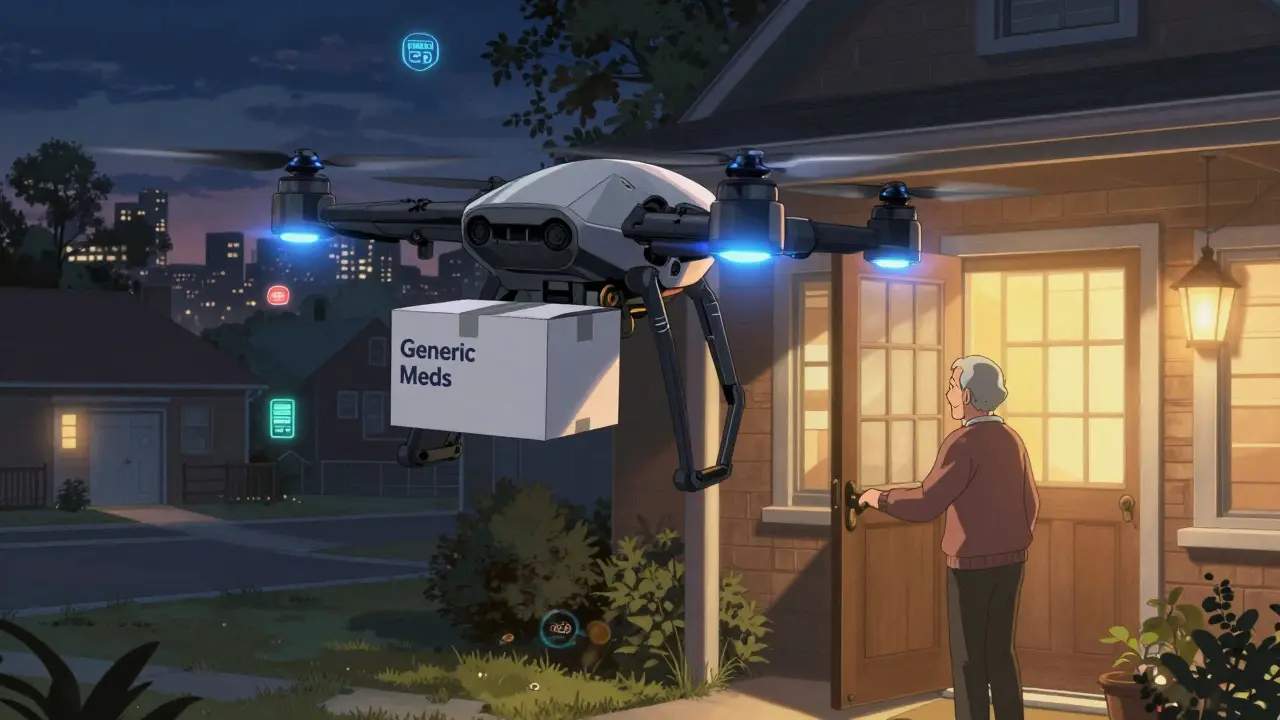
Getting your generic prescriptions delivered to your door isn’t just convenient-it’s becoming the new normal. If you’re on daily meds for high blood pressure, diabetes, or thyroid issues, you know the drill: drive to the pharmacy, wait in line, hand over your insurance card, and hope they have your stock. Now, imagine skipping all that. You order online, your pills arrive in a plain box a day or two later, and you never have to leave the couch. That’s prescription delivery-and it’s working for millions of Americans right now.
How Prescription Delivery Actually Works
It’s simpler than you think. You start by choosing a service-whether it’s your local CVS or Walgreens offering home delivery, or a digital-only pharmacy like Capsule or Alto. You log in, upload your prescription (or let your doctor send it electronically), and pick your delivery speed. Most services offer standard shipping (2-4 days) and same-day or next-day options in major cities. You pay your copay online, and your meds ship out.
Here’s the key part: most of these services work with your insurance. You don’t need a special plan. Whether you’re on Medicare, Medicaid, or a private insurer, your copay stays the same as if you walked into the pharmacy. The only difference? You’re not standing in line.
And yes, it works for generics. In fact, generics are the backbone of these services. Over 90% of prescriptions in the U.S. are for generic drugs. But here’s the catch: while generics make up most of the prescriptions, they bring in very little profit for pharmacies. That’s why delivery services focus on them-they’re low-cost, high-volume, and perfect for automation. You get your $5 monthly lisinopril or metformin shipped to your door, and the pharmacy still makes enough to cover shipping, staffing, and tech.
Why Generics Are the Secret Weapon of Delivery Services
Generic drugs cost 80-85% less than brand-name versions. That’s why they’re so popular. But here’s what most people don’t realize: the price of generics has dropped nearly 30% over the last decade. That’s great for you-but it’s squeezed pharmacy margins hard. That’s why delivery services are built around them. They don’t make money on the pills. They make money on volume and convenience.
Think of it like this: if you order 12 months of your generic blood pressure pill at once, you save on shipping fees, avoid missed refills, and reduce the chance of a health crisis from skipping doses. That’s why services like Walmart and Amazon are pushing hard on bulk delivery. Walmart now offers same-day delivery of generic prescriptions in 49 states. Amazon’s PillPack service delivers pre-sorted blister packs of your meds, labeled by time of day. It’s not magic-it’s logistics. And it works.
For chronic conditions, this matters. The WHO reports over 20 million new cancer cases globally in 2022, and that number is climbing. People with diabetes, heart disease, or arthritis need their meds every single day. Missing a dose can lead to hospital visits, ER trips, or worse. Delivery services cut that risk by making adherence automatic.
Same-Day Delivery Is No Longer a Luxury
Five years ago, same-day prescription delivery was a novelty. Now, it’s expected. Walmart rolled it out across 49 states in January 2025. Amazon plans to cover 45% of the U.S. by the end of this year. Even smaller players like NowRx offer same-day delivery in major metro areas like Denver, Chicago, and Atlanta.
But here’s the reality: same-day delivery doesn’t work for every drug. Cold-chain meds-like insulin, certain cancer drugs, or GLP-1 weight-loss treatments-need special packaging and refrigeration. Those still take longer and cost more. But for your everyday generics? Same-day is reliable. You order by 2 p.m., and it’s on your porch by 8 p.m.
One study from IQVIA found U.S. prescription use jumped 14% in the last five years. That’s over 215 billion daily doses. Delivery services are handling a growing chunk of that. And they’re getting better at it. Real-time tracking, SMS alerts, and automated refill reminders are now standard. You’re not just getting pills-you’re getting a system that helps you stay on track.

Who Benefits the Most?
If you’re over 65, have mobility issues, or live in a rural area with no nearby pharmacy, this service is life-changing. Seniors make up the largest group using prescription delivery. One in three Americans over 65 takes five or more prescriptions. Juggling refills, driving to the store, and remembering doses becomes overwhelming. Delivery removes that burden.
Parents of young kids with chronic conditions, people with anxiety or depression who find pharmacy visits stressful, and shift workers with odd hours all benefit too. You don’t need to take time off work to pick up your meds. You don’t need to ask a friend for a ride. You just open your door.
And it’s not just individuals. Long-term care facilities and home health agencies now partner with delivery services to manage meds for their residents. That’s how essential this has become.
What Could Go Wrong?
It’s not perfect. Sometimes your insurance doesn’t process fast enough. Sometimes the delivery driver shows up late. Sometimes your pill bottle gets damaged in transit. These aren’t common-but they happen.
The biggest issue? Communication. If your delivery is delayed, you want to know why. Some services still rely on outdated systems. Others send you automated texts that don’t answer your real questions. Look for platforms that offer live chat or phone support with real people. Capsule and Alto have 24/7 pharmacy teams you can call. Walmart’s app lets you track your order down to the minute.
Also, be careful with controlled substances. Opioids, benzodiazepines, and other regulated drugs have extra rules. Some delivery services won’t ship them at all. Others require in-person ID verification on delivery. Know your state’s laws. In Colorado, where this service is widely used, you can get most controlled substances delivered-but you must be home to sign for them.
How to Get Started
Here’s how to sign up in five steps:
- Check if your pharmacy offers delivery. Most big chains do-CVS, Walgreens, Rite Aid, and Walmart all have apps for it.
- Download the app or visit their website. Look for “Home Delivery” or “Mail Order.”
- Enter your insurance info. The system will auto-check your copay.
- Upload your prescription or let your doctor send it electronically.
- Choose your delivery speed and schedule your first order.
For first-time users, start with a 30-day supply of your most routine generic. That way, you can test the service before committing to a 90-day refill. Most services let you pause, skip, or change delivery dates anytime.
The Future Is Personalized
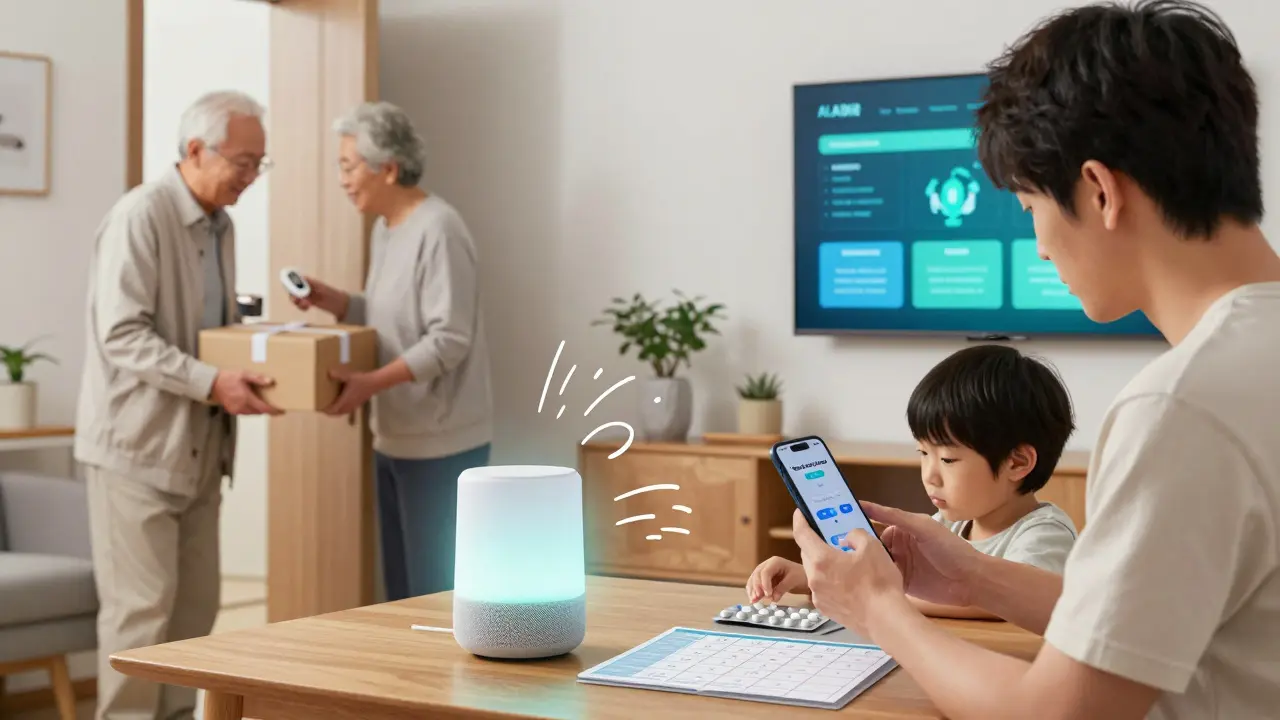
This isn’t just about getting pills faster. The next wave is smarter delivery. AI tools now predict when you’re likely to run out. Apps suggest refills before you forget. Some services even bundle your meds with free blood pressure cuffs or glucose monitors. Walmart and Amazon are testing voice-activated refill requests through Alexa and Google Home.
And as biosimilars-cheaper versions of expensive biologic drugs-start hitting the market, delivery services will expand into new areas. That means more affordable options for people on insulin, rheumatoid arthritis meds, or Crohn’s disease treatments.
Prescription delivery has moved from a nice-to-have to a critical part of healthcare. It’s not about replacing your doctor. It’s about making sure you never miss a dose because you couldn’t get to the pharmacy. For generics, that’s the biggest win of all.