

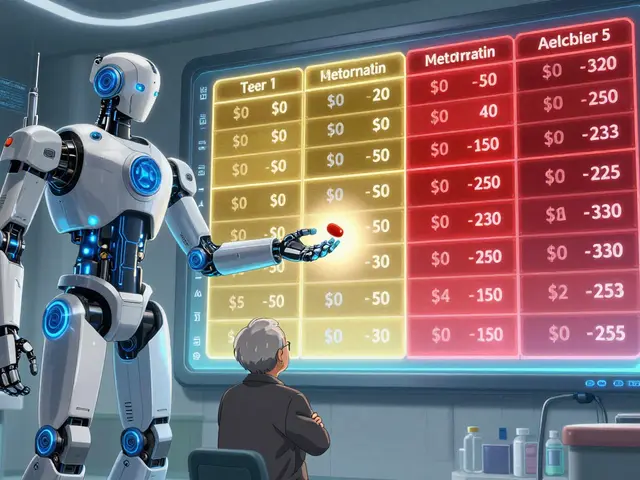
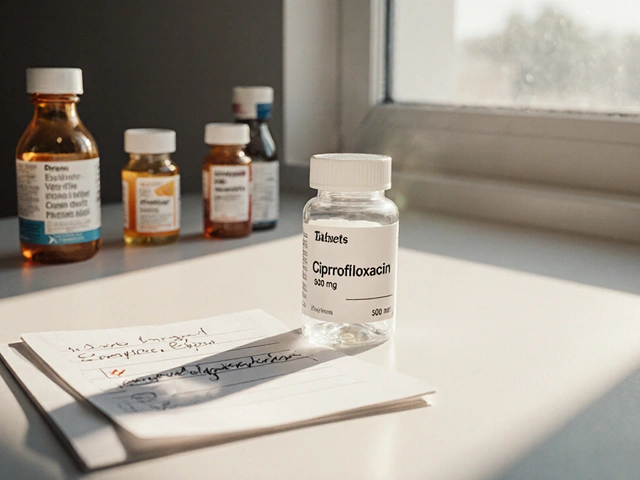
Every year, millions of Americans fill prescriptions only to find their brand-name medication has been swapped for a cheaper generic version-without ever being asked. This isn’t a mistake. It’s the law. In 43 states and Washington, D.C., pharmacists are legally allowed to substitute brand-name drugs with generics under what’s called presumed consent. That means if your doctor writes a prescription for Lipitor, and a generic version of atorvastatin is available, the pharmacist can fill it with the generic without checking with you first. You won’t be told until after the fact, often just by seeing the different label on the bottle.
How Presumed Consent Works
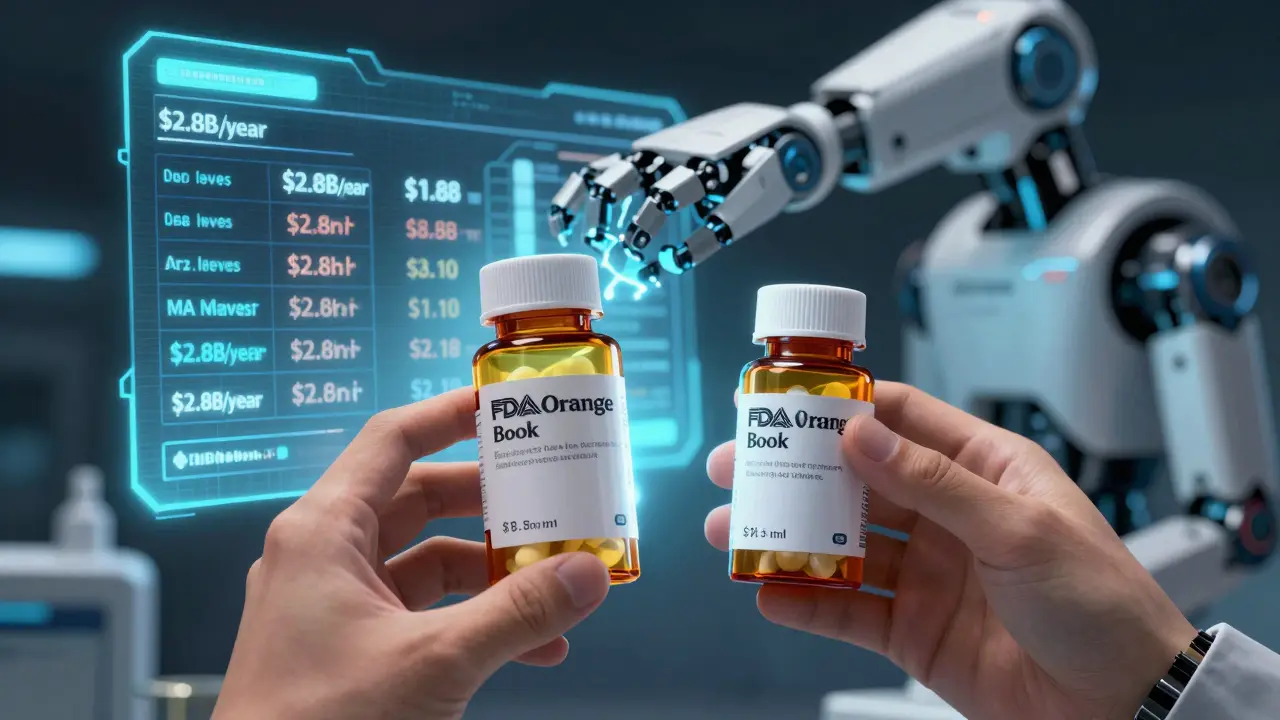
The system started in the 1980s after Congress passed the Hatch-Waxman Act, which made it easier for generic drug manufacturers to prove their products work just like the brand-name versions. The FDA then created the Orange Book, a public list of approved drugs and their therapeutic equivalence ratings. If a generic is rated "A," it means the FDA has confirmed it’s just as safe and effective as the brand. That’s the key. Presumed consent laws rely on this scientific standard.
In states with presumed consent, pharmacists don’t need your signature or verbal approval. They just assume you’re okay with the switch-unless you’ve told them otherwise. This isn’t about cutting corners. It’s about efficiency. A 2022 study by the American Society of Health-System Pharmacists found that presumed consent cuts prescription processing time by about 1.7 minutes per fill. Multiply that by millions of prescriptions, and you’re talking about $2.8 billion saved in pharmacy labor costs every year.
Not All States Are the Same
While 43 states operate under presumed consent, the rules vary wildly. Some states require pharmacists to notify you after the substitution. Others don’t. Some require written documentation. Others rely on electronic logs. And then there are the exceptions.
For example, in California, pharmacists must provide written notice if they switch a drug. In New York, since March 2023, all substitutions must be documented electronically in the pharmacy’s system. Meanwhile, seven states-including Alaska, Hawaii, and Maine-require you to give explicit consent before any substitution happens. If you live in one of those places, your pharmacist has to ask: "Do you mind if we give you the generic?"
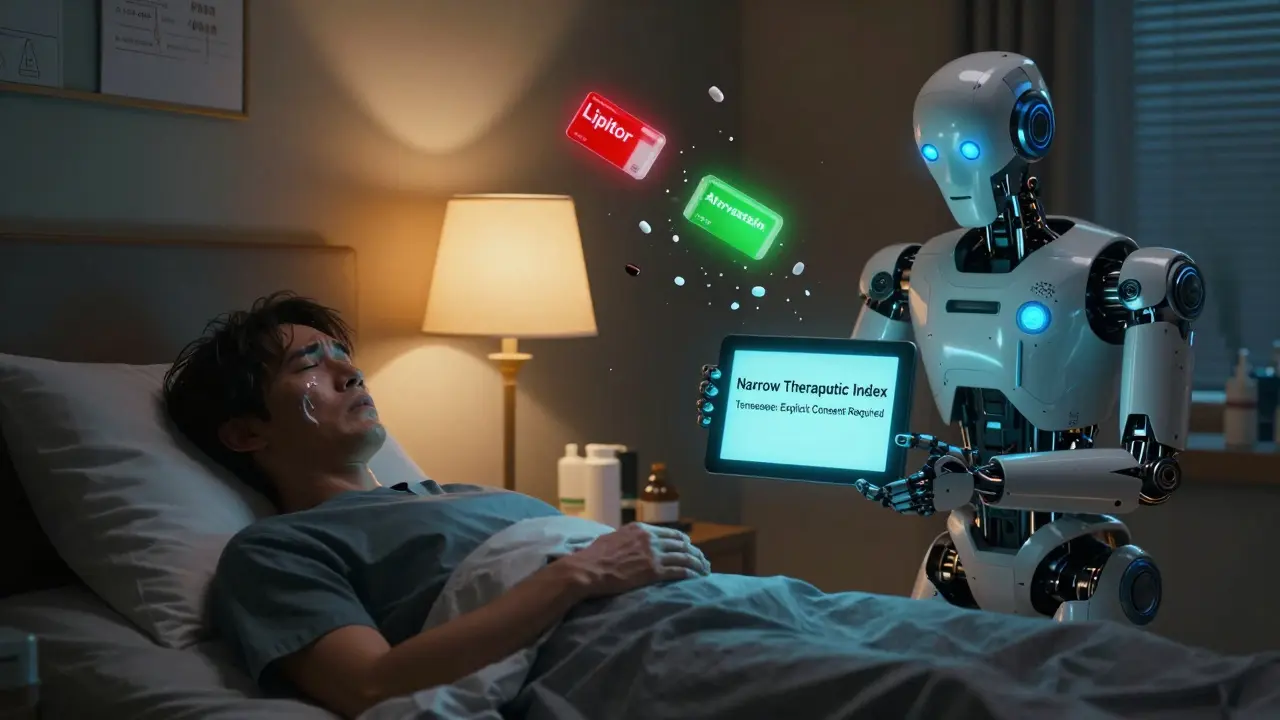
And it gets more complicated with certain drugs. If you take medication for epilepsy, thyroid disease, or blood thinners like warfarin, you’re in a different category. These are called narrow therapeutic index drugs. Small differences in how your body absorbs the medication can lead to serious side effects or treatment failure. That’s why 15 states have special rules. In Tennessee and Hawaii, pharmacists can’t substitute these drugs without your explicit approval-even under presumed consent.
Why This System Exists
The reason presumed consent exists isn’t to save pharmacies time-it’s to save you money. Generic drugs cost, on average, 80% less than brand-name versions. The Association for Accessible Medicines reports that generics made up 90% of all prescriptions filled in 2022 but accounted for only 15% of total drug spending. Over the last decade, generic substitution has saved the U.S. healthcare system $1.68 trillion.
For Medicare Part D beneficiaries, the impact is even clearer. According to CMS data, 94% of all generic substitutions happen in this group. The average savings per person? $627 per year. That’s enough to cover a month’s worth of groceries or a few extra doses of insulin.
Chain pharmacies, with their automated systems, are especially good at this. A 2023 National Community Pharmacists Association report found that 96.7% of substitutions at big chains followed state rules correctly. Independent pharmacies? Only 89.4%. Why? Because keeping up with 51 different sets of rules is hard. One pharmacist in Ohio told a Reddit thread: "I spend 20 minutes every morning checking state laws before I start filling scripts. It’s exhausting."
What You Might Not Realize
Presumed consent doesn’t mean pharmacists can substitute anything. They can’t switch a brand-name insulin for a biosimilar unless the biosimilar is approved as "interchangeable" by the FDA-and even then, only 6 states allow automatic substitution of these biologics. The rest require explicit consent. And if your drug isn’t in the Orange Book’s "A" category? No substitution allowed.
Also, pharmacists aren’t allowed to substitute if your prescription says "Dispense as Written" or "Do Not Substitute." That’s a legal instruction from your doctor. If they ignore it, they’re liable. That’s why some doctors, especially those treating patients with epilepsy or autoimmune conditions, write "DAW 1" on prescriptions. It’s their way of saying: "I know the risks. Don’t switch."
What Happens When Substitution Goes Wrong
There are real stories. In 2021, a 52-year-old man in Texas had a seizure after his pharmacist switched his antiepileptic drug. He’d been stable for five years on the brand. The generic was technically FDA-approved-but his body reacted differently. The Epilepsy Foundation documented 178 cases like his between 2018 and 2022. Most happened in states without special protections.
Dr. Jerry Avorn from Harvard Medical School says: "Presumed consent works fine for antibiotics or blood pressure meds. But for drugs where the difference between working and failing is tiny, we’re playing Russian roulette with patient safety."
On Drugs.com, 68% of patient comments about generic substitution are positive: "Saved me $45 a month," one wrote. But 22% are negative: "My thyroid meds stopped working after the switch," another said. The difference? Often, it’s whether the patient knew what was happening.
What You Can Do
You have rights-even in presumed consent states.
- Ask. When you pick up your prescription, ask: "Was this switched?" If it was, ask why.
- Check the label. Generic drugs look different. If the pill color, shape, or name changed, it’s likely a substitution.
- Speak up. If you’ve had problems with generics before, tell your pharmacist. They can note it in your file.
- Request "Do Not Substitute" on your prescription. Your doctor can add this. It’s legal.
- Know your state. Look up your state’s pharmacy board website. Most have a page on substitution laws.
Some pharmacists will even offer to call your doctor if you’re worried. You don’t need to be confrontational. You just need to be informed.
The Future of Substitution
The system is changing. As more biosimilars hit the market-drugs that mimic expensive biologics like Humira or Enbrel-the rules are getting more complex. Right now, only 35 states have updated their laws to handle these drugs. The rest are stuck with 1980s-era rules designed for simple chemical generics.
Some experts, like the National Academy for State Health Policy, are pushing for a "tiered consent" model: presumed consent for most drugs, but explicit consent for those with narrow therapeutic indexes. A proposed federal model law, the "Model State Substitution Act," is gaining support in 17 states. If it passes, it could finally bring some consistency to this patchwork system.
For now, though, the rules depend on where you live. And if you’re on a medication where even a tiny change matters? Don’t assume. Ask.
Can my pharmacist substitute my prescription without telling me?
In 43 states and Washington, D.C., yes. Pharmacists can switch your brand-name drug for a generic without asking, under presumed consent laws. But they’re required to notify you after the fact in 31 of those states. You’ll usually see the change on the label or packaging.
Are generic drugs really the same as brand-name drugs?
For most drugs, yes. The FDA requires generics to have the same active ingredient, strength, dosage form, and route of administration as the brand. They must also meet the same strict manufacturing standards. But for drugs with a narrow therapeutic index-like those for epilepsy, thyroid disorders, or blood thinning-even small differences in absorption can matter. That’s why some states restrict substitutions for these.
What if I don’t want a generic?
You can refuse it. If your pharmacist tries to substitute, you can say no. The pharmacy must fill the prescription as written. You can also ask your doctor to write "Dispense as Written" or "Do Not Substitute" on the prescription. This legally prevents substitution.
Do all states have the same rules for generic substitution?
No. While all 50 states and D.C. allow generic substitution, they differ on whether substitution is mandatory or optional, whether patient consent is required, and whether notification is needed. Some states also have special restrictions for certain drugs like antiepileptics or blood thinners. Always check your state’s pharmacy board website for specifics.
Can pharmacists substitute biosimilars without my permission?
Only in six states: Arizona, Indiana, Iowa, Massachusetts, New Jersey, and Pennsylvania. In the other 44, pharmacists need your explicit consent to switch you from a brand biologic to a biosimilar. This is because biosimilars are more complex than traditional generics and have different regulatory rules under the FDA’s Purple Book.

13 Comments
Jinesh Jain
Interesting read. I’ve been on generics for years-blood pressure, cholesterol, even the occasional antibiotic-and never had an issue. The science is solid, and the cost savings are massive. If you’re stable on a generic, why rock the boat? It’s not about trust in pharmacists-it’s about trust in the FDA’s approval process.
douglas martinez
While the economic argument is compelling, we must not overlook the ethical dimension of informed consent. Even if a generic is statistically equivalent, the patient’s right to know and choose must remain paramount. Healthcare is not a transaction-it’s a relationship.
Katherine Rodriguez
So the government lets pharmacists swap your meds without asking but you gotta pay extra for brand name? Classic. They don’t care about you-they care about the bottom line. Big Pharma and big pharmacy are in bed together and we’re the ones getting stuck with the bill
Devin Ersoy
Let’s be real-this whole presumed consent thing is just corporate efficiency masquerading as public policy. I mean, if you’re gonna play God with someone’s neurochemistry, maybe-just maybe-ask if they’re cool with it? It’s not rocket science. It’s basic human decency. And don’t get me started on the ‘A’ rating in the Orange Book. That’s not a stamp of approval-it’s a bureaucratic afterthought.
Scott Smith
For anyone worried about substitution, here’s what you can do: ask your pharmacist to note your preference in your profile. Most systems let you flag ‘no substitution’-it’s not a hassle, and it’s legally enforceable. Also, if you’ve had a bad reaction before, bring the bottle with you. Pharmacists appreciate when patients come prepared. Knowledge is power, and you’ve got more than you think.
Sally Lloyd
Think about it-pharmacists are just middlemen. Who’s really pulling the strings? The FDA? The insurance companies? The PBMs? This whole system is designed to make you think you’re in control while someone else decides what’s in your body. The Orange Book? A marketing tool. The ‘A’ rating? A placebo for compliance. You think generics are safe? Then why do they require separate storage and labeling? Why not just call them the same thing?
Emma Deasy
Oh. My. Gosh. I cannot BELIEVE this is still happening. I mean, seriously-imagine being on thyroid medication, feeling fine, then BAM-you get a different pill, and suddenly you’re exhausted, gaining weight, crying for no reason? It’s not just inconvenient-it’s TRAUMATIC. And don’t even get me started on the fact that some states don’t even REQUIRE NOTIFICATION? That’s not healthcare. That’s negligence dressed up as policy. Someone needs to sue. Someone needs to protest. Someone needs to write their congressperson-TODAY.
tamilan Nadar
In India, generics are the norm. We don’t have brand-name drugs unless you pay out of pocket. No one complains because the system works. The science is the same. The active ingredient is the same. The difference is packaging and marketing. If it works in a country with 1.4 billion people, why is it a crisis here?
Adam M
If you can’t handle a pill change, you shouldn’t be on medication. Simple.
Rosemary Chude-Sokei
Thank you for this comprehensive breakdown. I especially appreciate the clarification around narrow therapeutic index drugs. As someone who manages chronic conditions, I’ve learned to always check the label, ask questions, and document everything. The system isn’t perfect, but awareness and advocacy can mitigate risk. Knowledge is the most powerful tool we have.
Noluthando Devour Mamabolo
From a pharmacoeconomic standpoint, the substitution model aligns with value-based care paradigms. The cost-utility ratio for generics is overwhelmingly favorable, especially within public health systems. That said, the clinical heterogeneity in bioequivalence metrics-particularly Cmax and AUC variability-demands granular, patient-specific risk stratification. We need dynamic, AI-driven decision support tools integrated into EHRs to flag high-risk substitutions in real time.
Leah Dobbin
Of course the system is designed this way. It’s not about saving money-it’s about controlling you. You think pharmacists are just doing their job? They’re following corporate directives. The real question: who owns the pharmacy chains? Who funds the FDA? Who writes the Orange Book? It’s the same players who profit from the brand-name monopoly. This isn’t healthcare. It’s a slow-motion takeover.
Ali Hughey
THIS IS A NIGHTMARE. I’M NOT KIDDING. My cousin was on Keppra-stable for 7 YEARS. Then one day, the pharmacy swapped it. No warning. No call. Just a different pill. She had a seizure. In public. In front of her kids. They told her ‘it’s the same thing.’ SAME THING? WHAT DOES THAT EVEN MEAN? The FDA says ‘therapeutically equivalent’-but your body doesn’t read the Orange Book. It feels the difference. And now? She’s terrified. So am I. They’re playing Russian roulette with our lives-and calling it ‘efficiency.’ I’m done. I’m moving to Canada.