
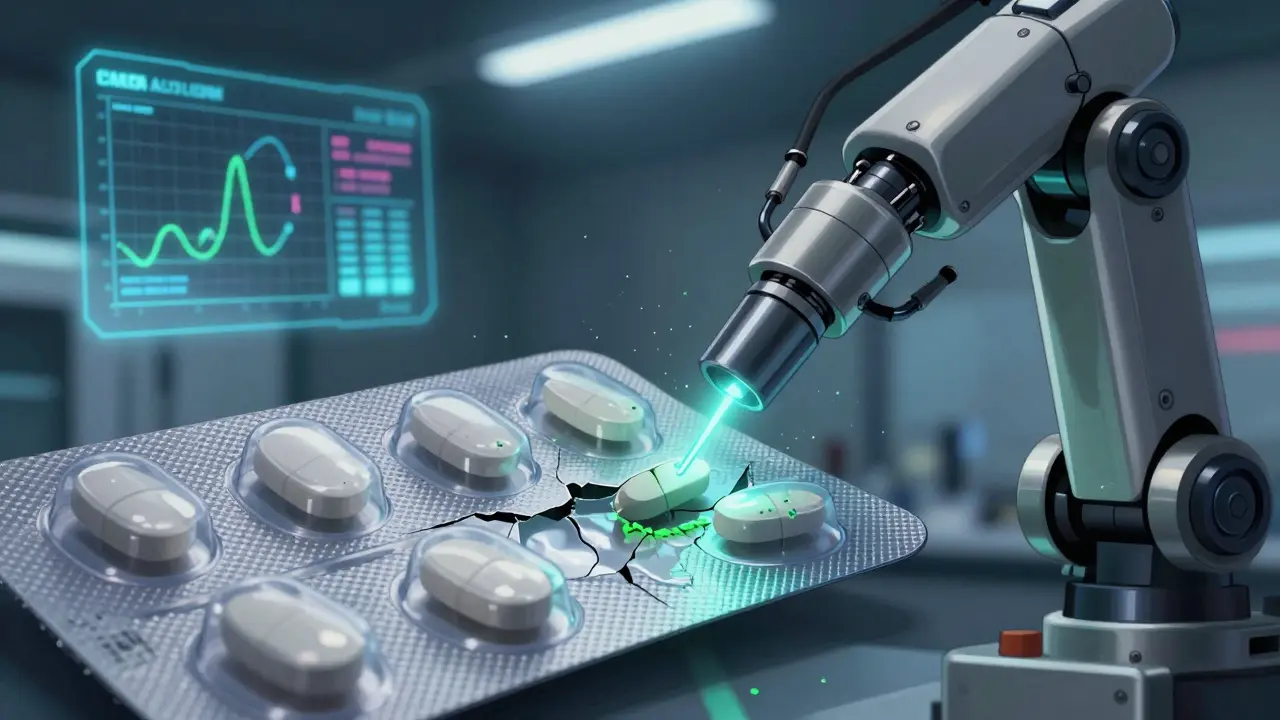
When you pick up a generic pill at the pharmacy, you expect it to work just like the brand-name version. But what happens to that pill over time? What keeps it safe, potent, and effective until the date printed on the bottle? The answer lies in stability and shelf life-a science that’s often invisible but absolutely critical to your health.
Stability isn’t just about whether a pill looks the same. It’s about whether the active ingredient is still at the right strength, whether it’s broken down into harmful byproducts, or whether it’s become a breeding ground for bacteria. The U.S. Food and Drug Administration (FDA) requires every drug, generic or brand, to prove it stays within strict limits of chemical, physical, and microbiological quality from the day it’s made until the day it expires.
What Does "Stability" Really Mean?
Stability testing answers three basic questions: Is the drug still potent? Is it still safe? And does it still work the way it’s supposed to?
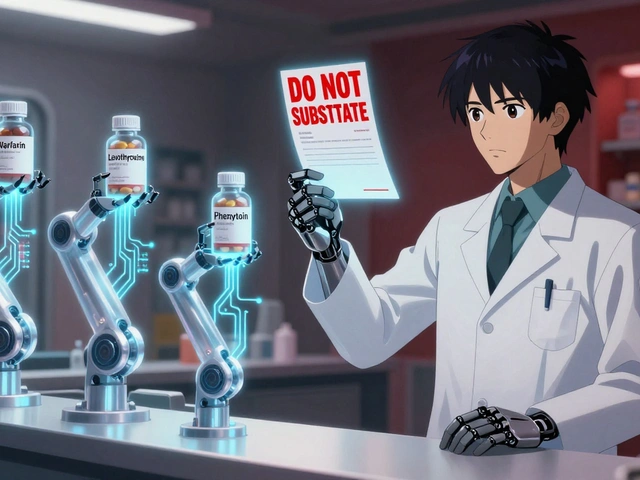
Chemical stability means the active ingredient hasn’t broken down too much. For example, levothyroxine, a common thyroid medication, can lose effectiveness if it degrades by more than 5%. In one 2020 FDA study, 17.3% of generic versions showed higher degradation than the brand-name Synthroid-mostly because their packaging didn’t block moisture as well. That’s not a small difference. A patient relying on that dose could end up with untreated hypothyroidism, fatigue, weight gain, or worse.
Physical stability matters too. A tablet shouldn’t crumble. A liquid shouldn’t separate. A nasal spray shouldn’t clog. Even the color or smell can change if something’s wrong. Nanoparticle drugs, like those used for cystic fibrosis, are especially tricky. If the particles clump together and grow past 200 nanometers, they can’t reach the target cells anymore. The whole design fails.
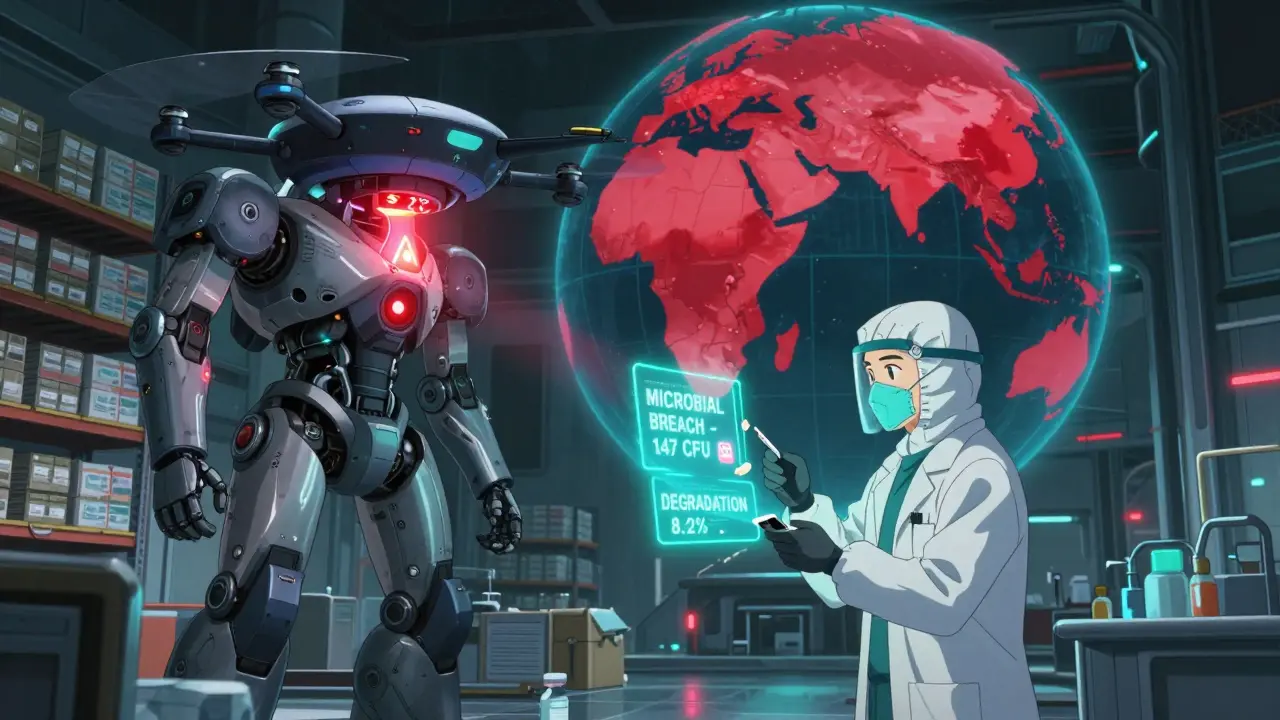
Microbiological stability keeps bacteria and mold out. Non-sterile products like oral liquids or creams must stay below 100 colony-forming units per gram. If preservatives break down over time, or if the water activity in the formula shifts, microbes can grow. One survey found that 41.3% of drug recalls in the last five years were caused by microbial contamination in preservative systems.
How Do Manufacturers Test This?
Testing follows strict guidelines set by the International Council for Harmonisation (ICH), especially Q1A(R2). The gold standard is long-term testing: keeping samples at 25°C and 60% humidity for as long as the shelf life claims to last-usually 24 to 36 months. That means a company might wait three years just to confirm a two-year expiration date.
But no one waits that long to launch a product. That’s where accelerated testing comes in. Samples are stored at 40°C and 75% humidity for six months. If nothing changes, companies use math to predict what will happen over time. But here’s the catch: heat doesn’t always mimic real-life degradation. A 2023 FDA report warned that some drugs undergo polymorphic transitions-hidden structural changes-only at room temperature. One company wasted $250,000 and 18 months because their accelerated test showed no problems… but the real product crystallized after 24 months.
Testing also includes dissolution rates (how fast the drug dissolves in the body), particle size, viscosity, and dose uniformity. For inhalers, each puff must deliver between 90% and 110% of the labeled dose. If it doesn’t, patients get too little-or too much-medication.
Why Do Generics Sometimes Fail?
Generics are supposed to be identical to brand-name drugs. But they’re not copies-they’re alternatives. Different manufacturers use different excipients (inactive ingredients), different manufacturing processes, and different packaging. These small differences can have big consequences.
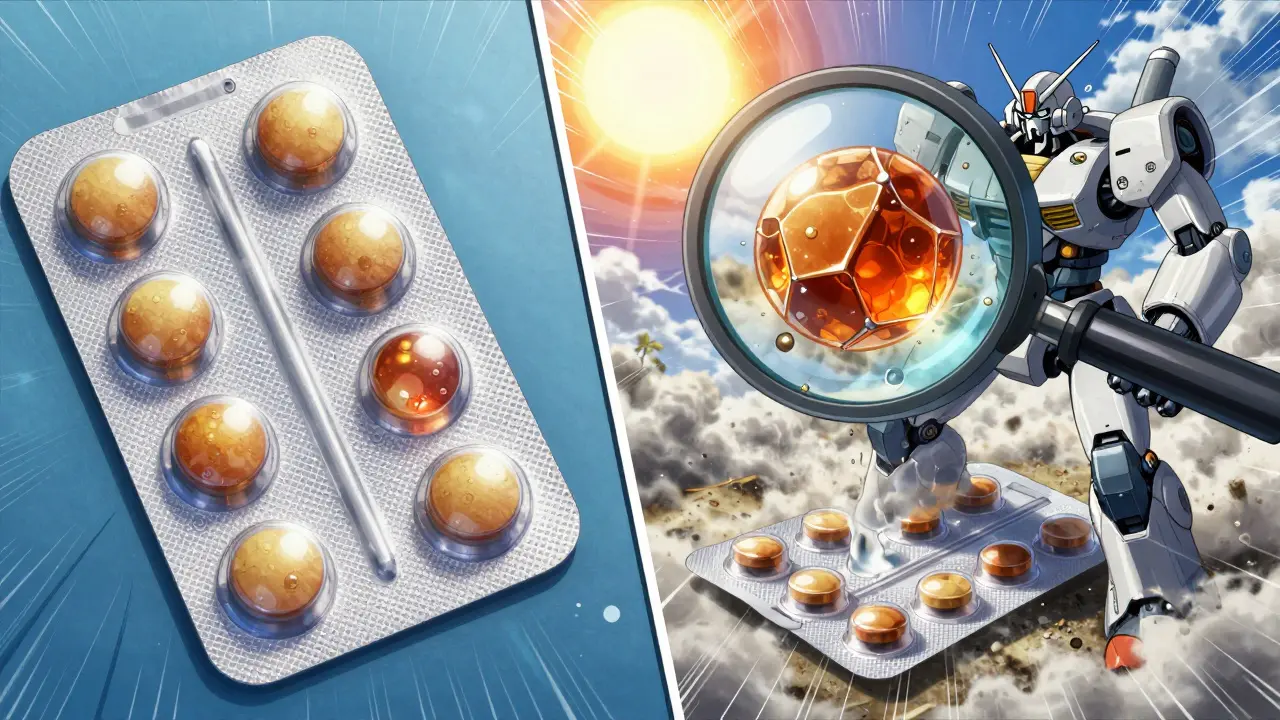
Take moisture. Many drugs degrade when exposed to humidity. Brand-name makers often use blister packs with aluminum backing. Some generics use cheaper plastic blister packs that let in more moisture. Over time, that leads to chemical breakdown. The FDA found this in levothyroxine, but it’s also been seen in antibiotics, antivirals, and even insulin.
Another issue is storage. In low-income countries, 28.7% of medicines fail stability tests because they’re stored in uncontrolled warehouses-exposed to heat, humidity, and sunlight. Even in the U.S., 80% of FDA citations for stability failures are due to poor documentation. Saying "stored at room temperature" isn’t enough. You have to record exact temperatures and humidity levels. A fridge at 4°C is not the same as one at 8°C. A warehouse at 32°C is dangerous.
What’s Changing in the Industry?
Companies are starting to use smarter tools. The IQ Consortium developed Risk-Based Predictive Stability (RBPS) models that cut testing time by 30% in pilot studies with Amgen and Merck. These models use data from early-stage testing to predict how a drug will behave over time-instead of waiting years.
And now, the ICH Q12 guideline (effective November 2023) lets manufacturers make changes after approval without restarting full stability studies. That’s a big shift. It means companies can tweak packaging or processes more easily-once they’ve proven the changes won’t affect safety.
The FDA is also testing Continuous Manufacturing Stability Testing (CMST), where drugs are made in a constant flow instead of in batches. Early results show shelf life can be determined 40% faster. That could mean quicker access to affordable drugs.
What Should You Do as a Consumer?
You can’t test your own meds. But you can protect yourself.
- Store pills in a cool, dry place-not the bathroom or a hot car.
- Keep medications in their original packaging. Blister packs and amber bottles protect against light and moisture.
- Don’t use expired drugs. That date isn’t arbitrary. It’s based on real data.
- Watch for changes. If a pill looks discolored, smells odd, or crumbles, don’t take it. Contact your pharmacist.
- For liquids or creams: if it separates, thickens, or smells sour, toss it.
And remember: just because a generic is cheaper doesn’t mean it’s less safe. Most generics are perfectly stable. But the system isn’t perfect. Regulatory oversight helps, but it’s not foolproof. That’s why transparency and vigilance matter.
What’s at Stake?
Stability testing isn’t just paperwork. It’s a lifeline. A single degraded antibiotic can lead to treatment failure and drug-resistant infections. A weak heart medication can trigger a stroke. A contaminated injection can cause sepsis.
Global stability testing services are now a $2.84 billion industry. And it’s growing. Why? Because we’re using more complex drugs-biologics, nanoparticles, personalized medicines-that are harder to stabilize. Climate change is making it worse. MIT predicts rising temperatures could shorten average drug shelf life by nearly five months by 2050.
Companies that invest in advanced stability science don’t just meet regulations-they gain an edge. McKinsey found they capture 22.3% more market share in generic drug categories because they can guarantee longer shelf life. That means fewer returns, fewer recalls, and more trust.
At the end of the day, stability isn’t about chemistry alone. It’s about responsibility. It’s about knowing that the little pill you swallow today will still do what it’s supposed to tomorrow, next month, and every day until the expiration date.
How long should a generic drug last before it expires?
Most generic drugs are labeled with a shelf life of 24 to 36 months, based on real-time stability testing under ICH Q1A(R2) guidelines. Some may have shorter expiration dates if testing shows faster degradation, especially for sensitive drugs like insulin or liquid antibiotics. Always follow the date printed on the package.
Can I still use a drug after its expiration date?
The FDA advises against using expired medications. While some drugs may remain stable beyond their expiration date, there’s no guarantee of potency or safety. Degradation can produce harmful compounds, and effectiveness drops over time-especially for critical drugs like epinephrine, nitroglycerin, or insulin. It’s not worth the risk.
Do generic drugs degrade faster than brand-name drugs?
Not always, but sometimes. Differences in excipients, manufacturing methods, and packaging can make generics more vulnerable to moisture, heat, or light. The FDA found that 17.3% of generic levothyroxine products had stability issues not seen in the brand version, mainly due to poor moisture protection. This doesn’t mean all generics are unsafe-but it does mean quality varies.
What role does packaging play in drug stability?
Packaging is critical. Aluminum blister packs block moisture and light far better than plastic. Amber bottles protect light-sensitive drugs. Desiccants inside bottles absorb humidity. A drug that lasts three years in one package might degrade in 18 months in another. That’s why manufacturers must test stability with the exact packaging used in final distribution.
How do regulators ensure stability testing is done right?
The FDA and EMA inspect manufacturing sites and review stability data before approving a drug. They check that testing follows ICH guidelines, that methods are validated, and that storage conditions are properly documented. In 2020-2022, over 37% of FDA warning letters cited inadequate environmental monitoring. Companies that fail can face recalls, fines, or production shutdowns.
Final Thoughts
Stability testing is one of the quietest, most vital parts of modern medicine. It doesn’t make headlines. But when a drug fails, people get sick. The system works most of the time-but it’s not perfect. Understanding how shelf life is determined helps you make smarter choices. Store your meds right. Check the date. Trust the process, but don’t ignore the signs.
15 Comments
Ernie Simsek
I work in pharma QA and let me tell you - most generics are fine. But that 17.3% failure rate on levothyroxine? Yeah. That’s not a typo. I’ve seen batches where the tablets looked fine but the active ingredient was at 82%. Patients don’t know. They just think they’re ‘not responding.’ 😬
Joanne Tan
my grandma took her generic blood pressure med for 3 years past the date and swore it still worked. i told her not to but she said 'it's just a pill' 🤷♀️ i still worry about her. maybe i'm overthinking? idk
Stacie Willhite
I just want to say thank you for writing this. I’m a nurse, and I’ve seen too many patients on expired insulin or crumbling antibiotics. It’s terrifying. The system *should* protect us, but sometimes it feels like we’re all just guessing. Please, store your meds right. It matters more than you think.
Rob Turner
I’m from the UK and we’ve had our own issues with generics. Not because they’re bad, but because the pressure to cut costs leads to corners being cut. Packaging is everything. I’ve held a generic asthma inhaler that felt like plastic wrap. The patient didn’t get a full dose. Twice. It’s not science. It’s logistics. And logistics fail. 💔
Gabriella Adams
I’m going to be brutally honest here. I work in regulatory affairs. The ICH guidelines are solid. The problem isn’t the science. It’s the documentation. I’ve reviewed stability reports where the temperature log said 'room temp' and the actual log showed 38°C for 11 days. No one noticed. No one checked. That’s not negligence. That’s systemic blindness.
Steve DESTIVELLE
You know what stability really means it means someone somewhere decided that if the pill doesn't explode in the heat then its fine and who cares if it loses 6 percent of its power because the patient is probably already dead from poverty or bad healthcare anyway and the system is designed to keep the profit flowing not the medicine working
Stephon Devereux
I’ve been in this field for 20 years. The real scandal isn’t the generics. It’s that brand-name companies *know* their packaging is better - and they use it to justify 5x the price. Meanwhile, the generics with inferior blister packs get blamed for instability. It’s a distraction. The real issue is profit over patient safety.
steve sunio
generic drugs are just placebo with a fancy label. i mean look at the price difference. if it was really the same why is it 10x cheaper? someone’s cutting corners. probably the preservatives. i bet half these pills are just sugar and hope
athmaja biju
India makes 20% of the world's generic drugs. We have the best labs. The best scientists. The best packaging. You think the FDA doesn't know this? They just don't want to admit that the West is relying on the East to keep their healthcare alive. But hey, if you want to live longer, stop being racist against quality.
Robert Petersen
This is such an important topic. I used to be one of those people who thought 'expired meds are fine.' Then my dog got sick from an old antibiotic. We lost him. Don’t be like me. Check the date. Store it right. It’s not paranoia - it’s love.
Craig Staszak
I work in a pharmacy and people ask me all the time 'can i still take this?' I say 'if you're not sure, don't.' But then they say 'but it's just a pill.' I just nod and hand them a new one. Sometimes I wish we could just give meds for free. Would that solve everything? Probably not. But it'd help.
alex clo
The FDA’s regulatory framework is robust. The issue lies in the implementation of post-market surveillance. Many manufacturers rely on accelerated stability data without adequate real-time validation. This creates a systemic vulnerability that is not adequately addressed by current audit protocols.
Jason Pascoe
I’m Australian. Our meds come from everywhere. I’ve had generics that worked perfectly and others that felt like they were made from dust. Packaging matters. Storage matters. But honestly? The biggest problem is that no one tells you this stuff. We’re just handed a bottle and told 'take it.' No warnings. No context. That’s not healthcare. That’s gambling.
Annie Joyce
I used to be a pharmacy tech. One day I found a bottle of generic levothyroxine that had turned yellow. Like, seriously, it looked like a lemon drop. I called it in. Got yelled at for 'causing panic.' The next week, a 72-year-old woman came in with a heart palpitation - her dose had been off for 6 months. I quit that job. I can’t unsee that.
Luke Trouten
The real tragedy isn’t that some generics degrade. It’s that we treat medicine like a commodity. We don’t ask if the pill will save a life. We ask if it’s cheap enough. Stability testing isn’t bureaucracy. It’s the last line of defense between a patient and a preventable death. We’ve forgotten that.