
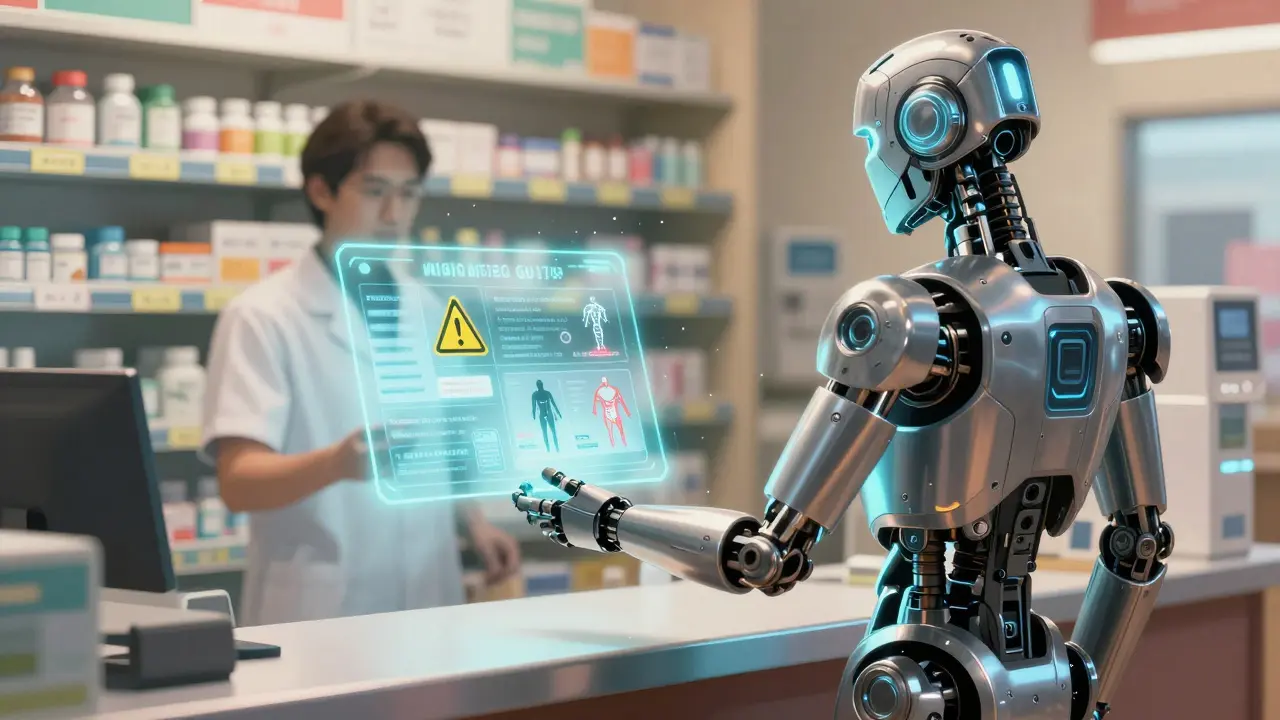
When you pick up a prescription, you might not notice it-but somewhere in the bag, there’s a small paper insert that could save your life. These are Medication Guides, official documents required by the U.S. Food and Drug Administration (FDA) for certain prescription drugs that carry serious risks. They’re not optional. They’re not marketing fluff. They’re legally required safety instructions written in plain language to help you understand what could go wrong-and how to avoid it.
What Exactly Are FDA Medication Guides?
Medication Guides (MGs) are printed or digital handouts that come with specific prescription medications. They’re not the same as the small leaflets you get with over-the-counter pills. These guides are only required for drugs that have serious, potentially life-threatening risks. Think: blood thinners that can cause internal bleeding, antidepressants linked to suicidal thoughts in young adults, or diabetes drugs that may lead to severe low blood sugar. The FDA started requiring them in the 1990s, but the number has exploded since then. In 2006, there were about 40 Medication Guides. By 2011, that number jumped to 305. Today, it’s likely over 350. Every time one of these drugs is dispensed, the pharmacy must give you the guide-unless you specifically ask for it electronically. These guides must follow strict rules. They have to be written in simple, everyday English. No medical jargon. No tiny fonts. They must include:- The name of the drug
- Why it’s prescribed
- Important safety warnings
- Common side effects
- What to do if you miss a dose
- When to call your doctor immediately
When Do You Get a Medication Guide?
You should get one every time you fill a prescription for a drug that requires it-whether it’s your first time taking it or you’ve been on it for years. This applies to outpatient settings like community pharmacies, mail-order services, and even some clinics where you take the medication home. Here’s the catch: you won’t get one if you’re in the hospital. If a nurse gives you the pill right there, the law doesn’t require a guide. But if you’re being discharged with the same drug, you should get one before you leave. Some drugs also require Medication Guides as part of a Risk Evaluation and Mitigation Strategy (REMS). These are extra safety programs for the riskiest drugs. For example, if you’re prescribed a drug like Accutane for severe acne, you’ll need to sign forms and get counseling before you can get your refill. The Medication Guide is part of that process.How to Get a Medication Guide
There are three ways to get one, and you have rights to all of them. 1. Ask your pharmacistThis is the most common way. When you hand over your prescription, the pharmacist should automatically give you the guide. But if they don’t, just ask: “Do I need a Medication Guide for this?” Most pharmacists will hand it to you right away. You don’t need to explain why. You don’t need to prove you need it. You just ask. 2. Request it electronically
You’re not stuck with paper. The FDA allows you to choose an electronic version. You can ask your pharmacist to email it, text it, or send it through a patient portal. Some pharmacies even let you download it from their website using your prescription number. If you’re tech-savvy or prefer to keep digital records, this is your best option. 3. Download it yourself from the FDA website
The FDA maintains a public database of all approved Medication Guides. Go to fda.gov/drugs/medication-guides and search by drug name. You’ll find the official, up-to-date version-exactly what your pharmacist should be giving you. This is useful if you lost yours, if your pharmacist didn’t give you one, or if you want to compare versions.

What If You’re Not Given a Guide?
If you’re handed a prescription for a drug that should come with a Medication Guide and you don’t get one, it’s not your fault. It’s a violation of FDA regulations. Here’s what to do:- Ask again-politely but firmly. Say: “I understand this drug requires a Medication Guide. Can you please provide it?”
- If they still refuse, ask to speak to the pharmacist in charge.
- If you’re still denied, call the FDA’s MedWatch hotline at 1-800-FDA-1088. Report the pharmacy. You don’t need to give your name. You’re protecting yourself and others.
Why Do Medication Guides Often Feel Confusing?
Here’s the uncomfortable truth: even though they’re supposed to be easy to read, many Medication Guides are still too long, too dense, or poorly formatted. A 2012 study found that despite the massive increase in guides, their readability hadn’t improved. Many are written at a college reading level, when the average American reads at an 8th-grade level. Some guides are 8-10 pages long. They use passive voice. They bury key warnings in paragraphs. They don’t highlight what matters most. That’s why the FDA is working on a new system called Patient Medication Information (PMI). The goal? One page. One standard format. All guides will follow the same structure: What this drug is for, Important safety info, What to avoid, What to do if you have side effects. And it will all be stored in a free, searchable FDA database. The PMI system is still being rolled out, but it’s coming. By 2027, most new drugs will use it. Existing drugs will be updated over the next five years. This change could finally make patient safety information something you can actually use-not just something you’re handed and forget.
What You Should Do Right Now
If you’re taking any prescription medication, especially one for a chronic condition:- Check if it requires a Medication Guide. Search the FDA’s database using the drug name.
- If you have one, read it. Even if you’ve taken the drug for years, new warnings can appear.
- If you don’t have one, call your pharmacy and ask for it. Don’t wait until you feel sick.
- Save the electronic copy. Take a photo of the paper one. Put it in your health app.
- Bring it to your next doctor’s visit. Ask: “Does this still apply? Are there any new warnings?”
What’s Changing Soon
The FDA’s new Patient Medication Information (PMI) system will replace the current patchwork of guides. Here’s what’s different:- One page-no more 10-page booklets.
- Standard format-same headings for every drug, so you know where to look.
- Online-only access-all guides stored in a central FDA database, updated in real time.
- Free and public-no login, no cost, no barriers.
Final Tip: Don’t Trust Memory
People remember what they think they know-not what’s true. You might think, “I’ve been on this pill for five years, I know how it works.” But side effects change. Interactions get discovered. New studies come out. Every time you refill a prescription with a Medication Guide, treat it like a new document. Read it again. Even if it looks familiar. Because it might not be.Are Medication Guides required for every prescription drug?
No. Only drugs that the FDA determines have serious risks that could harm patients if not properly understood. These include medications with high risks of serious side effects, drugs where patient adherence is critical to safety, or those where clear instructions can prevent life-threatening reactions. Roughly 350 out of thousands of prescription drugs require a Medication Guide.
Can I get a Medication Guide for a drug I’m not currently taking?
Yes. If you’re considering taking a drug in the future, or if you’ve taken it in the past and want to review the safety info, you can search for the Medication Guide on the FDA’s website. You don’t need a prescription to access it. The guides are public documents.
What if my pharmacist says I don’t need a Medication Guide because my doctor didn’t order it?
Your doctor’s opinion doesn’t override FDA rules. Even if your doctor thinks you don’t need it, you still have the right to request one. The law says the pharmacist must provide it if the drug requires one-no exceptions. If they refuse, ask to speak to the pharmacy manager or contact the FDA.
Are Medication Guides available in languages other than English?
The FDA requires Medication Guides to be written in English. Some manufacturers provide translations, but these are not FDA-approved. If you need information in another language, ask your pharmacist if they have a translated version or if they can connect you with a medical interpreter. You can also find patient-friendly summaries from nonprofit health organizations.
How often are Medication Guides updated?
Manufacturers must update guides whenever the FDA issues new safety warnings, adds new risks, or changes dosing instructions. Updates can happen at any time. Always check the FDA’s website for the most current version, especially if you’ve been on the drug for more than a year. The version you got last year may no longer be accurate.




12 Comments
Kegan Powell
I used to ignore these guides until my cousin had a bad reaction to a blood thinner and nearly died. Now I read every single one like it's a survival manual. Seriously, if you're on anything long-term, don't just toss it in the drawer. 📄❤️
Paul Taylor
You know what's wild is that most people don't even know these exist and pharmacists often forget to hand them out even though it's the law and honestly if you're on something like warfarin or clozapine not having that guide could mean the difference between living and ending up in the ER and I've seen it happen more times than I care to admit and it's not just about reading it it's about understanding it and keeping it somewhere you can find it when you need it like your phone or your wallet or even a sticky note on your mirror
John O'Brien
Pharmacies are lazy as hell. I asked for my guide for gabapentin and the kid behind the counter just shrugged and said 'we don't have those.' I called the FDA. They got fined. Done.
Patrick Merrell
The FDA doesn't care about you. They just want to cover their asses. These guides are useless if you can't read them. And no, translating them into Spanish or Tagalog doesn't fix the fact that the language is still written like a legal contract.
Marian Gilan
I think the whole system is rigged. These guides are only given out so the drug companies can say 'we warned them' and then when someone dies they point to the paper like it's some kind of magic shield. I've seen people die from side effects they never even read because the guide was 12 pages of tiny font and no one told them to look for the bold parts. This isn't safety. This is liability insurance.
Desaundrea Morton-Pusey
I don't get why we even have to do this. Why can't the doctors just tell us what we need to know? This feels like the government shoving paperwork on us to avoid responsibility.
Kathy McDaniel
i just read my guide for metformin for the first time after 3 years and found out i was supposed to avoid alcohol? i had no clue. thanks for this post lol
Conor Flannelly
In Ireland, we don't get these guides at all. I had to look up my antidepressant's guide on the FDA site because my Irish pharmacist had never heard of it. It's wild how different the system is. The FDA might be slow, but at least they're trying. We just get a leaflet that says 'take once daily and don't drive if dizzy.' That's it.
Conor Murphy
I used to think these were just boring paper. Then my mom had a bad reaction to a new blood pressure med and the guide had the exact warning about the interaction with grapefruit juice. She’s alive because she read it. Don’t underestimate this stuff. It’s not fluff. It’s your lifeline.
Kirstin Santiago
I save all my guides in a folder on my phone. I even took a photo of the one for my thyroid med last year and noticed the warning about calcium supplements changed. I called my doctor and we adjusted my routine. Small thing, huge difference.
April Williams
I don't care how 'life-saving' this is. If I have to read another 10-page PDF just to get my birth control refill, I'm switching pharmacies. This is bureaucracy at its worst. They're not helping me, they're harassing me.
Harry Henderson
If you're not reading these guides, you're playing Russian roulette with your body. Stop being lazy. Your life isn't a suggestion. It's a responsibility. Go check your meds right now. I'll wait.