
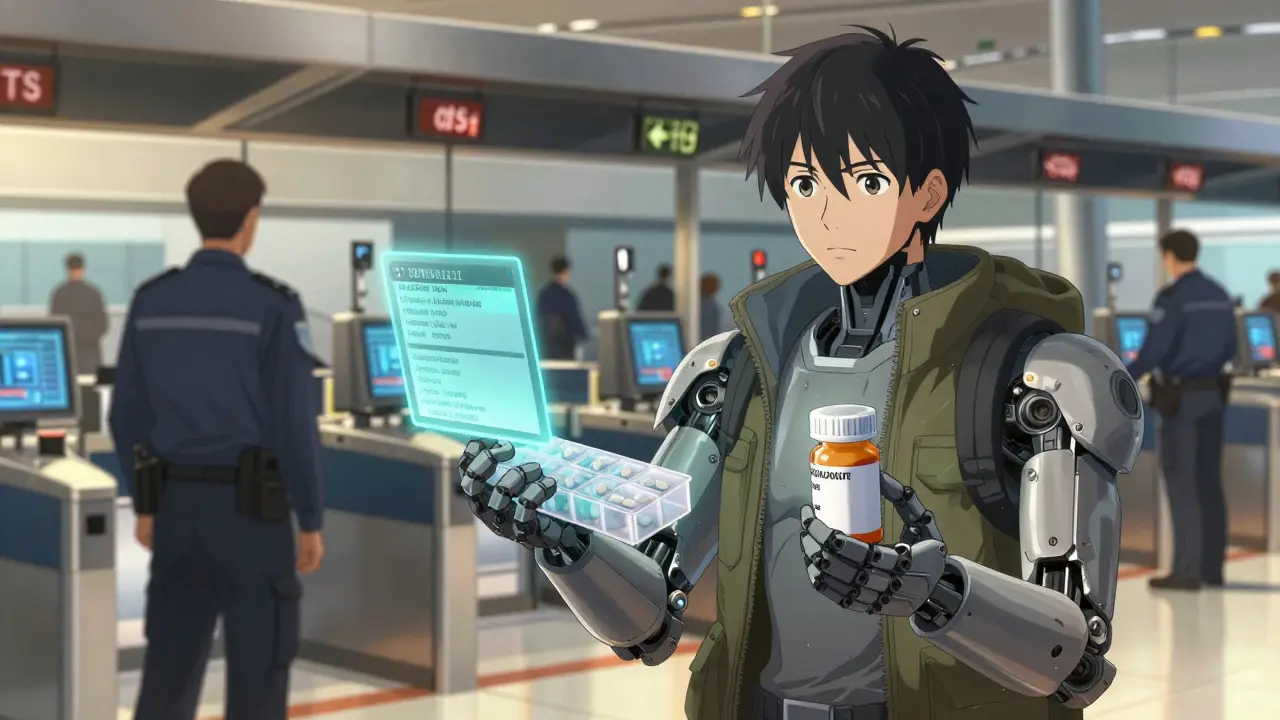
Planning a trip and wondering if you can toss your pills into a little pill organizer? It seems simple-until you hit security or customs and get pulled aside. The truth is, while the TSA doesn’t technically require your meds to be in original bottles, skipping them can cost you time, stress, and even get you denied entry abroad. Here’s what actually happens when you travel with medications-and why keeping them in their original containers isn’t just a good idea, it’s often your only safe option.
Why Original Containers Matter More Than You Think
The TSA says you don’t have to keep your pills in their original bottles. That’s true. But that’s not the whole story. While federal security rules are flexible, state laws, international customs, and airline policies aren’t. A pill organizer might look neat, but it’s a red flag at customs checkpoints. In 2023, travelers who carried medications in unlabeled containers were 73% more likely to face delays at international borders, according to a study of over 1,200 travelers. Why? Because officers can’t tell what’s inside. Is it a prescription? An over-the-counter drug? Something illegal? Without a pharmacy label, they have no way to verify. Original containers have the drug name, strength, dosage instructions, prescriber’s name, and pharmacy details-all of which help customs agents quickly confirm your meds are legal and legitimate. In countries like Japan, Singapore, and the UAE, even common medications like Sudafed or Adderall are banned or tightly controlled. If you’re caught with them in a random container, you could face fines, detention, or worse. The U.S. Embassy in Mexico reported a 68% drop in entry denials when travelers presented meds in labeled bottles with doctor’s notes.TSA Rules: What They Really Say (And Don’t Say)
The TSA website says you can bring any amount of solid medication in your carry-on, no matter how many pills. Liquids? You can bring more than 3.4 ounces if it’s medically necessary-but you must tell the officer at the start of screening. No need to declare it in advance, but don’t wait until they’re holding your bottle up to the scanner. Here’s the catch: TSA agents aren’t doctors. They don’t know if your blue pill is a blood thinner or a vitamin. If you hand them a container with no label, they’ll likely ask for proof. That means pulling out your prescription receipt, calling your pharmacy, or waiting while they consult a supervisor. It’s not a rule violation-but it’s a hassle you can avoid. And here’s something many travelers don’t realize: never check your meds. Even if you’re not taking them during the flight, never put them in checked luggage. The International Air Transport Association found that over 17% of medications stored in checked bags were exposed to extreme temperatures, humidity, or delays that ruined them. If your insulin, heart meds, or seizure medication gets lost or spoiled, you’re in serious danger. Carry-on only. Always.State Laws in the U.S. Are a Patchwork
Inside the U.S., rules vary wildly. Thirty-seven states, including California, New York, and Texas, require prescription medications to be in original containers with labels intact when transported-even if you’re just driving across state lines. That means if you’re flying from Florida (where there’s no such law) to California with your meds in a pill organizer, you could be in violation of California law if you’re pulled over or questioned. The National Association of Boards of Pharmacy tracks these laws, and the pattern is clear: states with strict pharmacy regulations demand labeled containers. It’s not just about security-it’s about preventing drug diversion and misuse. If you’re traveling to or through one of these states, you’re taking a legal risk by skipping the original bottle.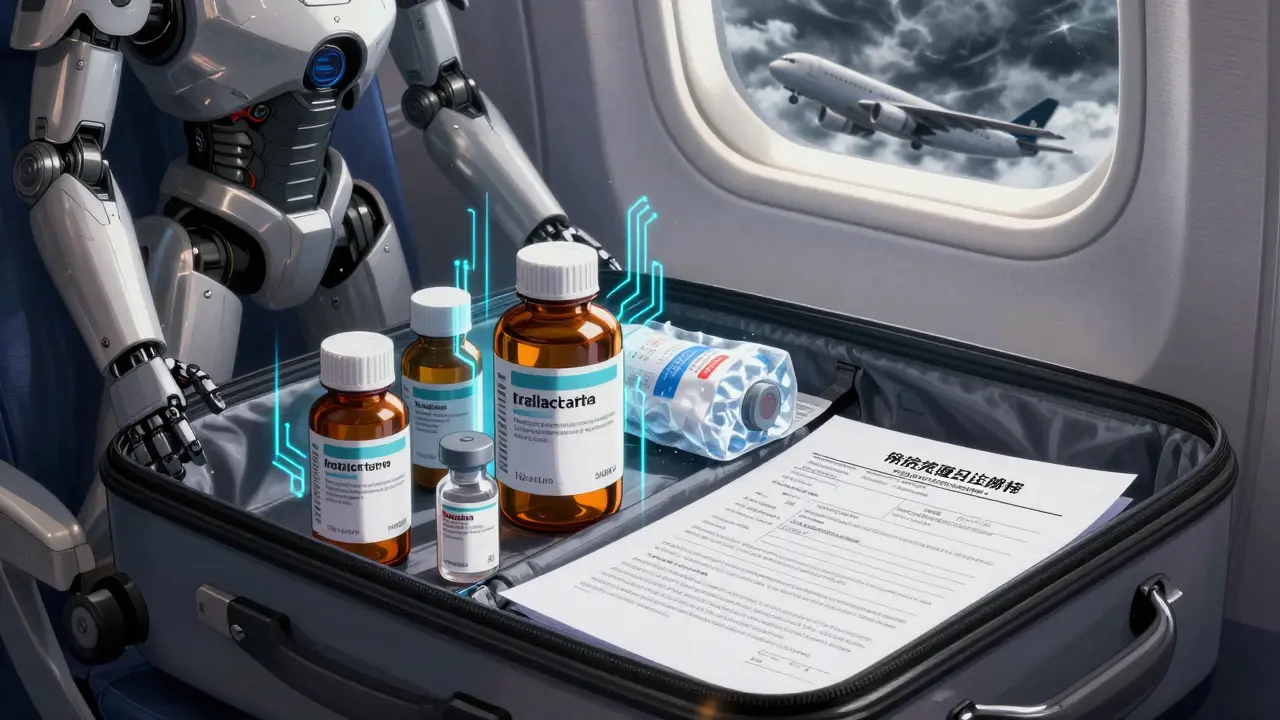
International Travel? It’s a Whole Different Game
Forget TSA. When you land abroad, you’re subject to that country’s drug laws. And they’re not always obvious. Here are a few surprises:- Japan: Sudafed (pseudoephedrine), codeine, and Adderall are banned. Even a single pill can get you arrested.
- United Arab Emirates: Any medication containing codeine, benzodiazepines, or stimulants requires a special permit-even if you have a U.S. prescription.
- Thailand: Codeine and tramadol are controlled substances. You need a doctor’s letter and a copy of your prescription.
- United Kingdom: You can only bring a 30-day supply of most prescription drugs without prior approval.
- European Union: Since 2020, all medications must be in original packaging with labels matching your prescription. The EU’s Medicines Verification System flags unlabeled drugs.
What to Do: The Simple Checklist
You don’t need to overcomplicate this. Follow these steps before you pack:- Keep all pills in original bottles-with pharmacy labels still on. Don’t remove them.
- Bring extra medication. Add 5-7 days to your total trip length. Flight delays happen. Lost luggage happens. Don’t risk running out.
- Carry a doctor’s letter. It should include your name, the generic and brand names of your meds, dosage, reason for use, and the doctor’s license number and contact info. Print it on official letterhead.
- For liquids over 3.4 oz: Tell the TSA officer at the start of screening. No need to put them in a separate bag-just say it out loud.
- For temperature-sensitive meds (insulin, epinephrine, etc.): Ask your pharmacist how to keep them cool. Ice packs are allowed, but you must declare them. Never use dry ice unless you’re trained to handle it.
- Take photos of your original bottles. If you must use a pill organizer, snap a clear photo of each bottle’s label and save it on your phone. It’s not a substitute, but it helps if you’re questioned.
What About Pill Organizers?
Yes, you can use them. But only as a backup. Never rely on them alone. If you’re traveling domestically and feel comfortable, you can transfer a week’s supply into a labeled organizer. But keep the original bottles in your carry-on. That way, you have proof if asked. One traveler in 2023 told me she used a pill organizer for her anxiety meds during a cross-country flight. At security, she was asked to identify them. She couldn’t. The officer called in a supervisor. She missed her flight. She later found out her medication was a controlled substance in that state. A simple label would’ve saved her hours.
What If You’re Buying Meds Abroad?
Don’t. The FDA warns that 11.7% of medications purchased overseas are counterfeit or substandard. In Southeast Asia, that number jumps to 28.4%. Even if it looks real, it might not work-or it could harm you. If you run out while traveling, contact your embassy. They can help you find a local pharmacy that can verify and dispense your medication legally.What’s Changing? The Future of Traveling With Meds
The Department of Homeland Security is testing a digital health pass at 12 major U.S. airports, expected to launch in late 2024. It will let you upload your prescription info to a secure app, which TSA agents can scan. The International Air Transport Association is also developing a global digital medication pass for 2025. But until then, the old rules still apply. Paper labels. Doctor’s notes. Original bottles. The bottom line? Technology will help-but not yet. Until then, the safest, fastest, and most reliable way to travel with medication is to keep it in the bottle it came in.What If You’re Denied Entry or Confiscated?
If customs officials take your meds, ask for a written receipt. Contact your embassy immediately. They can help you navigate local laws and connect you with medical providers. Don’t argue. Don’t lie. Stay calm. Your goal is to get your meds back or get proper medical care-not to escalate the situation.Can I carry my medication in a pill organizer?
Yes, but only as a secondary option. Always keep the original prescription bottles in your carry-on. Pill organizers have no labels, so TSA or customs can’t verify what’s inside. If you use one, take a photo of each original bottle’s label and keep it on your phone. That way, you have proof if asked.
Do I need a doctor’s note for my medication?
It’s not required by TSA, but it’s essential for international travel. A letter from your doctor should include your name, the generic and brand names of your meds, dosage, reason for use, and the doctor’s license number and contact info. Print it on official letterhead. This cuts down on delays and helps if your meds are questioned abroad.
Can I bring liquid medication on a plane?
Yes. TSA allows medically necessary liquids in amounts greater than 3.4 ounces. You must tell the officer at the start of screening. You don’t need to put them in a separate bag, but do declare them clearly. Never check liquid meds-they can freeze, leak, or be lost.
Are there medications that are banned in other countries?
Yes. Many common U.S. medications are illegal abroad. Adderall and Ritalin are banned in Japan, UAE, and parts of Europe. Codeine is restricted in Thailand and Singapore. Sudafed is prohibited in Japan and South Korea. Always check the U.S. Department of State’s travel advisories for your destination before you go.
Should I bring extra medication?
Always. Bring at least 5-7 days more than you think you’ll need. Flight delays, lost luggage, or unexpected trips can happen. Many countries don’t carry the same brands or dosages you use. Running out could be dangerous.
Can I bring ice packs for my insulin or other cold meds?
Yes. Ice packs are allowed, but you must declare them at security. Make sure they’re not frozen solid-slushy is fine. Dry ice is not recommended unless you’re trained to handle it. Ask your pharmacist for advice on keeping your meds cool during travel.





14 Comments
Jacob Paterson
Oh wow, another one of those ‘follow the rules or die’ posts. Let me guess-you also wear socks with sandals and think ‘organic’ means it’s blessed by a yoga instructor? I’ve flown 47 countries with pills in a Ziploc and never gotten stopped. The TSA doesn’t care. Customs? They’re bored, not brain surgeons. You’re giving people anxiety over a label. Chill.
Ashley Kronenwetter
While I appreciate the intent behind this guide, I must emphasize the importance of adhering to regulatory standards for both personal safety and legal compliance. The documentation and packaging requirements outlined are not arbitrary; they serve as critical safeguards against misidentification, contraband, and medical emergencies abroad. Disregarding these protocols, even with good intentions, may result in irreversible consequences.
Heather Wilson
Let’s be real-this whole thing is performative compliance. The TSA doesn’t care. The airlines don’t care. The only people who care are the ones who want to feel morally superior while overpacking their carry-ons. And yet, you still have to carry the original bottles? That’s 17 extra ounces of plastic waste per trip. You know what’s more dangerous? People taking meds they don’t need because they’re afraid to fly without a label. The real issue isn’t the bottle-it’s the fear culture.
Chris Kauwe
There’s a metaphysical dimension here: the container as a symbol of institutional legitimacy. The pill bottle is not merely a vessel-it is a techno-bureaucratic sacrament, a ritual object that transmutes pharmaceutical autonomy into state-sanctioned legitimacy. To discard the label is to reject the epistemic authority of the FDA, the DEA, and the global pharmacopoeia. In this ontological framework, your anxiety isn’t about pills-it’s about sovereignty.
Meghan Hammack
Y’all. I had a panic attack in Dubai because I forgot my doctor’s note. I thought I was fine with my little pill box-until they pulled me aside and asked if I was ‘carrying stimulants for illegal purposes.’ I cried in the security line. Please. Just bring the bottle. And the note. And a deep breath. You’re worth more than a detention room.
RAJAT KD
Excellent summary. I travel frequently between India and the US. In India, even common painkillers like Combiflam require a prescription. Always carry original packaging. One time, customs questioned my insulin pens because the label was faded. A printed prescription saved me. Small effort, huge payoff.
Matthew Maxwell
It’s not about ‘being safe’-it’s about respecting the legal architecture of medicine. The fact that people treat prescriptions like a suggestion rather than a covenant is symptomatic of a broader cultural decay. You wouldn’t drive without a license, so why treat your medication like a free-for-all? This isn’t about inconvenience-it’s about accountability.
Lindsey Wellmann
OK BUT WHAT IF YOU’RE JUST GOING TO THE BEACH AND YOU’RE ON ANTIBIOTICS?? 😭 I put my amoxicillin in a cute little pill case and forgot the bottle… then my phone died. I had to show them a photo of my pharmacy receipt on my laptop. They gave me a sticker that said ‘GOOD JOB’ 🎉 and let me go. But I’m still traumatized. 🥺💊 #MedicationAnxiety #TSAStories
Ian Long
I get both sides. The rules exist for good reasons, but they’re applied inconsistently. I’ve seen people with unlabeled meds waved through, and others detained for a single Advil. The real solution isn’t more fear-it’s better systems. Digital passes, QR codes on bottles, global databases. Until then, yeah, bring the bottle. But don’t shame others for trying to travel lighter. We’re all just trying to get from point A to point B without a meltdown.
Angela Stanton
Let’s analyze the cognitive dissonance here: you’re told to carry original bottles for ‘verification,’ yet the system is designed to fail you-pharmacies don’t always reissue labels, international forms are inconsistent, and TSA agents lack training. The burden is placed on the patient, not the infrastructure. This isn’t safety-it’s bureaucratic negligence dressed up as diligence. The real failure isn’t the pill organizer-it’s the lack of interoperable digital health records.
Darren McGuff
As someone who’s worked with airline medical protocols in the UK, I can confirm: the EU’s verification system is tightening. We’ve had multiple cases where passengers were denied boarding because their insulin vials had no pharmacy stamp-even though they had a doctor’s letter. The system’s flawed, but the label is still the fastest way through. I always carry two copies: one printed, one saved on my phone. And never, ever check your meds. Ever.
Alicia Hasö
You’ve got this. Seriously. I used to travel with everything in a pill organizer because I thought it looked ‘clean.’ Then I got stuck in customs in Singapore for 3 hours because they thought my ‘mystery blue pills’ were ecstasy. I cried. I apologized. I got my meds back. Now I carry the bottle, the letter, and a photo. You’re not being paranoid-you’re being smart. And you’re not alone. We’ve all been there. You’ve got this.
Aron Veldhuizen
Wait-so the government tells you to carry your meds in a bottle, but then you’re not allowed to take them out for convenience? That’s not safety, that’s control. You’re being trained to obey the container like a dog with a collar. What if your pills are in a generic bottle because your insurance switched pharmacies? What if you’re homeless and can’t afford a new bottle? This isn’t about health-it’s about power. And you’re helping them enforce it.
Micheal Murdoch
There’s a quiet dignity in carrying your medicine the way it was meant to be carried-not because you’re afraid, but because you honor the science, the pharmacist, and the doctor who made sure you could live another day. It’s not about rules. It’s about respect. For yourself. For the people who work in pharmacies. For the ones who might one day need to trust that what you’re carrying is real. A label isn’t a burden-it’s a quiet promise: I’m not hiding anything. I’m just trying to survive.