
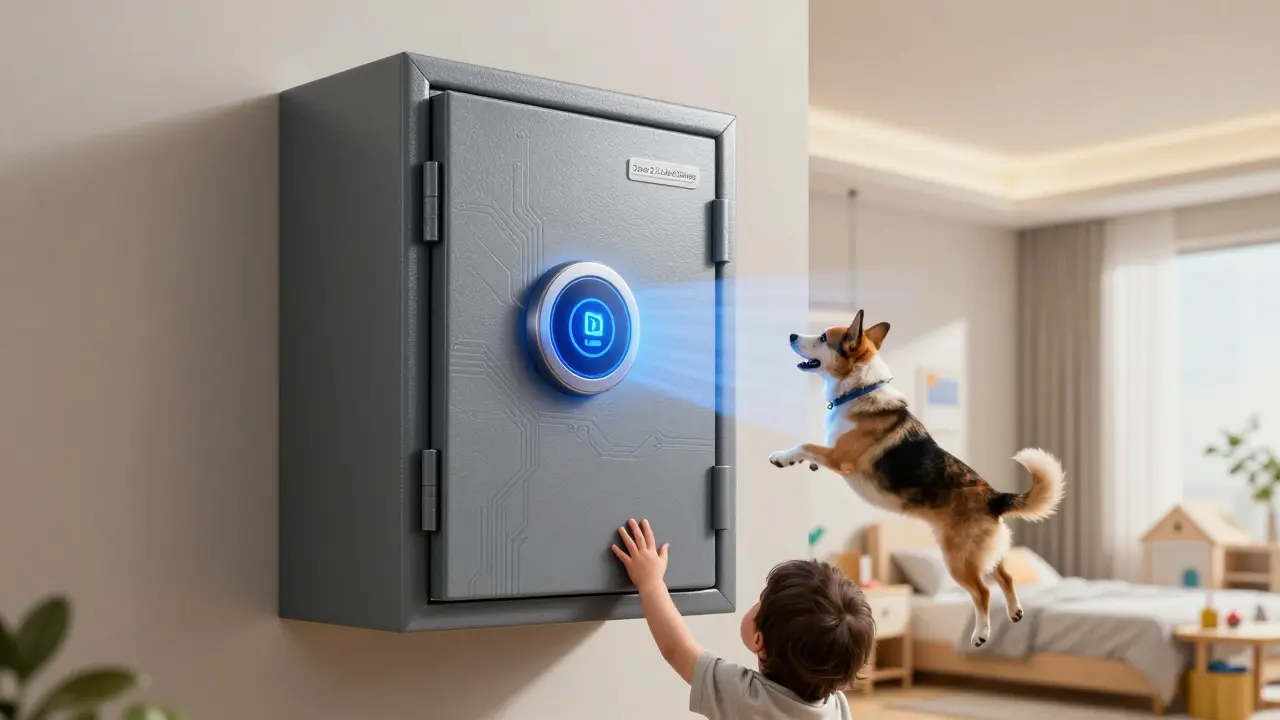
Every year, around 60,000 children under age 5 end up in emergency rooms after accidentally swallowing medications. Pets aren’t safe either-dogs alone account for nearly 80% of medication-related pet poisonings. These aren’t rare accidents. They happen because someone left a pill bottle on the counter, tucked a pill into a purse, or assumed the childproof cap was enough. The truth? Child-resistant packaging doesn’t stop a determined toddler. And no, your pet isn’t too smart to find that gummy vitamin under the couch.
Where Not to Store Medications
The bathroom cabinet is the most common mistake. It’s convenient, it’s clean, and it’s where most people grow up seeing medicine stored. But here’s the problem: bathrooms are humid. That moisture degrades pills, especially insulin, nitroglycerin, and antibiotics. High humidity also makes labels stick and peel, so you might not even know what’s inside the bottle.
And then there’s the kitchen counter. You grab a pill after breakfast, leave it there while you pour coffee, and forget about it. That’s a 30-second window for a child to grab it-or a dog to jump up and snatch it off the edge. One study found that 78% of pediatric medication poisonings happen because the medicine was left out during use, not because it was stored improperly.
Don’t forget the bedside table, the coffee table, or the top shelf of the closet. Kids climb. Pets jump. Cats can open cabinet doors. Dogs have noses that can detect a single pill through plastic. If it’s within 4 feet of the floor, it’s within reach.
Where to Store Medications Instead
Look up. Not just high-out of sight. The best place? A locked cabinet in a bedroom closet, or a high kitchen cabinet with a child lock installed. The CDC’s "Up and Away" campaign recommends storing medications at least 5 feet off the ground and behind a door that can’t be opened without a key, combination, or fingerprint.
For households with both kids and pets, separate storage zones are non-negotiable. Zone 1 is your immediate-use dose-only one pill or one day’s worth-on a flat surface while you’re administering it. Zone 2 is locked storage: a small safe or lockbox on a high shelf. Zone 3 is long-term storage for extras, kept in a completely different location than pet meds.
And here’s the rule most people miss: human and pet medications must never be stored together. A dog’s arthritis pill can be deadly to a cat. A human heart medication can cause kidney failure in a dog. Meanwhile, flavored pet meds-like chicken- or beef-flavored pills-are designed to taste like treats. Your child won’t know the difference.
Why Gummy Medications Are a Hidden Danger
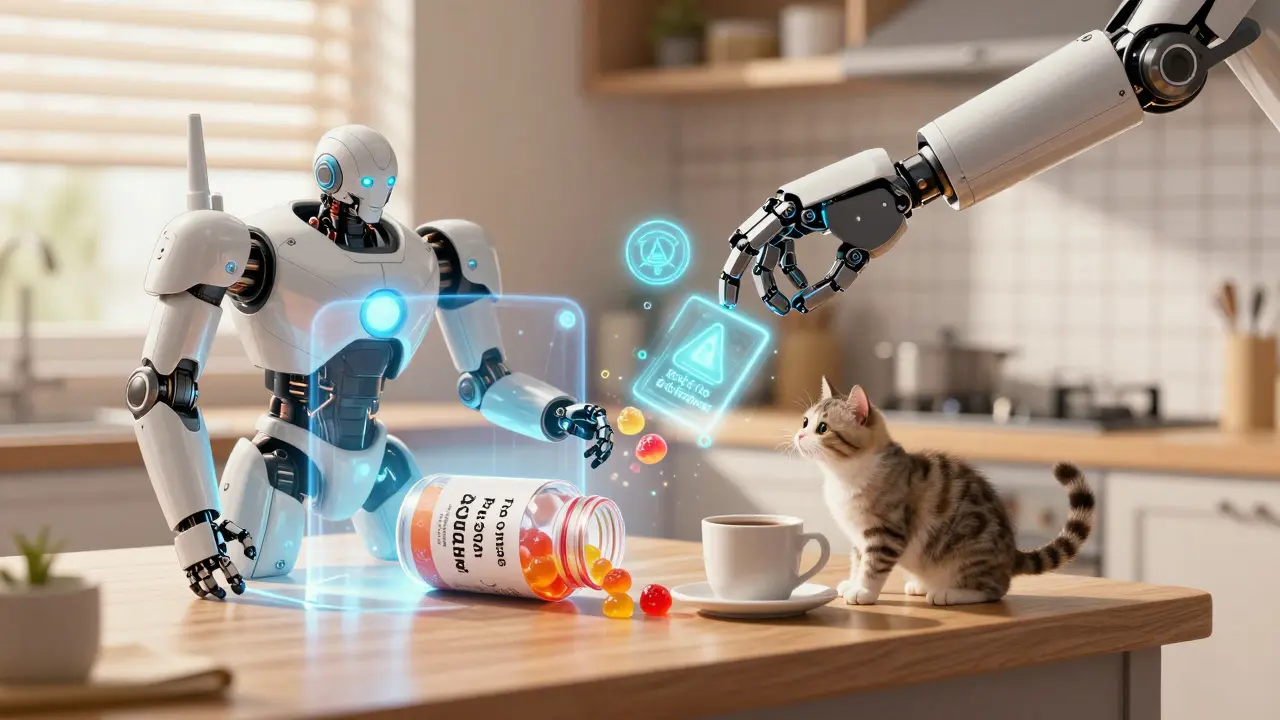
They look like candy. They taste like candy. And they’re everywhere: vitamins, allergy meds, sleep aids. The CDC says gummy supplements make up 30% of all childhood ingestions, even though they’re only 15% of the market. Parents think, "It’s just a vitamin," so they leave the bottle on the dresser. That’s a mistake.
Same goes for pet gummies. Many dog medications come in chewable, bacon-flavored forms. Your dog doesn’t know it’s medicine. Your kid doesn’t know it’s not a Skittle. Store them like you would opioids: locked up, out of sight, and never mixed with real snacks.
Lock Boxes and Smart Safes: Are They Worth It?
Yes. Especially if you’ve had a close call before. A simple combination lock box-like the 11" x 6" VADIC Safe Storage Bag-costs under $20 and holds a month’s supply of pills. It’s small enough to fit on a high shelf, heavy enough to not tip over, and locks with a dial you can set to your birthday or a random code.
For tech-savvy households, Bluetooth-enabled safes are now available. They send a notification to your phone if someone opens them. Adoption is still low-only 18% of high-risk homes use them-but they’re growing fast. One parent on Reddit said, "It adds 10 seconds to my morning, but I sleep better knowing my 3-year-old can’t get into the painkillers."
Don’t rely on "childproof" caps. They’re tested on kids aged 42 to 51 months-and even then, 20% can open them within five minutes. They’re meant to slow down a curious child, not stop them. Locks stop them.
Disposing of Old or Expired Medications
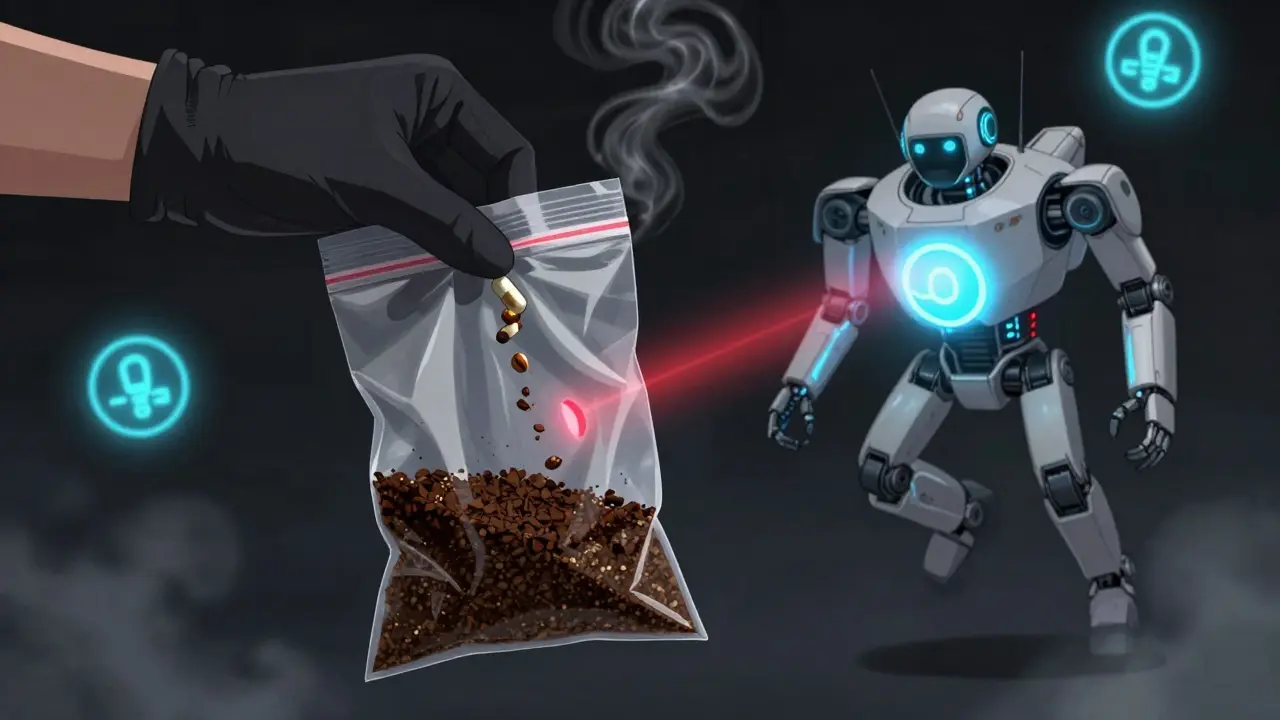
Don’t flush them. Don’t toss them in the trash bare. Don’t pour them down the sink. The EPA says the safest way is to mix them with something unappetizing-used coffee grounds, cat litter, or dirt-then seal them in a plastic bag. Use a 1:1 ratio. A few pills in a full coffee can? Perfect. The smell and texture make them unappealing to kids and pets, and the seal keeps them contained.
Some pharmacies and police stations offer drop-off bins. Check your local pharmacy’s website or call your city’s waste management office. In Boulder, you can drop off unused meds at the Boulder Police Department’s collection box on weekdays. If you can’t find one, the coffee grounds method works. It’s not glamorous, but it’s effective-92% of reused pills are prevented this way.
Behavior Changes That Prevent Accidents
There’s a simple habit that cuts risk in half: the two-minute rule. After you give a dose, put the bottle away immediately. Even if you’re giving the next dose in two hours. Don’t leave it on the counter. Don’t put it in your pocket. Don’t set it on the fridge. Put it in the lockbox. Right then.
Why? Because 52% of childhood ingestions happen during administration. You’re distracted. The baby cries. The dog barks. You set the bottle down. And then you forget.
Another tip: keep medications out of purses, backpacks, and coats. Kids rummage. Pets sniff. One mom found her 2-year-old with a bottle of her blood pressure pills tucked into her coat pocket. She’d left it there after a doctor’s visit.
What to Do If Something Goes Wrong
If a child or pet swallows medication, don’t wait for symptoms. Don’t try to make them throw up. Call Poison Control immediately: 1-800-222-1222. It’s free, it’s 24/7, and they’ll tell you exactly what to do. In 2023, they handled over 2.1 million calls related to medication exposure.
For pets, call your vet or the ASPCA Animal Poison Control Center at (888) 426-4435. There’s a fee, but it’s worth it. Time matters. A single ibuprofen can cause stomach ulcers in a dog. A single aspirin can kill a cat.
Keep these numbers saved in your phone. Not in a notebook. Not on the fridge. In your phone, under "Emergency Contacts."
What’s Changing in 2025
The FDA now requires all pet medications to have clear labels saying "Store Separately from Human Medications." That rule started in December 2024. You’ll see it on new bottles.
Some states are starting to require secure storage in childcare centers. In Colorado, new daycare licenses now require locked medicine cabinets. That’s a sign of what’s coming: more laws, more education, and more accountability.
And the market is responding. Sales of medication lock boxes jumped 75% in 2023. More parents are buying them. More vets are handing them out. It’s not about paranoia. It’s about prevention.
Medications save lives. But they can also end them-accidentally. You wouldn’t leave a gun unlocked in the living room. Don’t leave pills unlocked either. It’s not about being perfect. It’s about being consistent. Lock it up. Keep it high. Separate it out. And when you’re done with it? Mix it with coffee grounds and toss it in the trash.
One small habit. One lockbox. One rule. It could be the difference between a routine day and a trip to the ER.
Can childproof caps alone keep kids from getting into medicine?
No. Child-resistant caps are designed to slow down children aged 42-51 months, but 20% of them can open these caps in under five minutes. They’re not foolproof. Even toddlers can figure out how to twist or pry them open. Locked storage is the only reliable protection.
Is it safe to store medicine in the kitchen?
Only if it’s in a locked cabinet, away from countertops, and not near the stove or sink. Kitchens have high humidity from cooking and are easily accessible to both children and pets. The best spot is a high cabinet with a lock, not on the counter or in a drawer you open daily.
Why can’t I store my dog’s medicine next to my own?
Many pet medications are toxic to humans and vice versa. For example, NSAIDs like ibuprofen can cause kidney failure in cats at doses meant for dogs. Human heart medications can be deadly to dogs. Flavored pet pills also look and smell like treats to kids. Cross-contamination is a real risk-always store them in separate locked containers.
What should I do with expired or unused medications?
Mix them with an unpalatable substance like used coffee grounds or cat litter (at least a 1:1 ratio), seal them in a plastic bag, and throw them in the trash. Avoid flushing them or tossing them bare. Some pharmacies and police stations offer take-back programs, but the coffee grounds method is proven to prevent reuse by 92%.
Are gummy vitamins safer to leave out than pills?
No. Gummy vitamins and medications are actually more dangerous because they look and taste like candy. The CDC reports they account for 30% of all childhood supplement ingestions. Treat them like prescription drugs: lock them up, even if they’re "just vitamins."
Next Steps for Your Home
Take 15 minutes this week to do a medication safety walkthrough:
- Check every room: bedroom, bathroom, kitchen, living room, coat closet, purse, backpack.
- Remove all medications from surfaces and open containers.
- Buy a lockbox (under $20) or install a cabinet lock.
- Separate human and pet meds into two different locked containers.
- Dispose of old pills using the coffee grounds method.
- Save Poison Control’s number (1-800-222-1222) in your phone.
It’s not about being perfect. It’s about being ready. One locked box. One rule. One habit. That’s all it takes to keep your family safe.
8 Comments
Nicola George
So let me get this straight - we’re treating medicine like it’s a fucking grenade and not a life-saving tool? I get it, but also… really? My grandma kept her pills in a mason jar on the windowsill for 30 years and never lost a grandkid. Maybe stop scaring people into buying $20 lockboxes and just teach them to put shit away after use.
Liz Tanner
I love how this post breaks it down without being preachy. I used to leave my blood pressure meds on the nightstand - until my 2-year-old found them and started chewing one like a gummy bear. Never again. Now everything’s in a lockbox on the top shelf of the closet. It’s a 10-second habit that saves so much panic. Also - YES to separating pet and human meds. My dog got into a cat’s thyroid pill last year. We spent $1,200 on emergency care. Don’t be that person.
Babe Addict
Actually, the CDC’s 5-foot rule is pseudoscientific. The real metric is reachability, not height. A 3-year-old can climb a chair and grab something 6 feet up if it’s within arm’s reach from the perch. The real issue is cognitive accessibility - kids don’t understand ‘medicine’ as a concept, they understand ‘thing that looks like candy.’ Also, childproof caps are designed to meet ASTM D3475-19 standards, which test for dexterity, not brute force. So yeah, 20% open them - but that’s by design. Lockboxes are overkill unless you’re storing opioids. For OTC stuff? Just don’t be lazy.
Satyakki Bhattacharjee
People forget that everything in this world is a test. Your medicine is a test of your responsibility. Your child is a test of your love. Your pet is a test of your wisdom. If you leave pills lying around, you are not just careless - you are choosing chaos over order. God gave us hands to hold, and minds to think. Use them. Lock it up. Not because the law says so. Because you are better than that.
Anna Weitz
Lockboxes are a scam. The real problem is pharmaceutical companies making gummies that look like candy on purpose. They want kids to beg for their vitamins. They want pets to crave their meds. It’s not an accident - it’s a marketing strategy. And now they’re pushing smart safes with Bluetooth because they know you’ll pay $80 for a box that sends you a text when your kid opens it. Wake up. The system is designed to make you dependent on gadgets because they don’t want you to just be responsible
Elizabeth Alvarez
Have you ever thought about how this is all connected to the deep state? The FDA only started requiring separate labels for pet meds in 2024 because they’re testing behavioral compliance patterns in households. They want to see if people will obey rules about storage so they can later mandate biometric locks on all medicine cabinets. The coffee grounds method? That’s a cover. They’re tracking what you throw away to build databases on household medication use. I found a tiny RFID chip in my lockbox after I took it apart - it was emitting a signal every 12 minutes. I’m not paranoid. I’m informed.
dean du plessis
Good post. Real talk. I did the walkthrough last weekend. Found three expired antibiotics in my wife’s purse, a bottle of dog glucosamine under the couch, and my son’s gummy vitamins in the car console. Put it all in the lockbox. Didn’t even cost me a coffee. Now I just remember to close the door. Simple. Doesn’t need to be fancy. Just consistent.
Kylie Robson
Technically, the 92% efficacy of the coffee grounds method is misattributed. That stat comes from a 2018 EPA pilot study with a sample size of 127 households in three counties. The actual peer-reviewed meta-analysis in JAMA Pediatrics (2022) showed a 68% reduction in ingestion when combined with behavioral intervention - not storage alone. Also, ‘childproof’ caps are ASTM F963-17 compliant, not D3475. And you’re not supposed to mix meds with cat litter - it’s a biohazard risk if the litter is clay-based. Use sawdust or unbrewed coffee grounds. Also, Bluetooth safes are not FDA-cleared for medical storage. Just saying.