
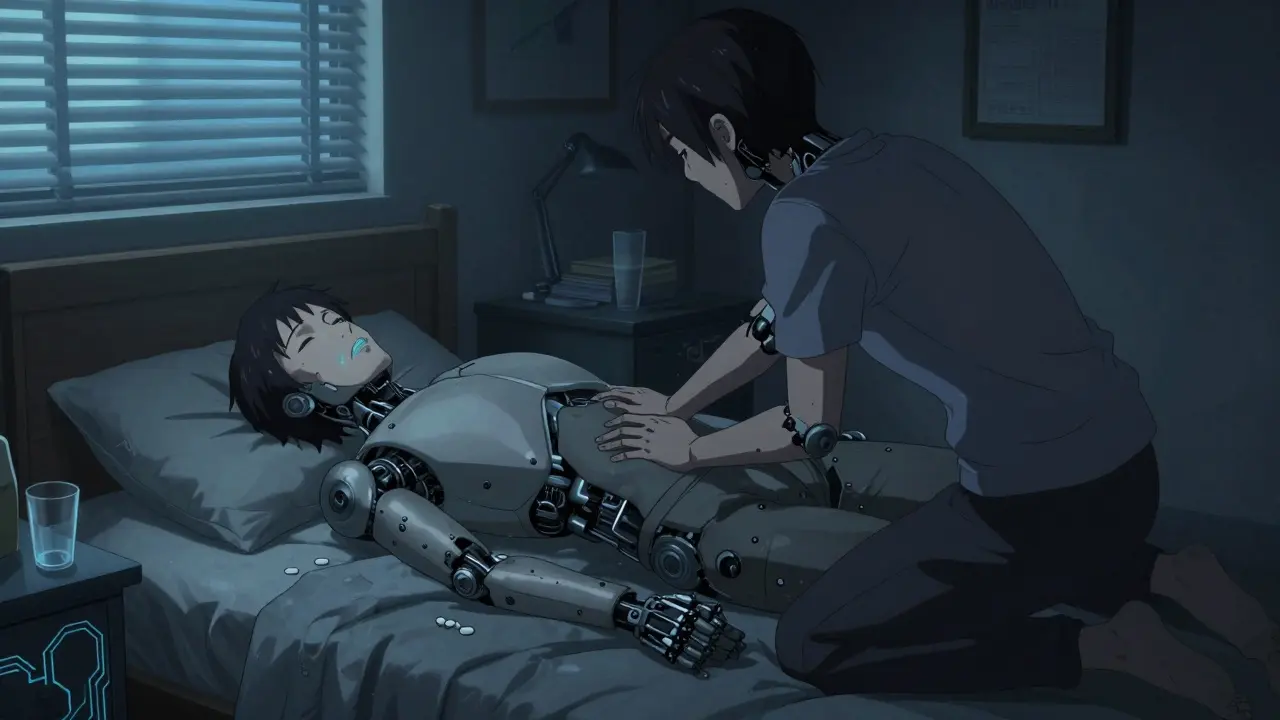
Someone takes a sleeping pill to get through the night. The next morning, they don’t wake up. No noise, no movement. A loved one shakes them-nothing. This isn’t deep sleep. This is an overdose. And it happens more often than most people realize.
What Counts as an Overdose?
An overdose from sedatives or sleep medications happens when the body can’t handle the amount of drug in the system. These drugs slow down your brain and nervous system. At normal doses, they help you relax or fall asleep. At too high a dose, they shut down vital functions-especially breathing. The most common culprits are benzodiazepines like alprazolam (Xanax), zolpidem (Ambien), and temazepam (Restoril). Barbiturates are less common now but still dangerous. Even over-the-counter sleep aids like diphenhydramine (Benadryl, Tylenol PM) can cause overdose at high doses. Melatonin, on the other hand, rarely causes life-threatening reactions-even at 60 times the normal dose. The real danger isn’t just taking too much of one drug. It’s mixing them. Combining sedatives with alcohol, opioids like fentanyl, or even some painkillers multiplies the risk. In 2021, nearly a quarter of benzodiazepine-related overdose deaths also involved fentanyl. That combination can stop breathing in minutes.Early Warning Signs You Can’t Ignore
Overdose doesn’t always start with someone collapsing. Often, it begins quietly. You might think the person is just really tired. But there are clear signs that separate normal sleepiness from medical emergency.- Unresponsiveness: Can you wake them up with loud shouting? A firm sternal rub (pressing hard on the breastbone)? If they don’t respond at all, it’s not sleep-it’s CNS depression.
- Slurred speech: Words come out slow, thick, or jumbled. This happens in 87% of benzodiazepine overdose cases.
- Extreme confusion: They don’t know where they are, who you are, or what time it is. They can’t follow simple commands like “squeeze my hand.”
- Unsteady movements: Walking is wobbly. They can’t hold their head up. They look drunk-even if they haven’t had alcohol.
The Life-Threatening Signs
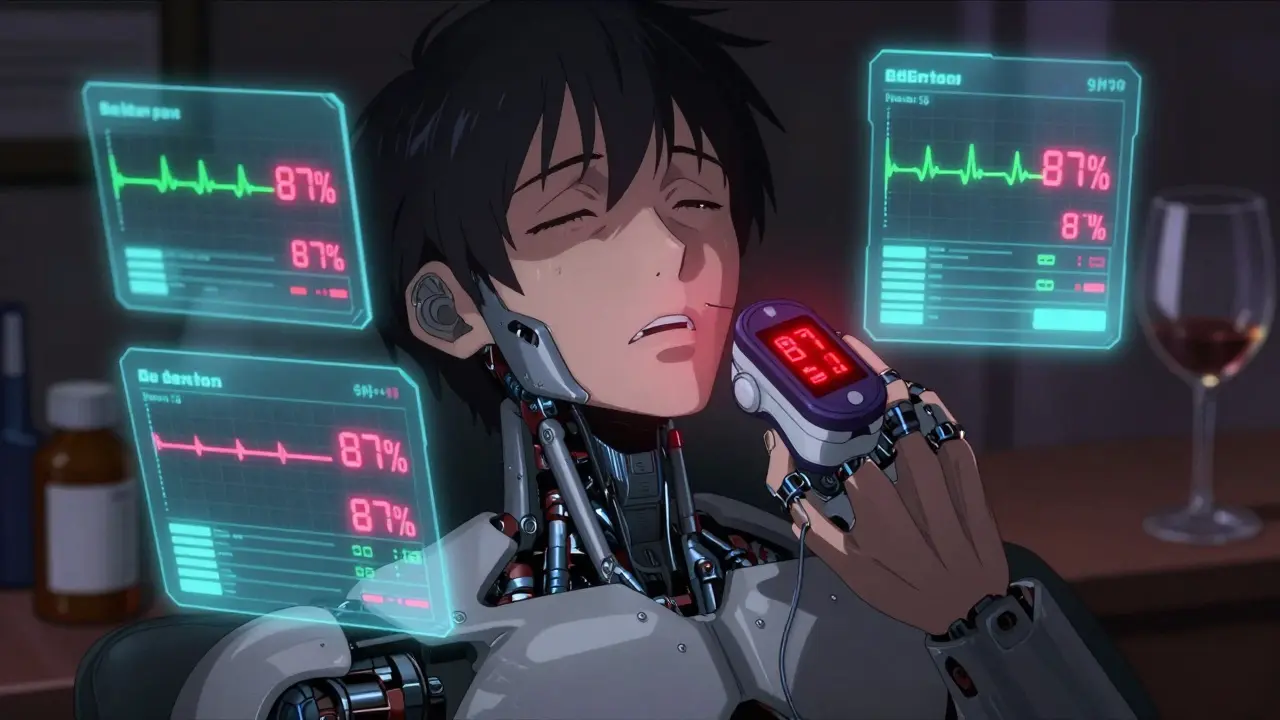
If early signs are missed, the body starts shutting down. This is when seconds matter.- Shallow or slow breathing: Normal breathing is 12 to 20 breaths per minute. Below 8 breaths per minute is critical. Below 4, breathing may stop entirely. Count breaths for 30 seconds and multiply by two.
- Cyanosis: Lips, fingertips, or nail beds turn blue or gray. This means oxygen levels are dangerously low-under 90% saturation.
- Cold, clammy skin: Their body temperature drops. Skin feels wet and icy. This signals the body is failing to regulate itself.
- Slow heart rate: Below 50 beats per minute. Blood pressure drops. The heart can’t pump enough blood.
- Coma: No reaction to pain, no eye movement. Glasgow Coma Scale score drops below 8.
Different Drugs, Different Risks
Not all sedatives act the same way. Knowing the type helps you understand what to expect.- Benzodiazepines (Xanax, Ambien): Cause deep sedation but often keep vital signs stable until the very end. Isolated overdoses are less likely to be fatal-but still dangerous.
- Barbiturates: Much more likely to cause rapid respiratory failure. Even small overdoses can be deadly. These are rarely prescribed today but still found in older medicine cabinets.
- OTC sleep aids (diphenhydramine): Can cause extreme drowsiness, dry mouth, urinary retention, and even hallucinations or seizures at high doses. These are often mistaken for “just a bad reaction.”
- Combination overdoses: Mixing with alcohol or opioids turns a risky situation into a death sentence. The drugs amplify each other’s effects. Fentanyl plus benzodiazepine? That’s a deadly combo.
What Bystanders Get Wrong
In 68% of sedative overdose cases, people delay calling 911 because they think the person is just “asleep,” “drunk,” or “exhausted.” A 2022 study found the average delay was 47 minutes. That’s 47 minutes too long. Reddit threads from r/OverdoseHelp are full of regret: “I thought my roommate was just tired from work.” “I assumed the slurred speech was from drinking.” “I waited to see if they’d wake up on their own.” These delays cost lives. Sedatives don’t wear off quickly. The body can’t process them fast enough. Every minute without help reduces survival chances by 7-10%.What to Do Right Now
If you suspect an overdose, don’t wait. Don’t try to “wake them up” with cold water or coffee. Don’t leave them alone. Don’t assume they’ll be fine in the morning. Follow this checklist:- Check responsiveness: Shout their name. Shake their shoulder. Do a sternal rub (press firmly on the center of the chest).
- Check breathing: Look at their chest. Count breaths for 30 seconds. If it’s less than 12 breaths per minute-or if they’re not breathing at all-call 911 immediately.
- Check color: Look at lips and fingertips. Blue or gray? That’s a red flag.
- Call 911: Say, “I think someone overdosed on sleeping pills.” Give your location. Stay on the line.
- Start rescue breathing if needed: If they’re not breathing, tilt their head back, pinch the nose, and give one breath every 5 seconds. Don’t stop until help arrives.
- Do NOT give flumazenil: This is the only reversal drug for benzodiazepines-but it can trigger seizures in people who are dependent on these drugs. Only trained medical staff should use it.
Who’s Most at Risk?
Overdose doesn’t discriminate. But certain patterns are clear:- Adults aged 25-54 have seen the steepest rise in overdose deaths.
- West Virginia has the highest rate-3.8 deaths per 100,000 people. The national average is 1.2.
- 9.5 million Americans misused prescription sedatives in 2021.
- Overdoses happen most often at home-where no one is trained to recognize the signs.
What’s Being Done to Stop This?
Health systems are waking up. In 2023, California distributed 250,000 overdose recognition cards to pharmacies. Early results show a 22% improvement in bystander response. New tools are emerging. Continuous pulse oximeters-devices that track oxygen levels-can now alert users before breathing stops. Emergency responders are getting faster-acting drugs like intranasal midazolam. Emergency departments are now screening patients with an 8-question tool that catches sedative misuse with 94% accuracy. But the biggest change still needs to happen in homes, in bedrooms, in living rooms. In the moment someone realizes their friend isn’t breathing.Final Warning
Sedatives are not harmless. They are powerful drugs that slow your brain’s most basic functions. What feels like a gentle sleep aid can become a silent killer. If you or someone you know uses these medications regularly, keep this in mind:- Never mix with alcohol or opioids.
- Never take more than prescribed.
- Keep medications locked up.
- Teach family members the signs of overdose.
- Keep naloxone (Narcan) on hand if opioids are also used.
Can you overdose on melatonin?
Melatonin overdoses rarely cause life-threatening symptoms. Even at doses as high as 240mg (60 times the normal dose), people may experience headaches, dizziness, or nausea-but not respiratory depression or coma. Unlike prescription sedatives, melatonin doesn’t suppress breathing. It’s not considered dangerous in overdose, though high doses can disrupt sleep cycles long-term.
Is it safe to give someone naloxone for a sedative overdose?
No. Naloxone (Narcan) only reverses opioid overdoses. It has no effect on benzodiazepines, barbiturates, or sleep medications. Giving naloxone in a sedative-only overdose won’t help-and could delay proper care. Only use naloxone if you suspect opioids are involved, such as if the person uses painkillers or heroin.
What should I do if someone is breathing but barely?
Call 911 immediately. Even if they’re breathing, if it’s slower than 8 breaths per minute, they’re in danger. Stay with them. Keep them on their side to prevent choking if they vomit. Do not try to make them walk or drink coffee. Do not wait to see if they get better. Respiratory failure can happen in minutes.
Can you recover from a sedative overdose without medical help?
No. Even if someone seems to wake up, the drug may still be active in their bloodstream. Sedatives can have delayed effects, especially if mixed with alcohol or other drugs. Without medical monitoring, they can slip back into respiratory failure hours later. Hospital care is essential for safety.
Why do some people survive sedative overdoses while others don’t?
Survival depends on three things: how fast help arrives, whether other drugs were involved, and the person’s overall health. Someone with a healthy heart and lungs has a better chance. Mixing with opioids or alcohol makes survival far less likely. The biggest factor? Time. Every minute without breathing reduces the chance of full recovery. Quick action saves lives.



10 Comments
Jessica Salgado
My cousin took Ambien after a breakup and slept for 18 hours. We thought she was just resting, but her lips were blue. We called 911. They said if we’d waited another 10 minutes, she wouldn’t have made it. This post saved her life. Thank you.
I never knew mixing sleep meds with wine was this deadly. Now I tell everyone I know.
Even my mom, who swears melatonin is ‘natural’ and harmless, now knows the difference.
People need to stop treating these like candy.
I’m sharing this with my entire family group chat.
God, I wish I’d known this two years ago.
Don’t wait until it’s too late. Know the signs.
One sentence: If they don’t respond to a sternal rub, call 911-no excuses.
Peter Ronai
Oh please. You’re scaring people with cherry-picked stats. Benzodiazepines have been used safely by millions for decades. The real problem? People mixing them with street fentanyl because they don’t know what’s in their pills. Blame the drug cartels, not the meds.
And melatonin? You’re acting like it’s harmless, but I’ve seen kids take 30mg and hallucinate for hours. You’re downplaying risks to sell a narrative.
Also, ‘sternal rub’? That’s not something normal people do. You’re writing for ER docs, not Grandma.
And why no mention of tolerance? People who take these daily aren’t overdosing-they’re just sleeping deeper. Your fearmongering ignores context.
Most overdoses happen in addicts, not people taking prescriptions as directed. Stop lumping everyone together.
Also, ‘naloxone doesn’t work’? Well duh. It’s not an opioid. But you didn’t say why it’s still worth keeping around if opioids are involved. Half your post is just rephrasing obvious stuff.
And who says ‘below 8 breaths per minute’? That’s not a rule, it’s a guideline. Some athletes have low resting rates. You’re turning medical nuance into a checklist for panic.
Stop treating laypeople like idiots. We’re not all clueless.
Also, why no mention of rebound insomnia? That’s what drives people to overdose in the first place. You’re treating symptoms, not causes.
And the West Virginia stat? Yeah, that’s because of the opioid crisis, not because people are ‘misusing’ Ambien. You’re conflating two epidemics.
Fix the supply chain, not the sleep aids.
Steven Lavoie
I work in a rural ER in Ohio, and I see this every weekend. A 52-year-old man takes his Xanax for anxiety, then has two glasses of wine. He falls asleep. His wife thinks he’s just tired. By the time she calls 911, his oxygen is at 78%.
This isn’t about fear. It’s about awareness.
I’ve had families cry and say, ‘We didn’t know it could be this fast.’
One woman told me her husband took 10 melatonin pills because he ‘wanted to sleep harder.’ He didn’t die, but he spent three days in the ICU with severe confusion. That’s not harmless.
The problem isn’t the drugs-it’s the cultural myth that ‘if it’s legal, it’s safe.’
Even doctors don’t always warn patients about mixing. I’ve seen prescriptions for Ambien with no warning about alcohol.
And yes, naloxone won’t help with benzodiazepines-but if you’re unsure whether opioids are involved, give it anyway. It’s harmless in that context. Better safe than sorry.
My hospital now trains all ER staff to ask: ‘Did they take anything else?’ That question has saved lives.
People think overdoses look like TV dramas-screaming, thrashing. In reality, it’s quiet. Stillness. Cold skin. Slow breaths.
If you’re reading this and you’ve ever taken a sleep med, please talk to someone about it. Not just your doctor. Your roommate. Your sibling. Your parent.
This isn’t just medical advice. It’s a lifeline.
And yes, I know it’s long. But if one person reads this and calls 911 sooner, it was worth it.
Anu radha
I am from India. My uncle took sleeping pill for stress. He slept too long. We did not know what to do. We waited. He was fine. But now I know we were lucky.
Now I tell my friends: if person not wake up, call ambulance. No wait.
Thank you for explain. I understand now.
Also melatonin is safe. I take it every night. No problem.
But mix with alcohol? No. Never.
Patrick A. Ck. Trip
As someone who’s been prescribed alprazolam for panic disorder, I appreciate the clarity here. I’ve always been cautious, but I never realized how quickly things can spiral. I now keep a printed copy of the warning signs taped to my medicine cabinet.
My therapist suggested I start using a pill organizer with time-stamped compartments-helps me avoid double-dosing.
Also, I’ve started telling my roommate the signs, just in case. It feels awkward, but it’s necessary.
I’ve also stopped drinking wine on nights I take my med. Small change, big difference.
Thanks for not sugarcoating this. Too many posts act like these drugs are toys.
I wish more doctors took this seriously. I’ve had three prescriptions in five years and never once had a full risk discussion.
It’s scary how easy it is to slip into dependency without realizing it.
Also, I’m not sure I’d do a sternal rub on someone. Feels invasive. But I’ll definitely check breathing and color.
And yes, I’m sharing this with my support group tomorrow.
Jigar shah
Interesting breakdown. I work in a pharmacy in Bangalore and see people buying diphenhydramine in bulk for ‘sleep issues.’ Many don’t know it’s an antihistamine. They think it’s a ‘natural sleep aid.’
One man bought 100 tablets last month. He said his wife ‘can’t sleep without it.’ I asked if he’d seen a doctor. He said no.
We now put a warning sticker on every OTC sleep med pack. Small thing, but it helps.
Also, I’ve noticed that older patients often mix these with blood pressure meds. That’s a silent killer combo.
Would love to see a poster version of this for clinics.
And yes, melatonin is safe-but I still tell patients not to exceed 5mg. Long-term disruption of circadian rhythm is real.
Thanks for the detailed, science-backed info. Rare to see this level of care in public posts.
Sachin Bhorde
Bro, this is fire. As a med tech, I’ve seen this firsthand. Benzodiazepines + alcohol = death sentence. Fentanyl in the mix? That’s a one-way ticket.
And yeah, people think ‘I’m just taking one extra pill’-but tolerance builds fast. You don’t wake up one day and say ‘I need 4 Xanax now.’ You just… do.
Also, sternal rub? Yeah, it’s rough, but it works. I’ve used it on 3 overdoses. Two survived because we acted fast.
Don’t sleep on the cyanosis thing. Blue lips = emergency. No debate.
And melatonin? Totally fine. I take 3mg every night. No issues. But if you’re popping 60mg, you’re not sleeping-you’re tripping.
Also, naloxone? Only use if opioids are suspected. Don’t waste it. But if you’re unsure, keep it handy. It’s cheap and safe.
Most people don’t know that sedative overdoses can be reversed with flumazenil-but only in a hospital. Don’t try to DIY this.
And yeah, West Virginia? That’s the opioid crisis bleeding into sedative use. It’s not the meds, it’s the fentanyl.
But still-know the signs. Save a life.
Also, keep Narcan in your glovebox. Seriously.
Joe Bartlett
Right then. Don’t be daft. If someone’s not breathing, call an ambulance. End of story.
Don’t overthink it. Don’t google. Don’t wait for ‘signs.’
Just call.
And stop mixing booze with pills.
Simple.
Marie Mee
Wait… so this is all a government ploy to make people afraid of sleep meds so they’ll take antidepressants instead?
I read somewhere that the FDA gets kickbacks from pharma companies who make Narcan.
And why is melatonin ‘safe’? Because it’s not patented. Big Pharma doesn’t profit from it.
My cousin took Ambien and woke up fine. They said she was ‘lucky’-but what if she was just… normal?
Why are they pushing this fear? Who benefits?
I don’t trust any of this.
Also, why do they say ‘don’t give flumazenil’? Because it’s not FDA-approved for home use? Or because they want you to go to the hospital and pay $20k?
Something’s off here.
And why is everyone so obsessed with sternal rub? That’s violent. What if they have a heart condition?
I think we’re being manipulated.
And why is this post so long? To confuse us?
Just say ‘don’t take pills’ and be done with it.
They want you scared. So you’ll buy their stuff.
I’m not falling for it.
Salome Perez
Thank you for this meticulously crafted, compassionate, and clinically precise guide. As someone who has worked in palliative care and witnessed the quiet, unremarkable tragedies of sedative overdose-especially among elderly patients who simply want rest-I can say this is one of the most humane and accurate summaries I’ve encountered.
The distinction between benzodiazepines and barbiturates is crucial, and the emphasis on polypharmacy as the true catalyst for mortality is not only accurate-it’s urgent.
I’ve distributed printed copies of this to my book club, my yoga studio, and even the local laundromat. People are surprised how few know the signs.
And I agree: the real tragedy isn’t the drug. It’s the silence.
We live in a culture that equates sleeplessness with weakness, and sedatives with weakness’s cure. But we never teach the cost.
The sternal rub may feel invasive, but it’s a gesture of love disguised as force.
And yes-melatonin is a gentle chronobiotic, not a sedative. It’s a rhythm regulator, not a brain suppressor.
Every time I see someone hesitate to call 911 because ‘they might be drunk,’ I gently remind them: ‘Drunk people wake up. This person isn’t sleeping. They’re dying.’
Thank you for giving us the language to speak when words fail.
This isn’t just information. It’s a lifeline written in clear, brave, human terms.