
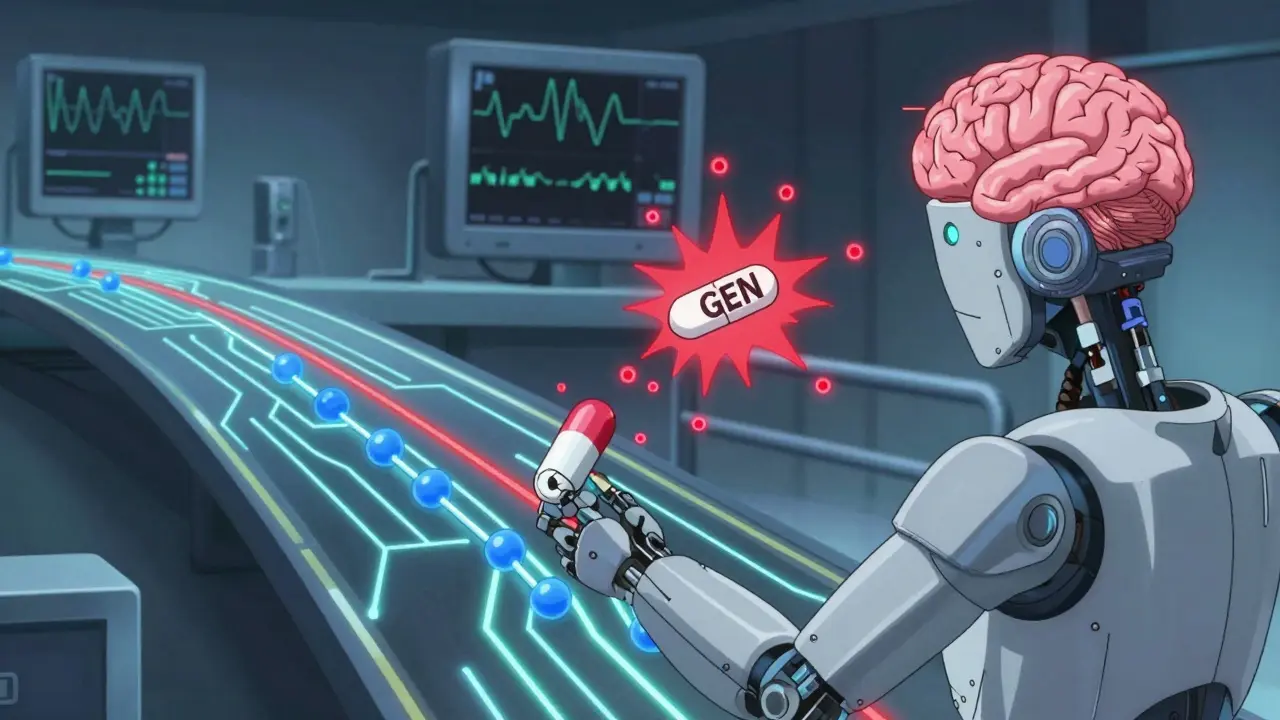
Switching from brand-name phenytoin to a generic version might seem like a simple cost-saving move - but for many patients, it can be anything but. Phenytoin isn’t like most medications. Its narrow therapeutic window, unpredictable metabolism, and high protein binding mean that even small changes in how the drug is absorbed can lead to serious consequences: seizures returning, or worse, toxic side effects like confusion, uncontrolled eye movements, or even coma. This isn’t theoretical. It’s happening in clinics right now.
Why Phenytoin Is Different
Phenytoin, first developed in the late 1930s, is still used today for controlling seizures - especially tonic-clonic and focal seizures. But unlike newer antiepileptics, phenytoin behaves strangely in the body. It has a narrow therapeutic index: the difference between an effective dose and a toxic one is tiny. The target range? Between 10 and 20 mcg/mL in total serum concentration. Go below 10, and seizures may come back. Rise above 20, and you risk toxicity. Go over 40, and brain function can shut down.What makes this worse is its non-linear pharmacokinetics. That means if you increase the dose by just 25-50 mg, the blood level might jump by 50% or more - not linearly, but explosively. This is because the enzymes that break down phenytoin get overwhelmed. Once saturated, the body can’t clear it efficiently. A little extra becomes a lot too much.
Then there’s protein binding. About 90-95% of phenytoin sticks tightly to albumin in the blood. Only the remaining 5-10% is free and active - the part that actually crosses into the brain to stop seizures. If albumin drops (due to liver disease, malnutrition, or kidney problems), that free fraction spikes. Even if total phenytoin looks normal, the active drug might be dangerously high.
Generic Substitutions: The Hidden Risk
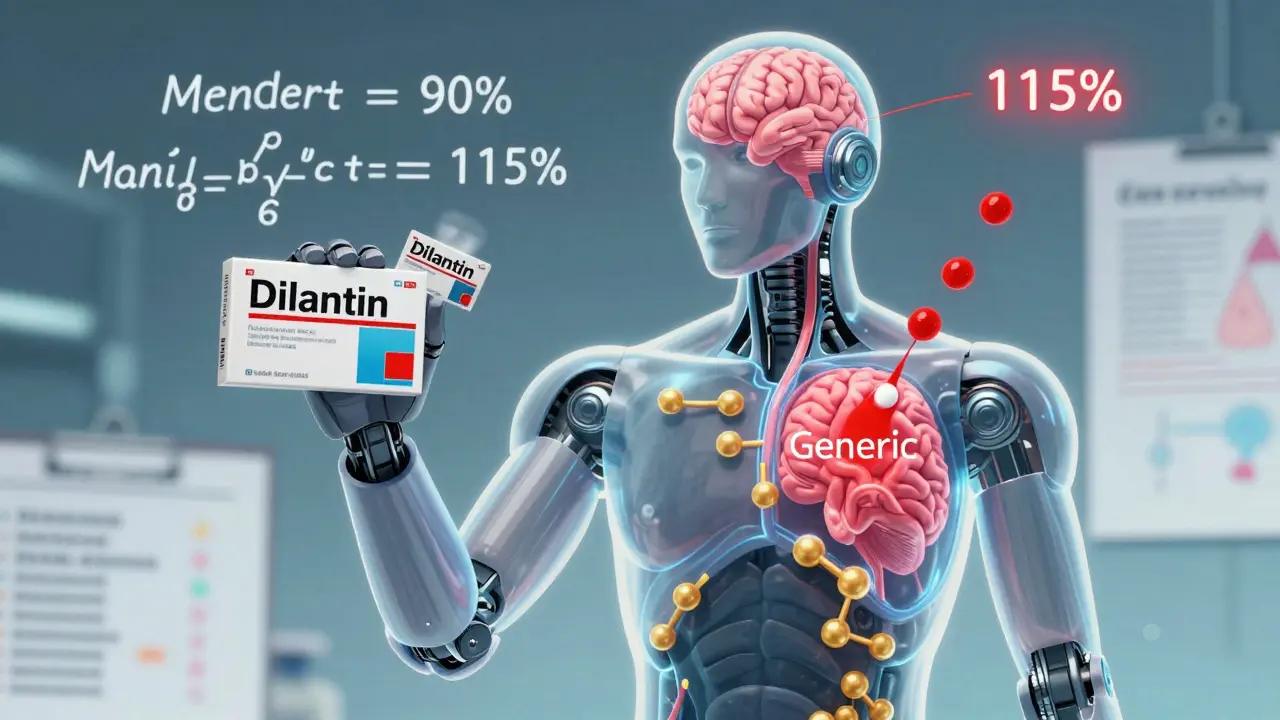
The FDA allows generic drugs to have up to a 20% variation in absorption compared to the brand-name version. For most drugs, that’s fine. For phenytoin? It’s a gamble.Two different generic versions of phenytoin might both meet FDA bioequivalence standards - meaning their average absorption falls within 80-125% of the brand. But that range is wide. One generic might deliver 90% of the brand’s exposure. Another might deliver 115%. For phenytoin, that’s enough to push someone from 18 mcg/mL to 23 mcg/mL - just by switching pills. And once you’re above 20, toxicity risk climbs fast.
Real-world cases confirm this. Patients stable on brand-name Dilantin for years have had breakthrough seizures after switching to a generic. Others developed tremors, slurred speech, and nystagmus - involuntary eye movements - after a pharmacy substitution. These aren’t rare. They’re predictable.
When to Monitor: The Critical Moments
Routine blood tests for phenytoin aren’t needed for everyone. But there are moments when monitoring is non-negotiable:- When starting phenytoin for the first time
- After any dose change
- When switching from brand to generic, or between different generics
- If the patient has low albumin, liver disease, or is taking interacting drugs
- If seizures return or new side effects appear
Timing matters too. Phenytoin takes about 5-7 days to reach steady state after a dose change. A blood test done too early - say, within 2-3 days - won’t tell you anything reliable. The gold standard? Take a trough level (just before the next dose) 5-10 days after the switch. That’s when you’ll see the true effect.
For IV doses, a level can be checked 2-4 hours after the infusion. For oral doses, wait at least 12-24 hours. Don’t guess. Test.
Special Cases: Albumin, Interactions, and Long-Term Risks
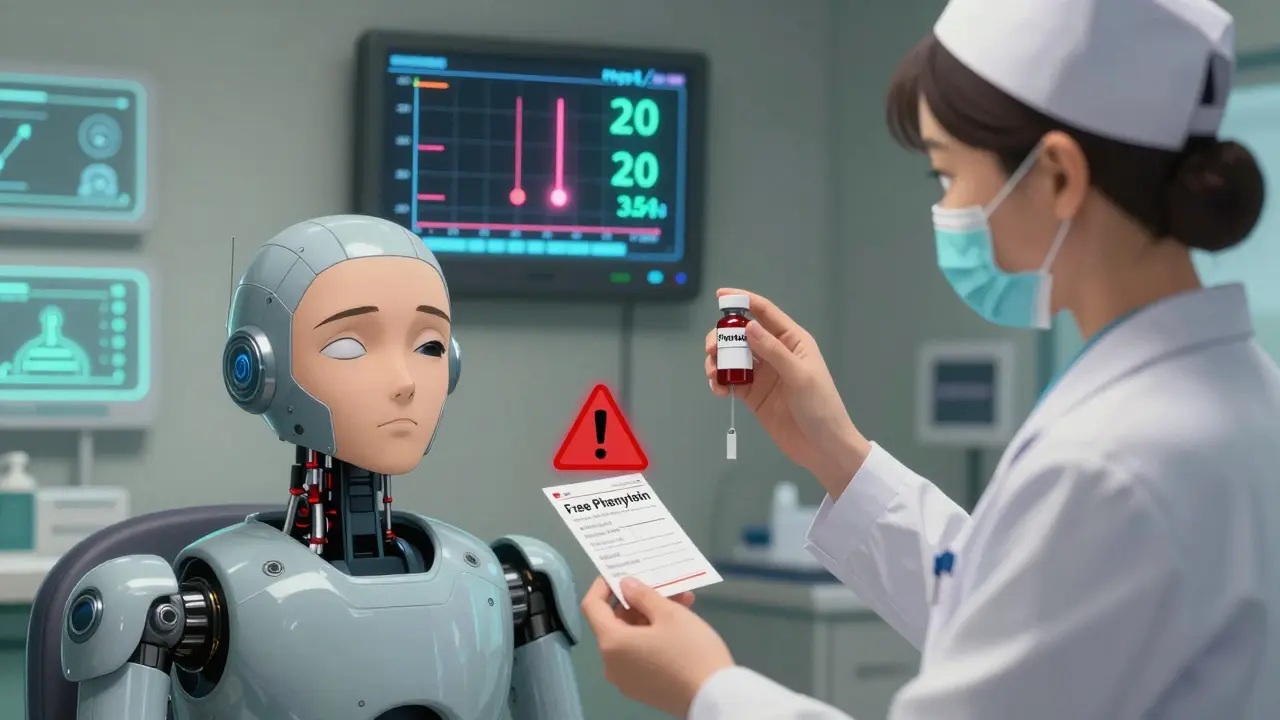
If a patient has low albumin - common in older adults, those with liver cirrhosis, or severe illness - total phenytoin levels can be misleading. A level of 15 mcg/mL might look fine. But if albumin is low, the free (active) fraction could be 30% higher than normal. That’s toxic territory.The formula to estimate corrected levels is: Corrected phenytoin = Measured level / ((0.9 × Albumin / 42) + 0.1). But even this isn’t perfect. The best practice? Measure free phenytoin directly. It costs more, but it’s worth it when albumin is below 3.0 g/dL.
Drug interactions are another silent threat. Medications like cimetidine, fluconazole, valproate, and metronidazole can slow phenytoin breakdown, causing levels to spike. On the flip side, rifampin, carbamazepine, and even alcohol can speed it up, leading to underdosing. These interactions don’t care if the drug is brand or generic - but switching formulations can make them harder to spot.
Long-term use of phenytoin - regardless of brand - carries risks too. It can cause bone thinning (osteomalacia), vitamin D deficiency, gum overgrowth (gingival hyperplasia), and even changes in facial appearance. Baseline tests for liver function, full blood count, vitamin D, calcium, and phosphate are recommended before starting. Repeat them every 2-5 years.
What Clinicians Should Do
There’s no universal rule that says every patient needs constant monitoring. But here’s what works in practice:- Before switching formulations, get a trough level.
- Document the exact product (brand name, generic manufacturer, lot number) - yes, even the lot number matters.
- After the switch, monitor closely for 10-14 days. Watch for seizures, dizziness, nausea, or unusual eye movements.
- Repeat the trough level 5-10 days after the change.
- If levels shift more than 15% or symptoms appear, consider switching back.
Some patients do fine after switching. Others don’t. There’s no way to predict who. That’s why monitoring isn’t optional - it’s essential.
The Bottom Line
Generic phenytoin is not unsafe. Many patients take it without issue. But because of phenytoin’s unique pharmacology - its narrow window, nonlinear metabolism, and high protein binding - the risk of harm from switching is real and documented. You can’t assume bioequivalence = clinical equivalence.When in doubt, test. When symptoms change, recheck. When the pharmacy changes the pill, don’t wait for a crisis. Monitor. It’s not about distrust in generics. It’s about respecting the science.





9 Comments
Korn Deno
Phenytoin is one of those drugs that reminds you medicine isn't just chemistry-it's a tightrope. The fact that a 20% absorption difference is allowed for generics still blows my mind. We treat insulin like a sacred text but let phenytoin get shuffled like a deck of cards. We're not being careful. We're being cheap.
Natasha Rodríguez Lara
I work in a rural clinic and we've had three patients crash after switching generics. One guy had a seizure in the parking lot. His levels were 'in range'-until we checked free phenytoin. Then it was 28 mcg/mL. Albumin was 2.1. We switched him back. He cried. Not because he was scared. Because he realized no one was watching.
Kevin Siewe
Just want to add: if you're monitoring phenytoin, always note the manufacturer. I've seen cases where two different generics from the same company had different absorption profiles. Lot numbers matter more than people think. And yes, it's a pain to document-but so is intubating someone because you didn't.
Chris Farley
This is why we need to stop letting bureaucrats decide what's safe. The FDA doesn't know jack about pharmacokinetics. They're just trying to save a buck. Real medicine isn't about cost-it's about precision. If a drug has a narrow window, it shouldn't be generic. Period. Let Big Pharma keep their monopoly. At least patients won't die because some lab in India got lucky.
Darlene Gomez
I get why people freak out about generics. But I've also seen patients do *fine* switching. The key isn't fear-it's awareness. If you're stable, don't switch. If you have to switch, test before and after. Don't assume. Don't guess. Just check. It's not complicated. It's just not sexy. But it saves lives.
Katie Putbrese
They say 'trust the science' but the science is rigged. I read a study once where they found phenytoin generics had different fillers-some had titanium dioxide, others had corn starch. One of them was linked to autoimmune flares in a mouse model. They buried it. They always bury it. You think this is about seizures? No. It's about control.
Donna Fogelsong
Free phenytoin testing? That's a scam. Labs charge $300 for it. Meanwhile, the FDA approves generics with 20% variance. Coincidence? Or is Big Pharma and the AMA in bed with the lab companies? I've seen it before-when they want to make money, they make you test. When they want to save money, they let you die.
Sean Bechtelheimer
I've been on phenytoin for 12 years. Brand name. Then pharmacy switched me. I got dizzy. Started seeing halos. Thought I was dying. Went to ER. Levels were 24. They said 'it's fine' but I knew. I'm not crazy. I'm just the guy they forgot. 🤯
rebecca klady
My mom had a seizure last year after a generic switch. We didn't know until it was too late. Now I check her levels every time the pharmacy changes the pill. It's annoying. But I'd rather be annoying than bury her.