The Connection: Why These Two Interact
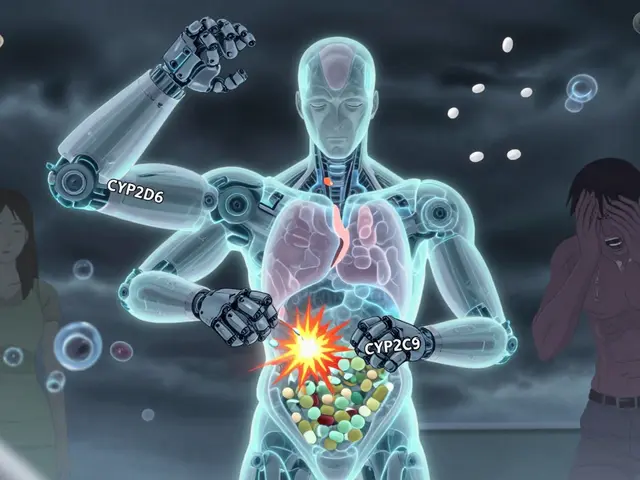
To understand the interaction, we have to look at where they meet in the body. Statins work by blocking an enzyme called HMG-CoA reductase, which is the primary gear in your body's cholesterol production line. Here is the twist: Vitamin D is actually derived from cholesterol. Because of this, some researchers have worried that by slamming the brakes on cholesterol synthesis, statins might accidentally lower your body's ability to produce Vitamin D. Beyond synthesis, there is the issue of the "delivery route." Several common statins-specifically atorvastatin, simvastatin, and lovastatin-are processed by a liver enzyme known as CYP3A4. Since Vitamin D metabolism also involves this pathway, they can theoretically compete for the enzyme's attention. Interestingly, not all statins behave the same way. For instance, rosuvastatin and pravastatin don't rely heavily on the CYP3A4 route, making them less likely to have these specific metabolic clashes. In some cases, research has even shown that certain statins might actually *increase* Vitamin D absorption by stimulating cholesterol transporters in the gut.Can Vitamin D Stop Statin Muscle Pain?
This is the most debated topic in patient forums. Statin-associated muscle symptoms, or SAMS, can range from mild soreness to severe weakness. Many patients swear that taking Vitamin D makes these aches vanish. In fact, surveys from sites like Reddit show that over half of users reported improvement after supplementing. But when scientists put this to a rigorous test, the results change. The VITAL trial-a massive, double-blind study involving over 2,000 participants-found that Vitamin D supplementation did not actually prevent muscle symptoms or stop people from quitting their statins. The rate of muscle pain was roughly 31% in both the supplement group and the placebo group. Even people who were severely deficient in Vitamin D (levels below 20 ng/mL) didn't see a significant clinical difference in pain reduction when they started supplements. This creates a strange gap between "patient experience" and "clinical evidence." While some people feel better, the American College of Cardiology suggests that routine Vitamin D testing just to prevent muscle pain isn't backed by enough evidence to be recommended as a standard of care.
The Great Vitamin D Debate: Does Statin Use Lower Your Levels?
If you look at the research papers, you'll find two groups of scientists arguing opposite points. One group points to studies showing that statin users have significantly lower Vitamin D levels than those not taking the drug, with some reporting deficiency rates as high as 71%. They argue that the drug's impact on cholesterol synthesis creates a shortage. On the other side, other studies show the exact opposite. Some data suggests that statin users-particularly those on atorvastatin-actually have *higher* circulating levels of Vitamin D. This suggests that the relationship isn't a simple "drug lowers vitamin" equation, but rather depends on the specific type of statin and the individual's genetics. For example, variations in the CYP2R1 enzyme (which converts Vitamin D in the liver) might explain why one person's levels drop while another's stay steady.| Statin Type | CYP3A4 Metabolism | Potential for Interaction | Observed Vitamin D Effect |
|---|---|---|---|
| Atorvastatin | High | Moderate | Mixed (Some reports of increase) |
| Simvastatin | High | Moderate | Variable |
| Rosuvastatin | Low | Minimal | Potential increase in absorption |
| Pravastatin | Low | Minimal | Neutral |

Practical Tips for Managing Both
If you are taking a statin and want to ensure your Vitamin D levels are healthy, don't guess-test. Because the research is so contradictory, the only way to know if you're deficient is through a 25-hydroxy vitamin D blood test. Here are a few rules of thumb for navigating this:- Don't stop your statin: Never stop taking your cholesterol medication because you think a supplement will replace it or fix the side effects without talking to your doctor. The cardiovascular risk of stopping statins is usually much higher than the benefit of a supplement.
- Check your specific drug: If you are on a CYP3A4-metabolized statin (like simvastatin) and experiencing side effects, ask your doctor if switching to a non-CYP3A4 statin (like rosuvastatin) might help.
- Aim for a baseline: The European Atherosclerosis Society suggests keeping Vitamin D levels at or above 20 ng/mL for general health, regardless of whether you take statins.
- Watch the dose: Extremely high doses of Vitamin D can occasionally interfere with the concentration of certain statins in the blood, though this is rare in standard dosing.
Looking Ahead: Personalized Medicine
We are moving away from a "one size fits all" approach. New research, like the ongoing PRECISION trial, is looking at whether Vitamin D only helps a very specific group of people-perhaps those with extreme deficiencies (below 12 ng/mL) or specific genetic markers. In the future, your doctor might look at your DNA to see how you process lipids and vitamins before deciding which statin to prescribe. Until then, the best approach is a balanced one: maintain your heart health with the medication your doctor prescribed and keep your Vitamin D levels in a healthy range for your bones and immune system, without expecting the supplement to act as a cure for medication side effects.Do statins cause Vitamin D deficiency?
The evidence is mixed. Some studies show that statins can lower Vitamin D levels because they inhibit cholesterol, which is a precursor to Vitamin D. However, other research suggests that some statins actually increase Vitamin D levels. Because of these contradictions, it is best to get a blood test to determine your actual status.
Will taking Vitamin D stop my statin muscle aches?
While many people report feeling better anecdotally, large clinical trials like the VITAL study found no significant difference in muscle symptom prevention between those taking Vitamin D and those taking a placebo. It is not recommended as a primary treatment for statin-associated muscle symptoms (SAMS).
Which statins are most likely to interact with Vitamin D?
Statins that are metabolized by the CYP3A4 enzyme, such as atorvastatin, simvastatin, and lovastatin, have a higher potential for metabolic interactions. Statins like rosuvastatin and pravastatin have minimal interaction with this pathway.
Should I take Vitamin D and statins at the same time?
Generally, yes. There is no major contraindication that prevents you from taking both. In fact, maintaining a healthy Vitamin D level is recommended for general health. Always consult your physician regarding the specific dosage for your needs.
Can Vitamin D make statins less effective?
There is limited evidence suggesting that very high doses of Vitamin D might slightly alter the concentration of some statins in the blood, but there is currently no strong evidence that it significantly reduces the LDL-cholesterol lowering effect for the average user.