
Why Medication Safety Matters More Than You Think
If you’ve never taken prescription medicine before, you might think it’s as simple as swallowing a pill and waiting for results. But here’s the truth: every year in the U.S., over 1.3 million people end up in the emergency room because of mistakes with their medications. That’s not just a statistic-it’s someone’s parent, sibling, or neighbor. About 7,000 people die annually from preventable medication errors. And the worst part? Most of these mistakes happen to people who are trying their best to follow the rules.
You don’t need to be a doctor to keep yourself safe. You just need to know a few key things-and do them consistently. Medication safety isn’t about memorizing complex science. It’s about building habits that protect you from harm.
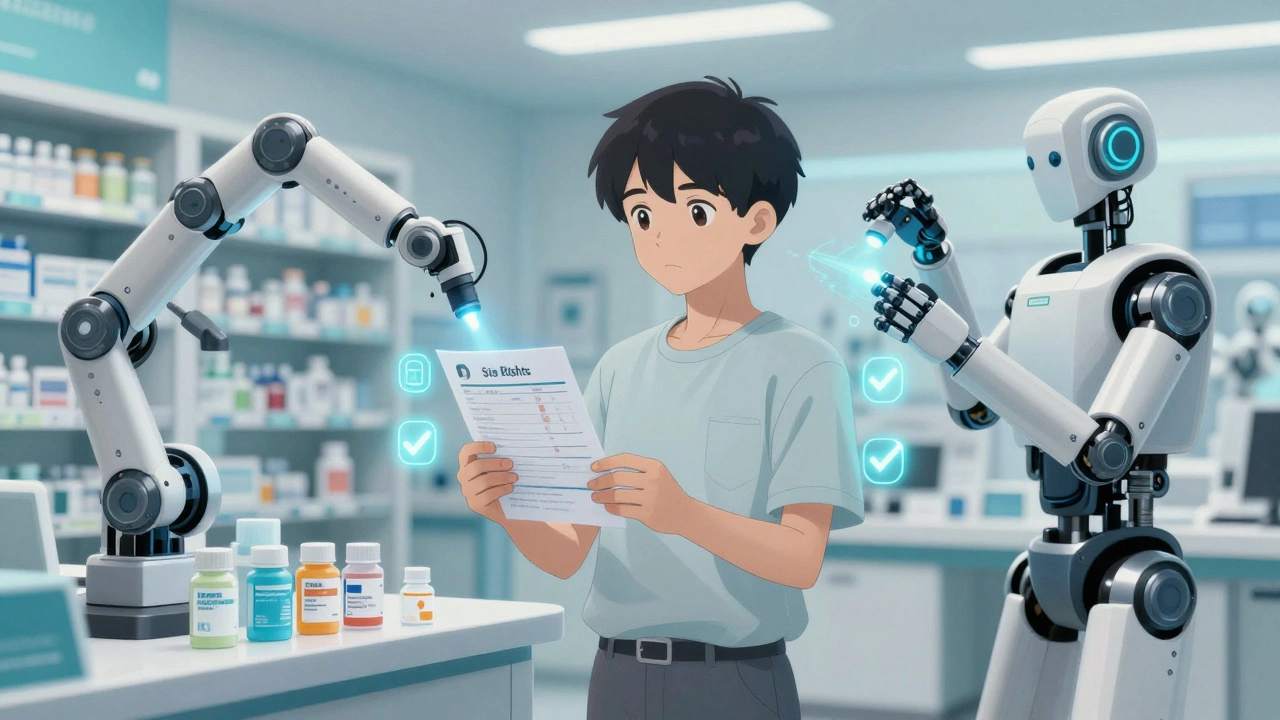
The Six Rights of Taking Medication (And How to Remember Them)
Hospitals and pharmacies use a simple checklist called the “Six Rights” to avoid errors. You should use it too. Here’s what each one means-and how to check it yourself:
- Right patient: Make sure the name on the bottle matches yours. If you’re picking up a prescription, confirm your full name and date of birth with the pharmacist.
- Right medication: Look at the label. Does the drug name match what your doctor told you? If it looks different from what you expected, ask why. Generic versions are safe, but they can look completely different.
- Right indication: Why are you taking this? Don’t assume. Ask: “What condition is this meant to treat?” If you’re not sure, you might be taking something you don’t need-or missing something you do.
- Right dose: Never guess. A teaspoon isn’t the same as a medicine cup. Use only the dosing tool that came with the bottle. Household spoons can be off by 25-50%. That’s dangerous with blood thinners, insulin, or antibiotics.
- Right route: Is it meant to be swallowed, applied to skin, inhaled, or injected? Taking a patch orally or an eye drop by mouth can cause serious harm.
- Right time: Some meds need to be taken with food. Others must be taken on an empty stomach. Some work better in the morning. Others at night. Ask your pharmacist: “When’s the best time to take this?”
Keep a Medication List-Every Single One
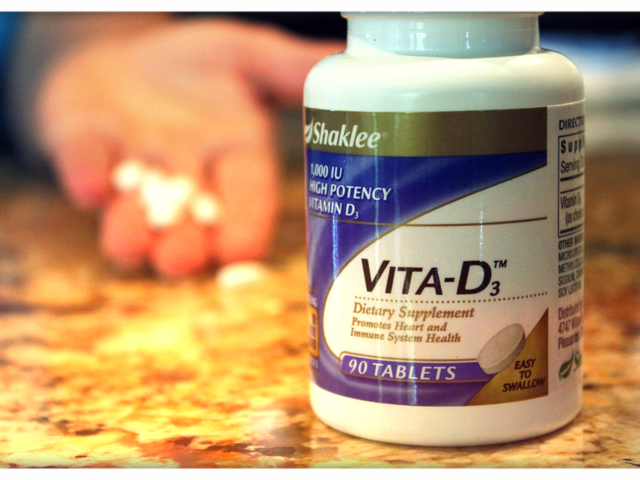
Most people forget about vitamins, supplements, and over-the-counter painkillers. But these can interact with your prescriptions. Aspirin, ibuprofen, melatonin, fish oil, even St. John’s Wort-all can cause problems when mixed with other drugs.
Start a simple list. Write down:
- The name of each medication (brand or generic)
- The dose (e.g., 10 mg, 500 mg)
- How often you take it (e.g., once daily, every 8 hours)
- Why you’re taking it (e.g., “for high blood pressure,” “for sleep”)
Update it every time you get a new prescription or stop one. Bring this list to every doctor visit, even if it’s just for a cold. Studies show patients who do this have 27% fewer medication errors.
Storage Matters More Than You Realize
Medications aren’t like canned food. They degrade if stored wrong.
- Insulin: Must be refrigerated (36-46°F) until opened. After that, it can stay at room temperature for about a month.
- Most pills: Keep them in a cool, dry place. Avoid bathrooms. Humidity ruins them.
- Liquid antibiotics: Often need refrigeration. Check the label. If you leave them out too long, they lose strength.
- Eye drops: Discard after 28 days, even if there’s liquid left. Bacteria grow fast in open bottles.
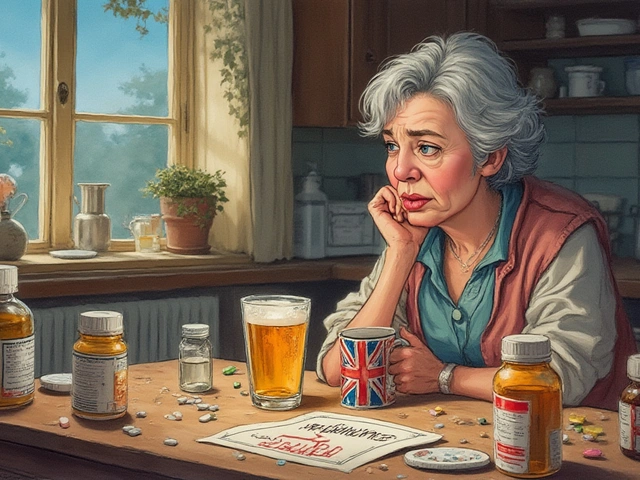
And never keep meds in your car. Summer heat can turn pills into useless powder. The FDA says 18% of medication errors come from using expired or improperly stored drugs.
Never Share Medications-Not Even With Family
Your friend says, “I have the same headache as you. Can I take one of your pills?” Say no. Even if it’s the same drug, the dose or reason might be totally different.
The FDA says sharing meds causes about 8% of emergency visits for drug reactions. A 65-year-old on blood thinners might take 5 mg of warfarin. A 30-year-old might take 1 mg. Same pill. Different risk. Taking someone else’s dose can cause bleeding, organ damage, or even death.
Ask These Three Questions Every Time You Get a New Prescription
Pharmacists are trained to help you. But they can’t read your mind. If you don’t ask, you might miss critical info. Here’s what to say:
- “What should I do if I miss a dose?” Only 22% of patients ask this. But the answer matters. Some meds you skip. Others you double up. Some you call your doctor about.
- “How should I store this?” As mentioned, 40% of medications have special storage needs. Don’t guess.
- “What side effects should I watch for?” Only 65% of pharmacy visits cover this. But knowing what’s normal vs. dangerous saves lives. For example, dizziness might be expected with blood pressure meds-but chest pain isn’t.
Don’t feel shy. You’re not bothering them. You’re protecting yourself.
Use Technology to Stay on Track
Remembering when to take five different pills every day is hard. Especially if you’re new to this.
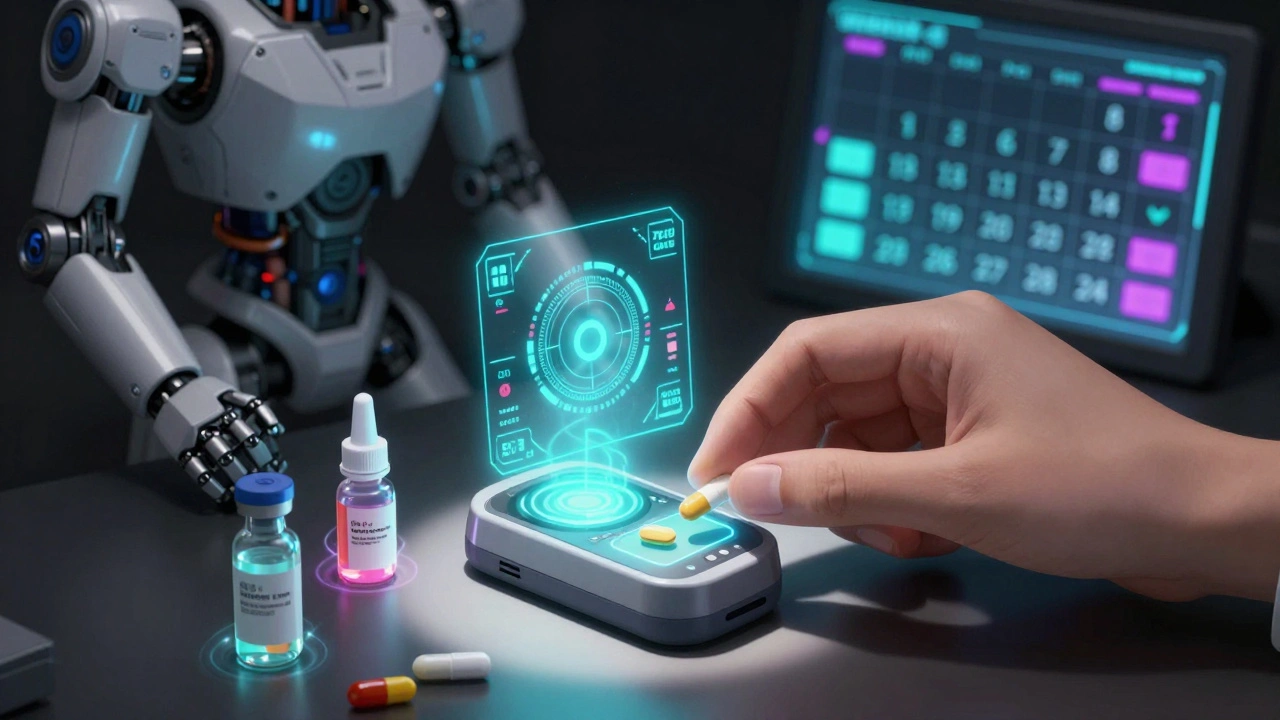
Apps like Medisafe and MyMeds help. They send alerts, let you log doses, and even scan your pill bottle to confirm you’re taking the right one. A 2022 study found users of these apps improved adherence by 28%. That means you’re more likely to get the full benefit of your treatment.
Some apps even connect to your pharmacy. If you miss a dose, they notify your pharmacist-so they can call you before something bad happens.
Watch for Changes in Your Pills
Have you ever opened a bottle and thought, “This doesn’t look right”? You’re not imagining it.
Nearly 90% of prescriptions are filled with generics. That’s fine-they’re just as effective. But they often look different: different color, shape, or markings. That’s normal. But if the pill looks wrong and you didn’t get a new prescription, ask your pharmacist: “Is this the same medicine?”
It’s not about distrust. It’s about verification.
What to Do After a Hospital Stay
One in five medication errors happens when you leave the hospital. You might get a new drug, stop an old one, or have your dose changed. But discharge instructions are often rushed.
Before you go:
- Ask for a written list of all your medications-new and changed.
- Ask: “What did I stop taking? What did I start? What dose am I on now?”
- Take that list to your primary doctor within 7 days.
This is called medication reconciliation. Hospitals that do it well cut errors by 33%.
When to Call Your Pharmacist or Doctor
You don’t have to wait for a crisis. Call if:
- You’re confused about how to take your medicine
- You notice new side effects (rash, swelling, dizziness, nausea)
- You run out early or your pills look different
- You’re unsure if a new OTC drug is safe to take with your prescriptions
Pharmacists are available during business hours. Many offer free phone consultations. Use them.
It Takes a Few Weeks to Get Used to It
Don’t beat yourself up if you mess up at first. A University of Michigan study found it takes most people 2-3 weeks to build a solid routine. You’ll forget a dose. You’ll misread a label. That’s normal.
What matters is what you do next. Learn from it. Update your list. Ask questions. Use your phone alarm. Keep going.
Final Thought: You’re in Charge
Doctors write prescriptions. Pharmacists fill them. But you’re the one who swallows the pill. That means you hold the most power-and responsibility-in your own safety.
Medication safety isn’t about being perfect. It’s about being aware. It’s about asking questions. It’s about double-checking. And it’s about never assuming anything.
Start today. Make your list. Read your label. Ask one question. You’ve got this.

13 Comments
Jade Hovet
OMG THIS IS SO HELPFUL!! 🙌 I just started my first med and was totally clueless... now I'm making my list right now 💊✨
Constantine Vigderman
Yesss!! I used to forget my meds till I got Medisafe - now it pings me like a hype friend who won't let me fail 😎💊
Cole Newman
LMAO you people act like this is rocket science. I've been on 12 meds since I was 12. Just read the damn label. Stop making it a thing.
Tom Zerkoff
The Six Rights framework is an evidence-based best practice endorsed by the Institute of Medicine. Adherence to these protocols reduces adverse drug events by up to 42% in outpatient populations. I strongly encourage all patients to internalize these as non-negotiable safety checkpoints.
Yatendra S
We are all just temporary vessels for chemicals, aren't we? 🤔 The real question isn't how to take pills... but why we feel we need them at all. The system sells us solutions to symptoms it helped create.
kevin moranga
I know it seems overwhelming at first, but trust me - once you get into the rhythm, it becomes second nature. I used to mix up my blood pressure meds with my thyroid pills - total disaster. Then I started using color-coded pill boxes, set alarms on my watch, and wrote sticky notes on my mirror. Now I feel like a med ninja. You got this. Seriously. One day at a time. And hey, if you mess up? No shame. Just reset and keep going. We've all been there. 💪❤️
Alvin Montanez
People need to stop treating medicine like it’s a magic spell. You don’t get to be careless and then blame the system when you end up in the ER. If you can’t be responsible enough to read a label or remember to take your pills, maybe you shouldn’t be taking them at all. This isn’t a parenting blog - it’s a survival guide for adults who refuse to grow up.
Lara Tobin
I cried reading this. My grandma almost died because she took someone else’s blood thinner... I wish someone had told us this sooner. 💔 Thank you for writing this.
Jamie Clark
You're all missing the point. This isn't about pills. It's about the commodification of health. The pharmaceutical industry profits from confusion. They design pills to look different on purpose. They bury warnings in tiny print. They charge $500 for insulin. This ‘safety guide’ is just a Band-Aid on a hemorrhage.
Keasha Trawick
Okay but let’s be real - the *aesthetic* of medication safety is everything. 🎨 I have a glittery pill organizer, a mood board of my meds with tiny icons (heart for BP, moon for sleep, fire for pain), and I name my pills. My insulin is ‘Sir Injects-a-Lot.’ My anxiety med? ‘Calmzilla.’ It’s not silly - it’s psychological armor. If you don’t make it feel personal, you’ll forget. And then you’ll feel guilty. And then you’ll stop. Don’t let the system win by making you feel dumb.
Bruno Janssen
I’ve been on 17 different meds in the last 5 years. No one ever told me about storage. I kept my insulin in the bathroom cabinet. I didn’t know it was ruined. I felt so stupid. Now I cry every time I see a pill bottle. I’m just... so tired.
Sheldon Bird
Love this. Seriously. I’m a nurse and I still forget stuff sometimes. My trick? I always say out loud what I’m taking and why before I swallow. It sounds weird but it sticks. And if you’re unsure? Call the pharmacy. They’re literally paid to help you. No judgment. Just support. 🙏
Karen Mccullouch
This is why America is falling apart. People can’t even take a pill right. We need to stop coddling. If you can’t handle basic responsibility, maybe you shouldn’t be allowed to live independently. This isn’t a ‘guide’ - it’s a cry for help from a generation that thinks a notification is enough to keep them alive.