ADHD Stimulants & MAOI Interaction Risk Checker
Medication Interaction Checker
Check if combining your ADHD stimulant and MAOI is safe. This tool uses FDA guidelines and clinical evidence to provide accurate risk assessment.
Combining ADHD stimulants with MAOIs isn't just a bad idea-it can be life-threatening. Even if you’ve been told this combination is "rarely dangerous," the data doesn’t back that up. When these two types of medications meet in your body, they can trigger a sudden, severe spike in blood pressure-known as a hypertensive crisis-that can lead to stroke, heart attack, or death. This isn’t theoretical. It’s documented in FDA warnings, hospital case reports, and clinical guidelines that have stood for decades.
What Happens When These Drugs Mix?
ADHD stimulants like Adderall, Vyvanse, and Ritalin work by flooding your brain with dopamine and norepinephrine. These are chemicals that boost focus, energy, and alertness. But they also tighten blood vessels and raise your heart rate. That’s why many people on stimulants notice their blood pressure creeping up a little-even if they feel fine. MAOIs, like phenelzine or tranylcypromine, are older antidepressants that block an enzyme called monoamine oxidase. This enzyme normally breaks down excess norepinephrine, dopamine, and even tyramine (a compound found in aged cheese, cured meats, and beer). When MAOIs shut down this cleanup system, those chemicals build up. Put them together? You get a perfect storm. The stimulant pushes more norepinephrine into your system. The MAOI stops your body from removing it. The result? Blood pressure can skyrocket-sometimes over 200 mmHg systolic. That’s not just high. That’s a medical emergency.Which MAOIs Are the Most Dangerous?
Not all MAOIs are the same. The older ones-tranylcypromine, phenelzine, and isocarboxazid-are irreversible inhibitors. Once they bind to the enzyme, your body has to make new enzymes to recover. That takes about two weeks. During that time, even small amounts of extra norepinephrine from stimulants can cause dangerous spikes. Tranylcypromine is especially risky. A 2023 case report from Cleveland Clinic described a 42-year-old patient who developed a systolic blood pressure of 210 mmHg after taking tranylcypromine with dextroamphetamine. He didn’t even eat tyramine-rich food. The combination alone was enough. Transdermal selegiline (Emsam patch) is different. At low doses (6 mg/24 hours), it mostly blocks MAO-B in the skin, not MAO-A in the gut. That means it doesn’t interfere as much with tyramine. The FDA says hypertensive reactions with this form are "rare"-but they still happen. And if you’re taking it with a stimulant? The risk goes up. Even the patch isn’t safe to mix without strict monitoring.Which ADHD Medications Carry the Highest Risk?
Amphetamines-like Adderall and Vyvanse-are more dangerous than methylphenidate-based drugs like Ritalin or Focalin. Why? Amphetamines force nerve cells to dump large amounts of norepinephrine directly into the synapse. Methylphenidate mostly blocks reuptake, which is a slower, more controlled effect. A 2005 review in the Primary Care Companion to The Journal of Clinical Psychiatry confirmed this: amphetamines cause significantly greater norepinephrine release. That’s why case reports of hypertensive crises almost always involve amphetamines, not methylphenidate. Even so, methylphenidate isn’t safe either. One 2017 study from Massachusetts General Hospital successfully used low-dose methylphenidate with selegiline in 12 patients-but only after starting at 25% of the normal dose and checking blood pressure every 15 minutes for the first few days.Why Do Some Doctors Still Combine Them?
You might hear stories of doctors mixing these drugs successfully. That’s true-but only in rare, tightly controlled cases. These are usually patients with treatment-resistant depression and severe ADHD who’ve tried everything else. They’re monitored like lab rats: daily blood pressure logs, weekly check-ins, no tyramine foods, no alcohol, no other stimulants or SSRIs. Dr. Richard Friedman from Weill Cornell Medicine says he’s seen over 200 such cases without a crisis. But he’s also quick to add: "I’m one doctor with a very specific patient group. That doesn’t mean it’s safe for everyone." The FDA doesn’t agree. Their black box warning-the strongest possible-is on every stimulant label. It says: "Concomitant use can cause hypertensive crisis. Potential outcomes include death, stroke, myocardial infarction." And the American Psychiatric Association’s 2022 guidelines call this combination a "strong recommendation against" with "high quality of evidence."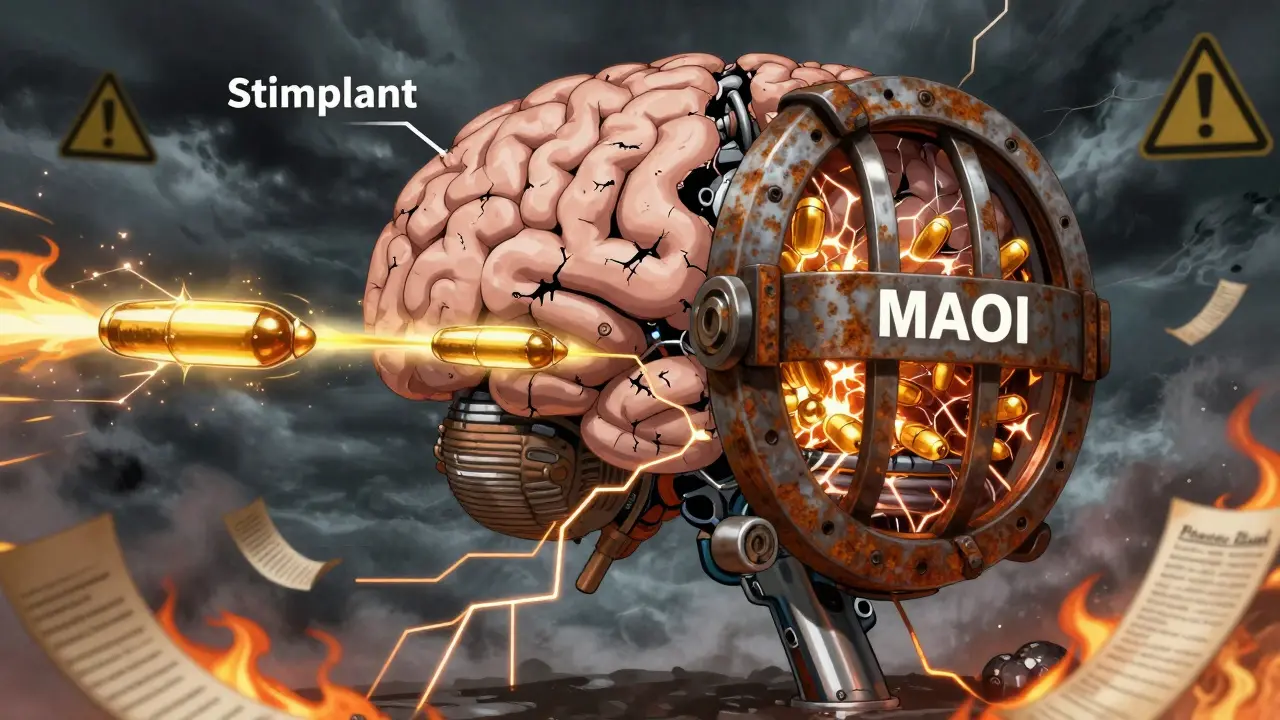
What About the 14-Day Washout Rule?
If you’re switching from an MAOI to a stimulant-or vice versa-you must wait at least 14 days. Why? Because MAOIs bind permanently to the enzyme. Your body needs time to grow new enzymes. If you start a stimulant too soon, your system still can’t clear norepinephrine. Even if you stopped the MAOI last week, you’re still at risk. Some people think, "I felt fine after 10 days, so it’s okay." That’s dangerous thinking. Enzyme recovery isn’t about how you feel. It’s about biology. You could be perfectly fine one day and in the ER the next. For transdermal selegiline, the washout period is still 14 days-even though it’s "safer." The FDA doesn’t make exceptions.What If You’re Already on Both?
If you’re currently taking both, stop immediately. Don’t wait for your next appointment. Call your prescriber now. Do not stop the MAOI cold turkey-sudden withdrawal can cause severe depression or rebound hypertension. But don’t keep taking the stimulant either. Your doctor will likely have you taper off the stimulant first, then wait 14 days before adjusting the MAOI. Or vice versa. There’s no one-size-fits-all plan. But there is one rule: never take them together without a clear, documented, monitored protocol.What Else Should You Avoid?
It’s not just stimulants. MAOIs also interact dangerously with:- Serotonin-boosting drugs (SSRIs, SNRIs, tramadol, dextromethorphan)
- Decongestants (pseudoephedrine, phenylephrine)
- Illicit drugs (cocaine, MDMA, amphetamines)
- Tyramine-rich foods: aged cheeses, soy sauce, tap beer, cured meats, fermented tofu, overripe bananas
Who Should Never Try This Combination?
Avoid this combination entirely if you have:- High blood pressure (even if controlled)
- Heart disease, arrhythmias, or history of stroke
- Liver or kidney disease
- A history of substance use disorder
- Any condition that affects blood pressure regulation
What Are the Alternatives?
If you need help with ADHD and depression, there are safer paths:- For ADHD: Non-stimulants like atomoxetine (Strattera) or guanfacine (Intuniv) don’t raise blood pressure the same way.
- For depression: Bupropion (Wellbutrin) is an antidepressant that also helps focus-no MAOI risk. Or try newer agents like vortioxetine or esketamine (Spravato) under supervision.
- Therapy: CBT and DBT are proven to help both ADHD and depression symptoms without drugs.
Bottom Line: Don’t Take the Risk
Yes, there are rare case reports of success. Yes, some doctors still try it. But the data is clear: the risk of death or stroke is real, measurable, and avoidable. The FDA, the American Psychiatric Association, and every major medical guideline agree: do not combine ADHD stimulants with MAOIs. If you’re on one and your doctor suggests the other, ask: "What’s the evidence for safety? What’s my emergency plan if my blood pressure spikes? What are the alternatives?" If they can’t give you a clear, documented, FDA-aligned answer-walk away. Your life isn’t worth the gamble.Can I take Adderall if I’m on an MAOI?
No. Combining Adderall (or any amphetamine-based stimulant) with an MAOI can cause a sudden, life-threatening spike in blood pressure. This combination is strictly contraindicated by the FDA and major psychiatric associations. Even if you’ve taken both before without issues, the risk remains high and unpredictable.
Is the Emsam patch safer than oral MAOIs when combined with stimulants?
At the lowest dose (6 mg/24 hours), the Emsam patch is less likely to cause hypertensive reactions because it mainly blocks MAO-B in the skin, not MAO-A in the gut. But it’s still not safe to combine with stimulants. The FDA warns that hypertensive reactions have occurred even with the patch. There is no approved safe dosage combination.
How long do I have to wait after stopping an MAOI before starting a stimulant?
You must wait at least 14 days after stopping any MAOI before starting a stimulant. This is because MAOIs permanently disable the enzyme that breaks down norepinephrine. Your body needs two weeks to produce new enzymes. Starting a stimulant sooner-even if you feel fine-can trigger a hypertensive crisis.
What are the symptoms of a hypertensive crisis from this interaction?
Symptoms include severe headache, blurred vision, chest pain, shortness of breath, nausea, vomiting, confusion, or a pounding heartbeat. Blood pressure may spike above 180/110 mmHg. If you experience any of these while taking both medications, call 911 immediately. This is a medical emergency.
Are there any stimulants that are safe to use with MAOIs?
No. All FDA-approved ADHD stimulants-including methylphenidate (Ritalin, Concerta), lisdexamfetamine (Vyvanse), and dexmethylphenidate (Focalin)-carry the same black box warning when combined with MAOIs. Even non-amphetamine stimulants can trigger dangerous increases in norepinephrine. No stimulant is considered safe with an MAOI.
Can I use over-the-counter cold medicine if I’m on an MAOI?
No. Many OTC cold and allergy medicines contain pseudoephedrine or phenylephrine, which are stimulants that raise blood pressure. These can cause a hypertensive crisis when combined with MAOIs. Always check labels and ask your pharmacist before taking anything new.