

Benzodiazepines work fast. For someone in the middle of a panic attack, that matters. A pill can calm the racing heart, quiet the panic thoughts, and bring back control within an hour. That’s why doctors still prescribe them - not because they’re perfect, but because for some people, in some moments, they’re the only thing that works.
How Benzodiazepines Actually Work
Benzodiazepines don’t just make you sleepy. They target a specific chemical in your brain called GABA. GABA is like a brake pedal for your nervous system. When you’re stressed, your brain is stuck on "on." Benzodiazepines turn up the volume on GABA, helping your brain slow down. That’s why they help with anxiety, muscle spasms, seizures, and even alcohol withdrawal.
Not all benzodiazepines are the same. Some wear off in a few hours - like triazolam or alprazolam. These are often used for panic attacks or insomnia because they don’t hang around long enough to make you groggy the next day. Others, like diazepam or clonazepam, stick around for days. These are better for chronic anxiety or managing withdrawal from alcohol. The half-life matters. Using the wrong one can lead to problems.
The Real Benefits: When They Save Lives
There are situations where benzodiazepines are irreplaceable. In an emergency room, when someone is having a seizure that won’t stop, midazolam is often the first line of defense. It stops the electrical storm in the brain within minutes. In the ICU, it’s used to calm patients on ventilators. For someone going through alcohol withdrawal, diazepam can prevent seizures and delirium - things that can be deadly.
For acute anxiety - say, before surgery or after a traumatic event - they offer relief no other medication can match. While SSRIs take weeks to build up in your system, a benzodiazepine works in 30 minutes. Studies show 60 to 80% of people get immediate relief from panic attacks with alprazolam. That’s not small. For someone who can’t breathe, can’t think, or can’t leave their house because of fear, that’s life-changing.
The Hidden Risk: Dependence Builds Quietly
Here’s the problem no one talks about until it’s too late: your brain adapts. After just a few weeks of regular use, your GABA receptors start to downsize. They need more of the drug to do the same job. That’s tolerance. And once tolerance sets in, stopping becomes hard.
Research from the World Health Organization shows 30 to 50% of people taking benzodiazepines daily for more than four weeks develop physical dependence. That doesn’t mean addiction - it means your body expects the drug to function normally. If you stop suddenly, your nervous system goes into overdrive. Symptoms can include shaking, sweating, insomnia, anxiety worse than before, and in rare cases, seizures.
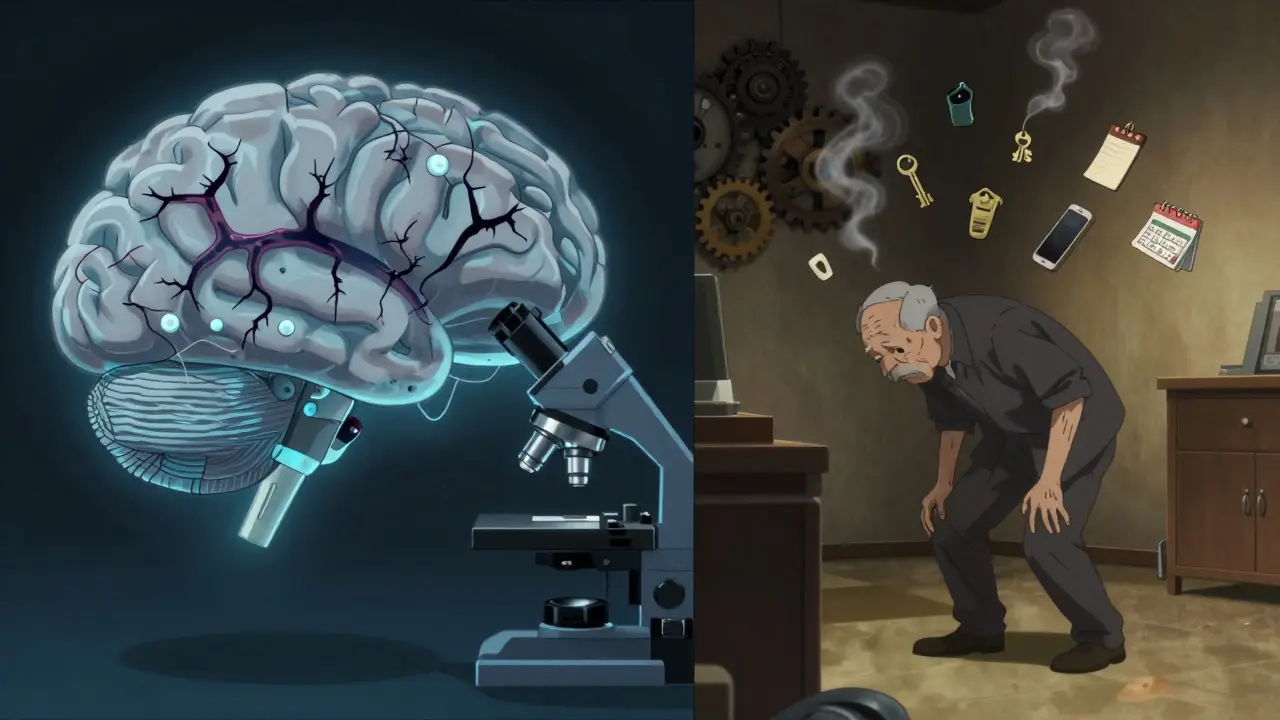
One study from the Benzodiazepine Support Group found 23% of users had memory gaps during normal daily activities - forgetting conversations, walking into rooms and not knowing why, missing appointments. That’s anterograde amnesia. It’s not rare. It’s a documented effect.
Why Long-Term Use Fails
Doctors are trained to limit use to 2 to 4 weeks. But in practice, many patients stay on them for months or years. Why? Because the anxiety comes back. And the fear of withdrawal keeps people from quitting.
Long-term use doesn’t work. The body builds tolerance. The drug loses its effect. You’re not getting better - you’re just maintaining a baseline. Meanwhile, side effects pile up: drowsiness, dizziness, poor coordination, falls (especially in older adults), and cognitive decline. The American Geriatrics Society now says benzodiazepines should be avoided entirely in people over 65. The risk of falls and dementia jumps significantly.
And it’s not just the elderly. Younger people on long-term prescriptions report feeling "numb," "out of it," or like they’re watching life from behind glass. That’s not treatment. That’s suppression.
The Withdrawal Trap
Trying to quit cold turkey is dangerous. Withdrawal can last weeks or months. The Ashton Manual - the gold standard guide for tapering - says most people need 3 to 6 months to safely stop after long-term use. Some need longer.
People who try to quit on their own often describe symptoms like electric shock sensations, ringing in the ears, severe anxiety, insomnia, and even hallucinations. Reddit threads from r/PharmaCon are full of stories from people who took a few pills for a week and ended up in withdrawal for over a year. It’s not a myth. It’s real.
The key? Slow, supervised tapering. Cutting dose by 5 to 10% every 1 to 2 weeks. Switching from a short-acting benzo to a long-acting one like diazepam can make the process smoother. But you need a doctor who knows how to do this. Most don’t.

Alternatives That Actually Work
For long-term anxiety, antidepressants like SSRIs are safer. They take 4 to 6 weeks to work, but they don’t cause dependence. They don’t make you forget your own name. And they’re effective for most people.
For insomnia, cognitive behavioral therapy for insomnia (CBT-I) is the most effective long-term solution. It doesn’t involve pills. It retrains your brain to sleep. Studies show it works better than sleeping pills - and the results last.
For panic attacks, therapy like exposure therapy or mindfulness-based stress reduction can help you build tolerance to anxiety without drugs. When combined with very low-dose benzodiazepines, one 2023 study in JAMA Internal Medicine cut long-term dependence risk by 58%.
And for alcohol withdrawal? Medical supervision with a benzo is still the standard. But after detox, the goal is to get off the drug - not stay on it.
Who Should Never Take Them
Benzodiazepines aren’t for everyone. They’re risky if you have:
- A history of substance abuse (alcohol, opioids, stimulants)
- Severe breathing problems like COPD or sleep apnea
- Depression with suicidal thoughts
- Are over 65
- Are pregnant or breastfeeding
And if you’re taking other sedatives - opioids, alcohol, sleeping pills - the risk of overdose skyrockets. The FDA added a boxed warning in 2020 about this exact danger.
The Bigger Picture
Benzodiazepines are still prescribed 76 million times a year in the U.S. - mostly to women. But the tide is turning. Kaiser Permanente cut long-term prescriptions by 37% just by adding electronic alerts to doctors’ systems. The UK’s NICE guidelines now say don’t start them for anxiety at all. France still prescribes them like candy. The U.S. is somewhere in between.
The future? Short-term use only. Emergency use. Procedural sedation. That’s it. For chronic anxiety, the focus is shifting to therapy, lifestyle changes, and non-addictive medications. Benzodiazepines aren’t going away - but their role is shrinking.
They’re not evil. They’re tools. Like a fire extinguisher. You don’t keep it on the kitchen counter. You keep it ready for when you need it - and you don’t use it to warm up your house.
Can you get addicted to benzodiazepines if you take them as prescribed?
Yes. Even when taken exactly as prescribed, physical dependence can develop in 30 to 50% of people after just 4 weeks of daily use. Addiction - which includes compulsive use despite harm - is less common, but dependence is real and can make stopping very difficult. This is why doctors are advised to limit prescriptions to 2 to 4 weeks for anxiety.
How long does benzo withdrawal last?
It varies. Acute withdrawal symptoms - like anxiety, insomnia, and tremors - usually peak within 1 to 4 days and last up to 2 weeks. But protracted withdrawal can linger for months. Some people report symptoms like brain zaps, dizziness, and heightened anxiety for 6 months or longer. The Ashton Manual recommends tapering slowly over 3 to 6 months to reduce the severity and duration of withdrawal.
Are there safer alternatives to benzodiazepines for anxiety?
Yes. For long-term anxiety, SSRIs and SNRIs are first-line treatments - they take weeks to work but carry no dependence risk. For panic attacks, therapy like CBT or exposure therapy can be as effective as medication over time. For insomnia, CBT-I is more effective than sleeping pills. Non-drug approaches don’t have the side effects or withdrawal risks of benzodiazepines.
Why are benzodiazepines still prescribed if they’re so risky?
Because they work fast - and sometimes, fast is the only option. In emergencies like seizures, acute panic, or alcohol withdrawal, they’re lifesaving. The problem isn’t the drug - it’s using it for the wrong reason, for too long. When used correctly - short-term, under supervision - they’re valuable. When used long-term for chronic anxiety, they become a problem.
What should you do if you’ve been on benzodiazepines for months or years?
Don’t stop suddenly. Talk to your doctor about tapering. Switching to a longer-acting benzo like diazepam can make the process safer. Work with someone experienced in withdrawal management - many general practitioners aren’t trained for this. Combine tapering with therapy, exercise, and sleep hygiene. It takes time, but recovery is possible. Many people report feeling clearer, calmer, and more themselves after quitting.





13 Comments
Weston Potgieter
Benzos are a godsend when you're drowning in panic but a life sentence if you're not careful. I took them for three months after a car wreck and woke up one day unable to function without them. No one warned me. Now I'm off them after six months of hellish withdrawal. Don't let doctors treat these like aspirin.
Vikas Verma
From a clinical standpoint, the pharmacokinetics of benzodiazepines demand strict adherence to short-term protocols. Longitudinal studies confirm neuroadaptive changes post-28 days of continuous use. The WHO data is unequivocal: dependence thresholds are crossed rapidly. Non-pharmacological interventions like CBT-I and mindfulness-based stress reduction demonstrate superior long-term outcomes with zero pharmacological risk profile.
Amina Aminkhuslen
Oh sweet mercy, another one who thinks benzos are the devil. I was on Klonopin for 18 months after my dad died. I didn't become a zombie. I didn't forget my kids' names. I got to breathe again. And when I tapered? Slowly. With a doctor who actually cared. Stop acting like everyone who uses these is a junkie. Some of us needed a bridge - not a cage.
Tim Hnatko
I've seen too many people get scared off by horror stories. The truth is, benzos aren't the problem - the system is. Doctors prescribe them because they're easy. Therapy takes time. Tapering requires patience. We need better training, not just fear-mongering. I work with patients who've been on these for years. Most want out. They just don't know how.
Joey Pearson
You got this. I was there. Scared. Stuck. Then I found a therapist who got it. We tapered slow. Added yoga. Got sleep back. Now I'm 18 months clean and feel more alive than I have in years. It’s not easy - but it’s worth it.
Roland Silber
Interesting how the Ashton Manual is still the gold standard after 30+ years. Why hasn’t the medical system updated its protocols? We have better tools now - ketamine-assisted therapy, neurofeedback, even CBD trials showing promise. Why are we still clinging to 1970s tapering models? The science has moved on. The practice hasn’t.
Patrick Jackson
My brain felt like a broken radio for 11 months after quitting. Every night I’d lie there wondering if I’d ever feel normal again. And then - one day - I didn’t. I woke up and just… felt. Like me. Not numb. Not anxious. Just alive. 🙏 It’s not magic. It’s patience. And it’s possible.
Pranay Roy
Did you know Big Pharma funded 83% of the studies that say benzos are safe for long-term use? The WHO data? Suppressed. The FDA warning? Buried under 17 pages of fine print. Doctors are paid to prescribe. Patients are paid to stay sick. Wake up. This isn’t medicine. It’s a revenue stream.
Joe Prism
In Japan, they rarely prescribe benzos. Instead, they use group therapy, forest bathing, and structured daily routines. Depression rates are lower. Suicide rates are lower. Maybe the answer isn’t a pill - it’s a rhythm. A life. A community.
Bridget Verwey
Oh so now we’re pretending benzos are just a fire extinguisher? Bro, I’ve seen people use them to light their cigarettes. That’s not a tool. That’s a crutch with a prescription label. And yes, I’m talking to you, Dr. Smith, who prescribed me 30 days… then 6 months… then 3 years.
Andrew Poulin
Stop sugarcoating. If you’re on benzos longer than a month you’re addicted. Period. No one needs them for "chronic anxiety." That’s a cop-out. Get real therapy. Get a life. Quit hiding behind a pill.
Ferdinand Aton
Actually, studies show the withdrawal symptoms are mostly psychological. Placebo effect. People think they’re sick so they feel sick. I’ve never met anyone who had real seizures from quitting. Just drama.
William Minks
My sister quit after 8 years. Took 14 months. She cried every day. Now she hikes, paints, and laughs like she used to. I’m so proud of her. You’re not broken. You’re just healing. 💙