
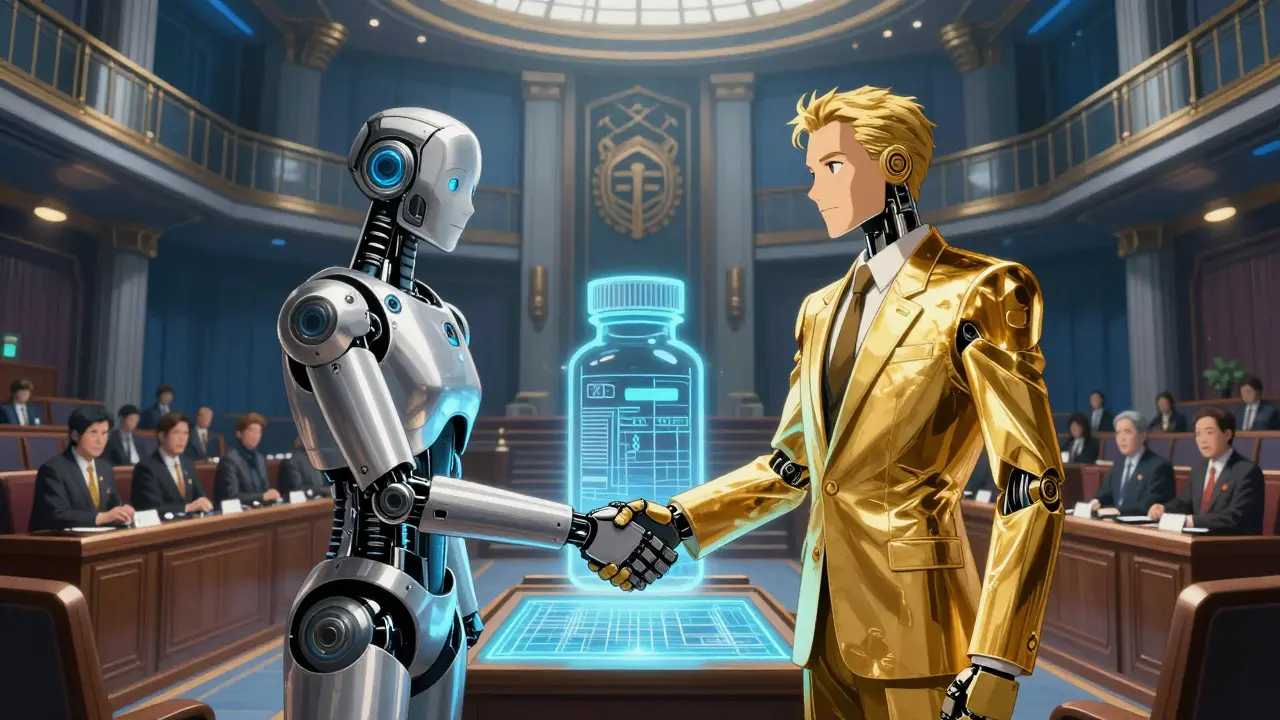
Imagine a world where every single generic drug company had to spend hundreds of millions of dollars and years of time recreating clinical trials just to prove a drug worked-even if the original brand-name version had already proven it decades ago. That was the reality before 1984. It wasn't just a waste of time; it was a massive barrier that kept cheap medicine off the shelves. The Hatch-Waxman amendments is the landmark 1984 legislation that created a shortcut for generic drugs to enter the market while protecting the patents of the original inventors.
This law didn't happen by accident. It was a rare political marriage between Senator Orrin Hatch, a conservative, and Representative Henry Waxman, a liberal. They managed to strike a deal that satisfied two opposing groups: the big pharmaceutical companies who wanted to protect their profits and the generic makers who wanted to lower costs. If you've ever filled a prescription that cost a fraction of the brand-name price, you're seeing the direct result of this legislative compromise.
The Old Way vs. The New Way: The ANDA Revolution
Before this law, the FDA required a full New Drug Application (NDA) for every single version of a drug. This meant generic companies had to repeat safety and efficacy tests on humans, which is both expensive and ethically questionable if the drug is already known to work. The Hatch-Waxman Act fixed this by creating the Abbreviated New Drug Application (or ANDA), which is a streamlined application process that allows generic manufacturers to skip clinical trials and instead prove bioequivalence.
Basically, a generic company only has to show that their drug delivers the same amount of active ingredient into the bloodstream at the same rate as the brand-name version. This shift reduced development costs by an estimated 80% to 90%. Because the barrier to entry dropped, the market exploded. In 1983, generics held less than 19% of the market; by 2023, that number soared to about 90% of all prescriptions dispensed in the U.S.
The Orange Book and the Patent Game
To keep things fair, the government needed a way to track which patents actually applied to which drugs. This led to the creation of the Orange Book, which is the official FDA publication listing all approved drug products and their associated patents. When a generic company wants to enter the market, they have to look at the Orange Book and "certify" their position on those patents.
The most controversial part of this process is the Paragraph IV certification. This is where a generic company basically says, "The brand-name company's patent is invalid, or our drug doesn't actually infringe on it." If the generic company wins this fight, they get a huge reward: 180 days of market exclusivity, meaning they are the only generic version available for six months. This creates a massive financial incentive for companies to challenge weak patents and bring cheaper drugs to patients faster.
| Feature | New Drug Application (NDA) | Abbreviated NDA (ANDA) |
|---|---|---|
| Primary User | Innovative Brand-Name Companies | Generic Manufacturers |
| Clinical Trials | Required (Safety & Efficacy) | Not Required (Bioequivalence only) |
| Cost | Very High (Millions of dollars) | Significantly Lower (80-90% less) |
| Goal | Prove the drug works | Prove it's the same as the brand |

Fair Trade: Giving Back to the Inventors
Brand-name companies didn't give up their monopolies for nothing. They argued that the FDA's long approval process ate away at their 20-year patent life. To fix this, the law introduced patent term restoration. This allows companies to recover some of the time lost during regulatory review, adding up to five years back onto their patent.
They also received "regulatory exclusivity" periods. For example, a New Chemical Entity (a completely new drug molecule) typically gets five years of protection where the FDA won't even approve a generic, regardless of patent status. Orphan drugs-those meant for rare diseases-get an even longer seven-year window. This ensures that companies still have a financial reason to spend billions on risky research and development.
The "Safe Harbor" and the 30-Month Stay
One of the biggest hurdles before 1984 was a court case called Roche v. Bolar. The court ruled that generic companies couldn't even *test* their drug for FDA approval if the patent was still active. It was a legal dead-end. The Hatch-Waxman Act created a "safe harbor" (35 U.S.C. § 271(e)(1)), which allows generic firms to use patented inventions if they are doing so specifically to gather data for an FDA application.
However, the law also created a structured way to fight in court. If a brand-name company sues a generic challenger within 45 days of a Paragraph IV notice, the FDA automatically triggers a 30-month stay. This means the generic drug cannot be approved for 30 months while the court decides if the patent is valid. It prevents a "rush to market" that could cause chaos if the generic company later loses the lawsuit.

The Dark Side: Evergreening and Pay-for-Delay
While the law intended to balance innovation and access, some companies found loopholes. You might hear the term "evergreening." This is when a brand-name company makes a tiny, insignificant change to a drug-like changing it from a tablet to a capsule-and files a new patent to extend their monopoly. It doesn't actually help the patient, but it keeps the generic competitors out.
Even worse are "pay-for-delay" settlements. This happens when a brand company literally pays a generic company to stay out of the market for a few years. The Federal Trade Commission (FTC) found hundreds of these deals between 1999 and 2012, estimating they cost consumers about $35 billion annually. It's a direct contradiction to the spirit of the 1984 law, and the government is still fighting these tactics today.
Modernizing the System: GDUFA and Beyond
As the volume of generic applications grew, the FDA became a bottleneck. To solve this, the Generic Drug User Fee Amendments (GDUFA) were introduced in 2012. Essentially, generic companies pay a fee to the FDA to speed up the review process. It sounds counterintuitive, but it worked. The average review time for an ANDA dropped from 30 months in 2012 to under 12 months by 2022.
Today, the debate continues. Should the 180-day exclusivity still exist? Is it too easy for brand companies to block generics through citizen petitions? While the landscape has changed, the core of the Hatch-Waxman framework remains the bedrock of the U.S. pharmaceutical system, ensuring that once a breakthrough drug's patent expires, a cheaper version is ready to take its place.
What is the main purpose of the Hatch-Waxman Act?
The primary goal was to find a middle ground between two needs: encouraging the development of new, innovative drugs (by protecting patents) and making sure the public has access to affordable versions of those drugs once the patents expire (by simplifying the generic approval process).
What is an ANDA and how does it differ from an NDA?
An NDA (New Drug Application) is for brand-new drugs and requires full clinical trials to prove safety and efficacy. An ANDA (Abbreviated New Drug Application) is for generics; it "abbreviates" the process by letting the company skip those trials and simply prove the drug is bioequivalent to the brand-name version.
What is the "Orange Book"?
The Orange Book is an official FDA list that identifies which patents are associated with a specific approved drug. Generic companies use it to determine which patents they need to challenge or certify against before they can launch their product.
How does Paragraph IV certification work?
A Paragraph IV certification is a claim by a generic manufacturer that the brand's patent is either invalid or not infringed by the generic version. If the generic company is the first to successfully do this, they are rewarded with 180 days of market exclusivity.
What is a "pay-for-delay" agreement?
This is a controversial settlement where a brand-name drug company pays a generic competitor to keep their cheaper version off the market for a set period. The FTC views this as anti-competitive because it keeps drug prices artificially high for consumers.
Does the law really help lower drug prices?
Yes, significantly. By removing the need for duplicative clinical trials, the law lowered the cost of bringing generics to market. This increased competition, which has led to generic drugs costing 80-85% less than their branded counterparts.

1 Comments
Danielle Kelley
Of course they mention a "safe harbor" because that is exactly where they hide the real data from us. The whole system is rigged by Big Pharma to keep us dependent on their chemicals while they play games with patents to make sure we never get the real cures!