
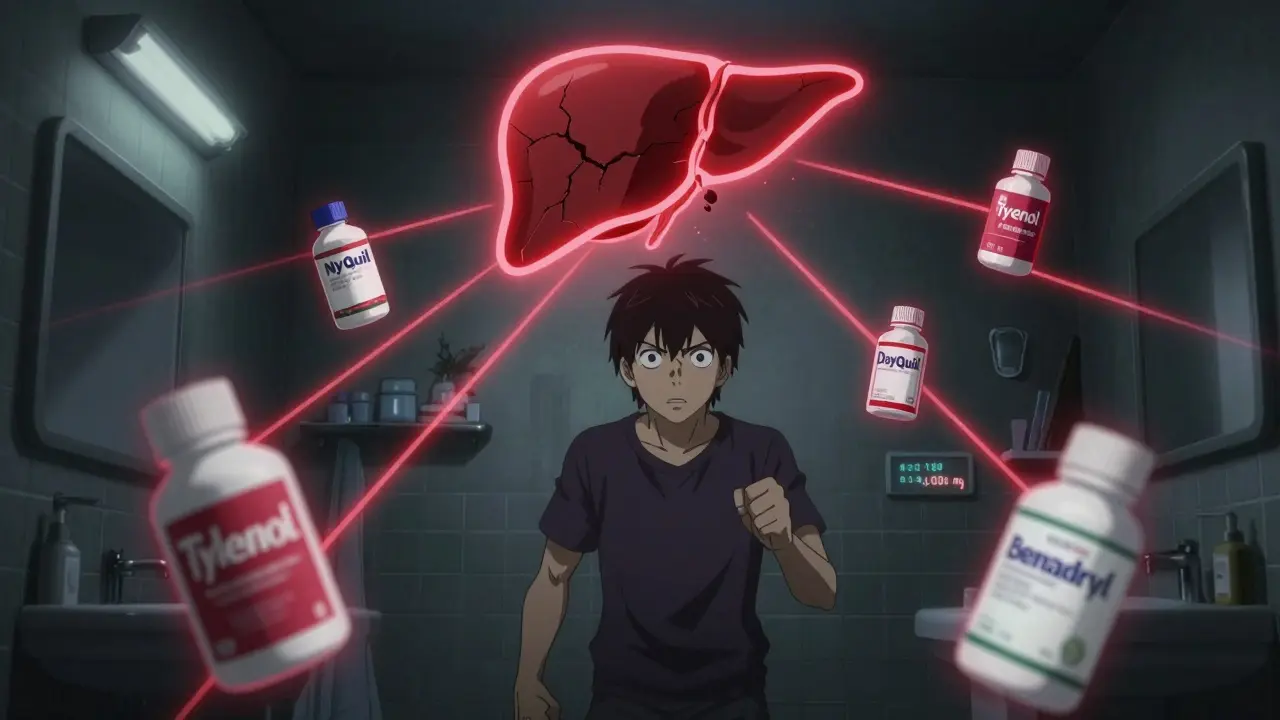
Every year, millions of people reach for OTC cold and flu combinations because they’re convenient. One pill for fever, another for cough, and a third for congestion - all in one box. But here’s the problem: acetaminophen is hiding in almost every one of them. And if you’re taking more than one product, you’re at serious risk of liver damage - even if you’re following the directions on each bottle.
Why You’re More Likely to Overdose on Acetaminophen Than You Think
Acetaminophen (also called APAP or paracetamol) is the most common ingredient in OTC cold and flu combos. It’s in Tylenol Cold & Flu, Theraflu, DayQuil, NyQuil, and dozens of other brands. The FDA says the maximum safe dose is 4,000 mg in 24 hours. Sounds high, right? But it’s easier to hit that limit than you’d expect. Let’s say you take one caplet of Tylenol Cold & Flu Nighttime. That’s 325 mg of acetaminophen. You feel worse by midday, so you grab a regular Tylenol tablet for your headache. That’s another 325 mg. Then you take a dose of NyQuil at night because you’re coughing and congested. Another 325 mg. By bedtime, you’ve taken 975 mg just from these three products. Do that three times a day for two days? You’re at 5,850 mg - over 1,800 mg over the limit. And you didn’t even realize you were overdosing. The American Association of Poison Control Centers recorded 14,237 cases of acetaminophen overdose in 2022 - and 12% of all OTC medication poison calls were from cold and flu combos. Most of those cases happened because people didn’t know acetaminophen was in multiple products.What’s Actually in Those Combination Pills?
OTC cold and flu meds aren’t magic. They’re just combinations of four common ingredients:- Acetaminophen - for pain and fever (325 mg per caplet in most products)
- Dextromethorphan (DM) - for cough suppression (10-30 mg per dose)
- Phenylephrine - for nasal congestion (5-10 mg per dose)
- Antihistamines - like doxylamine or chlorpheniramine for runny nose and sleep (12.5 mg or less)
Single Ingredients Are Safer - Here’s Why
A 2022 survey of 1,200 pharmacists found that 68% recommend single-ingredient products over combos. Why? Because you control what you take. If you only have a fever, take acetaminophen alone. If you’re congested, try pseudoephedrine (Sudafed) - it’s more effective than phenylephrine, even if you have to ask the pharmacist for it. If you have a cough, dextromethorphan by itself works fine. No extra sleep aids. No unnecessary painkillers. One woman on Reddit shared how she ended up in the ER after taking Tylenol Cold & Flu and regular Tylenol for three days. Her liver enzymes were sky-high. She didn’t know APAP meant acetaminophen. She thought the “cold” part was just for congestion. Another common mistake? Taking NyQuil at night and then taking Benadryl because she’s still sneezing. Doxylamine and diphenhydramine are both antihistamines. They’re not the same, but they both make you sleepy. Combine them? You’re asking for a next-day fog that feels like a hangover.
How to Read the Drug Facts Label (And What to Look For)
The FDA requires every OTC medicine to have a “Drug Facts” label. It’s not optional. It’s the law. But most people skip it. Here’s how to read it right:- Look for “Active Ingredients” - that’s the section that matters. Everything else is filler.
- Write down every ingredient - even if it’s abbreviated. APAP = acetaminophen. DM = dextromethorphan.
- Check the dose per unit - is it 325 mg? 500 mg? 650 mg? Don’t assume.
- Compare with other meds - if you’re taking two products, do they share an active ingredient? If yes, stop.
- Check the time between doses - DayQuil says every 4 hours. NyQuil says every 6. Mixing them? You’re dosing too often.
Who’s at Highest Risk?
Younger adults - ages 18 to 34 - are the most likely to use combination products. A Kaiser Family Foundation survey found 68% of this group prefer them. Why? Convenience. They’re busy. They don’t want to juggle five bottles. But here’s the twist: older adults (65+) are more cautious. Only 49% use combos. They’ve seen what happens when meds mix. They read labels. They ask pharmacists. They stick to one thing at a time. And it’s not just about age. People with liver disease, heavy drinkers, or those on other medications (like statins or antidepressants) are at higher risk. Acetaminophen is processed by the liver. Add alcohol? Add other drugs? You’re stacking the deck against your body.
What to Do Instead
Here’s a simple, safer plan:- Only one pain/fever reducer - pick acetaminophen or ibuprofen. Not both. Not with a combo.
- Use decongestants only if you’re congested - and choose pseudoephedrine if you can get it (it’s behind the counter for a reason - it works).
- Use cough suppressants only if you’re coughing - dextromethorphan alone is fine. No need for antihistamines unless you’re also sneezing.
- Don’t use sleep aids unless you need sleep - doxylamine lasts 8-12 hours. You’ll feel awful the next day.
The Future Is Changing - And So Should You
The OTC cold and flu market is worth $3.2 billion. But sales of combination products are growing slower than single-ingredient ones. IQVIA reports that standalone acetaminophen sales jumped 12.7% last year, while combo sales grew just 2.3%. Why? People are learning. The FDA’s move to remove phenylephrine is a sign. Manufacturers are already testing new formulas - some are replacing it with guaifenesin, an expectorant. Others are thinking about split-dose packaging: one tablet for congestion, another for cough, in the same box. That way, you pick what you need. But until then, you have to protect yourself. The convenience of combo pills isn’t worth the risk. Your liver doesn’t care how fast you got better. It only cares how much acetaminophen you gave it.What to Do If You Think You Overdosed
If you took more than one cold medicine and now feel nauseous, sweaty, or unusually tired - especially if you’ve been taking acetaminophen - call Poison Control immediately: 1-800-222-1222. Don’t wait. Don’t Google it. Don’t hope it goes away. Liver damage from acetaminophen can happen without symptoms at first. By the time you feel sick, it might be too late. The window for treatment is short. And it’s free. And available 24/7.Can I take a cold medicine and Tylenol at the same time?
No. If the cold medicine already contains acetaminophen (check the Drug Facts label for APAP or acetaminophen), adding Tylenol puts you at risk of overdose. Even if you’re only taking half a dose of each, the total can still exceed the 4,000 mg daily limit. Always assume the combo product has acetaminophen unless the label says otherwise.
Is phenylephrine still safe to use?
The FDA has proposed removing phenylephrine from OTC cold products because studies show it doesn’t work at the 10 mg dose found in most pills. It’s still legal, but it’s ineffective. If you’re taking a product with phenylephrine, you’re not getting any real decongestant benefit - just extra chemicals and potential side effects like increased blood pressure. Consider switching to pseudoephedrine (Sudafed) if you need real congestion relief.
What’s the difference between doxylamine and diphenhydramine?
Both are antihistamines that cause drowsiness. But doxylamine (in NyQuil) lasts longer - up to 12 hours - and can leave you groggy the next day. Diphenhydramine (in Benadryl) wears off faster but still causes drowsiness. Taking both together doubles the sedative effect and increases side effects like dry mouth, confusion, and urinary retention. Don’t mix them.
Are children’s cold medicines safer?
No. Many children’s cold medicines contain acetaminophen or dextromethorphan in child-friendly doses. But if you’re giving your child a children’s product and also giving them adult medicine - or if you’re giving them more than one children’s product - you’re still risking overdose. Always check the active ingredients. The FDA does not recommend OTC cold medicines for children under 6.
What’s the safest way to treat a cold?
Rest, fluids, and time. For symptoms, use single-ingredient products only when needed. A fever? Take acetaminophen. A cough? Take dextromethorphan. Congestion? Try saline spray or steam. Avoid combos unless you have multiple symptoms and you’ve confirmed the ingredients don’t overlap. When in doubt, ask a pharmacist.




9 Comments
Jinesh Jain
Been there. Took NyQuil and Tylenol for a cold last winter. Thought I was being careful. Turned out I hit 5,000 mg in 36 hours. Woke up nauseous, no idea why. Ended up in urgent care. They said my liver was fine, but I got a lecture that still haunts me. Now I read labels like they’re contracts. APAP means trouble. Always.
douglas martinez
Thank you for this comprehensive and clinically accurate overview. The public health implications of polypharmacy in over-the-counter medications are profoundly underappreciated. The FDA’s proposed removal of phenylephrine is long overdue, and the data on acetaminophen toxicity among young adults is alarming. I encourage all readers to consult with a licensed pharmacist before combining any OTC agents, regardless of perceived safety.
Sabrina Sanches
I used to take everything at once because I felt awful and wanted to feel better NOW. Then I learned that "cold medicine" doesn’t mean "cure" it means "mask". Now I pick one thing. One. And wait. My body actually recovers faster. No more 12-hour groggy zombie mornings. Just peace. And sleep. And a liver that still works.
Shruti Chaturvedi
My mom used to say if you don’t know what’s in it don’t take it. She was right. I didn’t know APAP meant acetaminophen till I was 28. Now I teach my nieces to read labels. It’s not complicated. Just slow down. Your body isn’t a machine you can just reboot with pills.
Katherine Rodriguez
Big Pharma loves these combos because they make you buy three things at once. They don’t care if you overdose. They make money either way. The FDA? Too slow. Pharmacists? Too busy. You’re on your own. Stop trusting the label. Read the fine print. Or don’t. Your liver’s not that important anyway.
Devin Ersoy
Let’s be real - the entire OTC cold medicine industry is a beautifully packaged con. Phenylephrine? A placebo with side effects. Combo pills? Psychological comfort disguised as pharmacology. People think they’re being smart by taking "one pill for everything" - but they’re just handing their liver over to a marketing department. Real men don’t take NyQuil. Real men drink hot tea, sleep, and let nature do its thing. Or at least take a single dose of pseudoephedrine and call it a day. The rest? Corporate theater.
Scott Smith
I’m a pharmacist. Every winter, I see at least three people who didn’t realize their "cold and flu" tablet had acetaminophen. One guy took three different products for five days. His liver enzymes were off the charts. He didn’t even know "APAP" was the same as Tylenol. We need better labeling. Simpler packaging. Maybe even color-coded warnings. But until then - check. Double-check. Then check again. Your liver won’t thank you. But it’ll still work.
Sally Lloyd
Did you know the FDA has been quietly pressured by pharmaceutical lobbyists to delay removing phenylephrine? There’s a whole network of shell companies that own the patents on these combo pills. The "overdose" stats? They’re underreported. People don’t die from liver damage - they just disappear. And no one asks why. I’ve seen the internal memos. This isn’t negligence. It’s calculated.
Emma Deasy
Oh. My. GOSH. I just read this entire post and I am literally shaking. I had no idea. NONE. I thought I was being so responsible, taking "just a little" of everything. I took NyQuil, then DayQuil, then Benadryl, then a Tylenol for my headache - all in the same week. I thought I was being proactive. I thought I was being smart. But now I realize - I was a walking time bomb. My liver. My precious, beautiful liver. I’ve been torturing it. I feel sick just thinking about it. I’m going to the pharmacy tomorrow. I’m going to ask the pharmacist to hold my hand while I read every label. I’m going to cry. I’m going to apologize to my body. I’m never doing this again. Never. Ever. Again.